
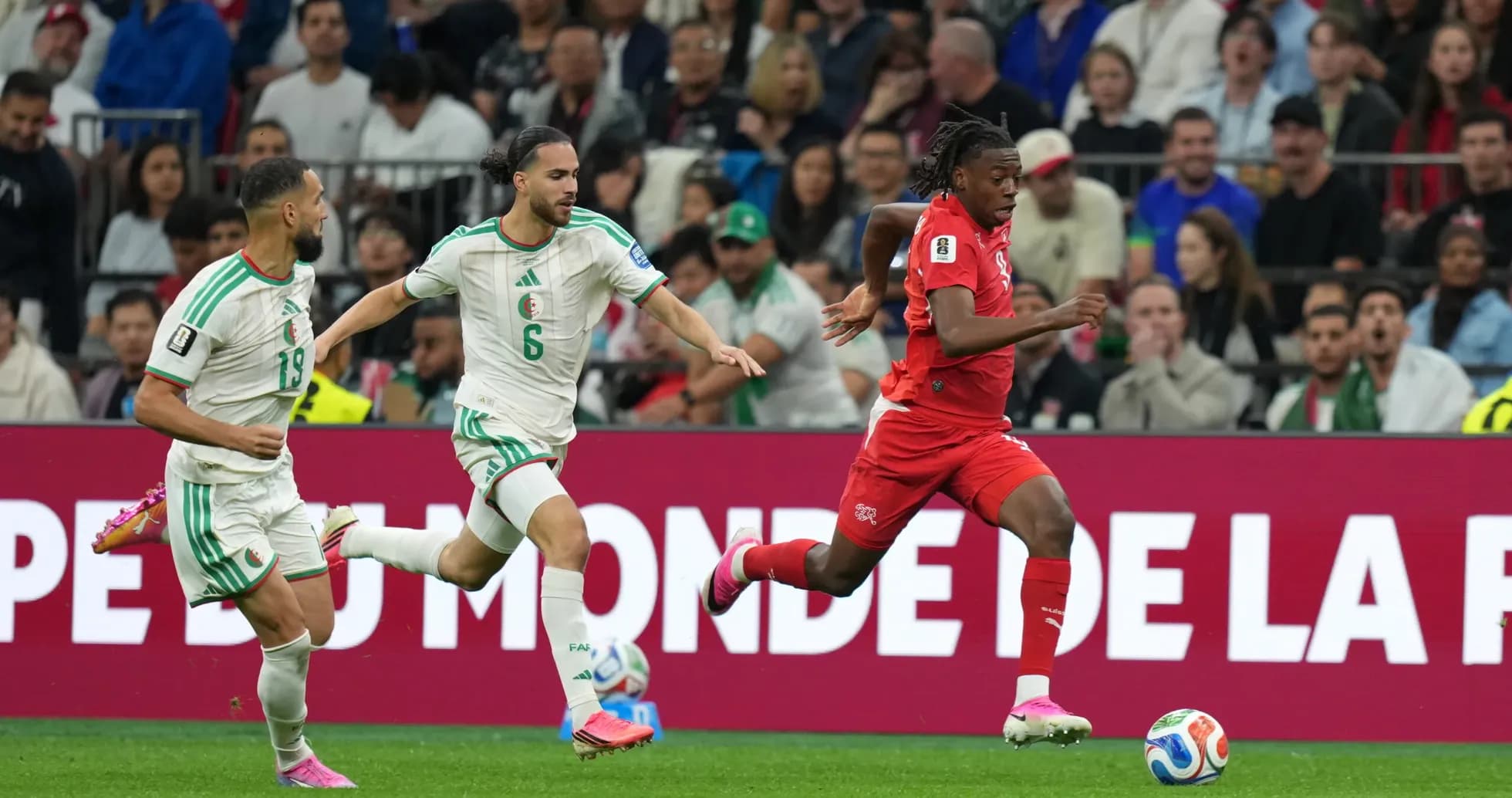
Switzerland vs Algeria: A Tactical Analysis of the Knockout Match
BC Place in Vancouver staged a meeting of contrasts: a Switzerland side arriving as one of the most balanced outfits of the group phase against an Algeria team that had lived on a knife-edge, conceding heavily but still carrying menace. By the end of 90 minutes, the 2–0 scoreline in Switzerland’s favour felt like the logical extension of what both squads had been hinting at all tournament.
I. The Big Picture: Group DNA meets knockout pressure
Heading into this Round of 32 tie, Switzerland’s body of work in the World Cup was quietly imposing. Overall this campaign they had played 4 matches, winning 3 and drawing 1, with no defeats. Their attacking return was 9 goals in total, supported by an overall scoring average of 2.3 goals per game. At home in this tournament context (neutral venues but classified as “home”), they had produced 8 goals in 3 fixtures, an average of 2.7, while conceding only 2 at home for a home defensive average of 0.7. Overall, they had let in just 3 goals, an overall average of 0.8. The underlying picture: a side that scores freely without losing defensive control.
The standings reinforced that image. In Group B, Switzerland topped the section with 7 points from 3 matches, scoring 7 and conceding 3 in the group phase. That gave them a group-stage goal difference of +4, exactly matching 7 goals for minus 3 against.
Algeria’s path in Group J had been more volatile. They advanced with 4 points from 3 games, scoring 5 and conceding 7 for a group goal difference of -2 (5 minus 7). Their season-wide profile echoed the same imbalance: across 4 matches in total they had scored 5 (an overall average of 1.3) but conceded 9 (an overall average of 2.3). On their travels they were especially fragile, with 2 goals scored away at an away average of 0.7, and 6 conceded away at an away defensive average of 2.0. The warning lights were clear before a ball was kicked in Vancouver.
II. Tactical Voids and Discipline: Margins in a knockout tie
Both managers had to account for small but notable absences. For Switzerland, L. Jaquez was ruled out with a muscle bruise. While not a headline name, his unavailability slightly reduced Murat Yakin’s flexibility, particularly if he had been an option to rotate or tighten the structure late on.
On the Algerian side, A. Benbouali missed out due to a wound, trimming Vladimir Petkovic’s attacking alternatives from the bench. For a team already struggling to balance risk and security, losing a potential impact forward narrowed their tactical escape routes if they fell behind.
Discipline had been a quiet subplot in the group phase for both teams. Switzerland’s yellow-card profile was concentrated in the 31–45 minute window, where 66.67% of their bookings occurred, with the remaining 33.33% arriving between 61–75 minutes. Algeria’s pattern was eerily similar: 66.67% of their yellows also came between 31–45 minutes, and 33.33% between 61–75. Neither side had seen a red card in the tournament.
This shared tendency to collect cautions just before half-time and in the mid-second-half band hinted at key emotional moments: the scramble to control games before the interval, and the tension spikes as matches opened up after the hour mark. In a knockout setting, that timing risked tilting momentum if a key midfielder overstepped.
III. Key Matchups: Hunter vs Shield, and the Engine Room
The central narrative of this tie was always going to run through Switzerland’s attacking trident behind the striker and Algeria’s defensive line.
In the “Hunter vs Shield” duel, Switzerland brought a potent cast. Johan Manzambi, starting as a midfielder in the line of three behind Breel Embolo, arrived as one of the World Cup’s most productive young attackers. Across the tournament he had 4 appearances, 200 minutes, and had already scored 3 goals with 2 assists. His efficiency was striking: 4 total shots, 3 on target, and 3 goals. Add 55 passes with 3 key passes and 78% accuracy, plus 14 dribble attempts with 5 successes, and you get a player who can both break lines on the ball and arrive in the box with timing.
Behind him, Embolo provided the reference point. In 4 appearances and 347 minutes, he had 2 goals and 2 assists, with 6 shots (4 on target) and 8 key passes from 49 total passes. He is not just a finisher but a connector, happy to drop and link with the line of D. Ndoye, Manzambi, and R. Vargas. His 35 duels contested, with 18 won, underlined the physical edge he brings to occupying centre-backs.
Algeria’s “Shield” had to be anchored by the pairing of A. Mandi and R. Bensebaini, with R. Ait-Nouri and R. Belghali flanking them. But the broader context was unforgiving: overall this campaign they had yet to keep a clean sheet, with 0 clean sheets in total and 9 goals conceded. On their travels they had already suffered a 3–0 defeat, their heaviest away loss, and their biggest away win (1–2) felt like an outlier rather than a norm.
In midfield, the “Engine Room” contest set Granit Xhaka and Remo Freuler against Nabil Bentaleb, Fares Chaibi, and Ramiz Zerrouki. Xhaka and Freuler sat as the double pivot in Yakin’s 4-2-3-1, tasked with controlling rhythm, recycling possession, and shielding the back four of Ricardo Rodriguez, Manuel Akanji, Nico Elvedi, and Denis Zakaria. Their job was twofold: deny Mahrez and Houssem Aouar the spaces between the lines, and ensure quick, clean progression into Manzambi’s feet.
For Algeria, Zerrouki and Bentaleb had to act as both screen and launchpad. With Riyad Mahrez starting wide right in the front three, they needed to find him early switches and isolations against Rodriguez, while also tracking Manzambi’s drifting runs and Embolo’s drops. The risk was structural: in a 4-3-3 that had already leaked 6 goals away from home, any over-commitment in support of Mahrez and Aouar could leave Mandi and Bensebaini exposed two-versus-two against Embolo and a late-arriving 10.
IV. Statistical Prognosis and Tactical Verdict
From a statistical vantage point, the match always leaned towards Switzerland. Overall, they came in with a goals-for total of 9 and goals-against total of 3, a net of +6 over 4 games. Algeria, by contrast, had 5 scored and 9 conceded overall, a net of -4. The contrast in clean sheets was stark: Switzerland had 1 clean sheet in total, Algeria none.
Crucially, Switzerland’s attacking variety reduced their reliance on a single outlet. Manzambi’s dual role as both finisher (3 goals) and creator (2 assists) meshed perfectly with Embolo’s blend of goals, assists, and hold-up play. With no penalties missed by Switzerland in the tournament (2 taken, 2 scored, 0 missed), they also carried composure in the high-pressure moments inside the box.
Algeria, for all their talent in the final third, were undermined by their defensive averages. On their travels they conceded 2.0 goals per game, while Switzerland at home averaged 2.7 scored. Overlay those curves and the projection was clear: if Switzerland played to their normal attacking level, Algeria would need to outperform their defensive baseline dramatically to survive.
The 2–0 result simply confirmed the trajectory. Switzerland’s structure, depth, and star turn from Manzambi in the half-spaces, supported by Embolo’s all-round centre-forward play, were too coherent for an Algerian side still searching for defensive stability. In a knockout defined by margins, the numbers had been pointing in this direction from the moment the draw was made.
Related News

Thomas Tuchel Reflects on England's 10-Man World Cup Triumph and a Surprising Regret

Robert Moreno Takes Over as Interim South Korea Coach After World Cup Setback

Jude Bellingham Returns to Form with Real Madrid After World Cup Success

Chloe Kelly, Beth Mead & 13 Lionesses Who Must Shine in the Upcoming WSL Season for England’s 2027 World Cup Bid

Barcelona Cancels World Cup Tribute Amid Political Tensions
Messi Breaks Record for Most Penalties Taken and Missed in FIFA World Cup History