
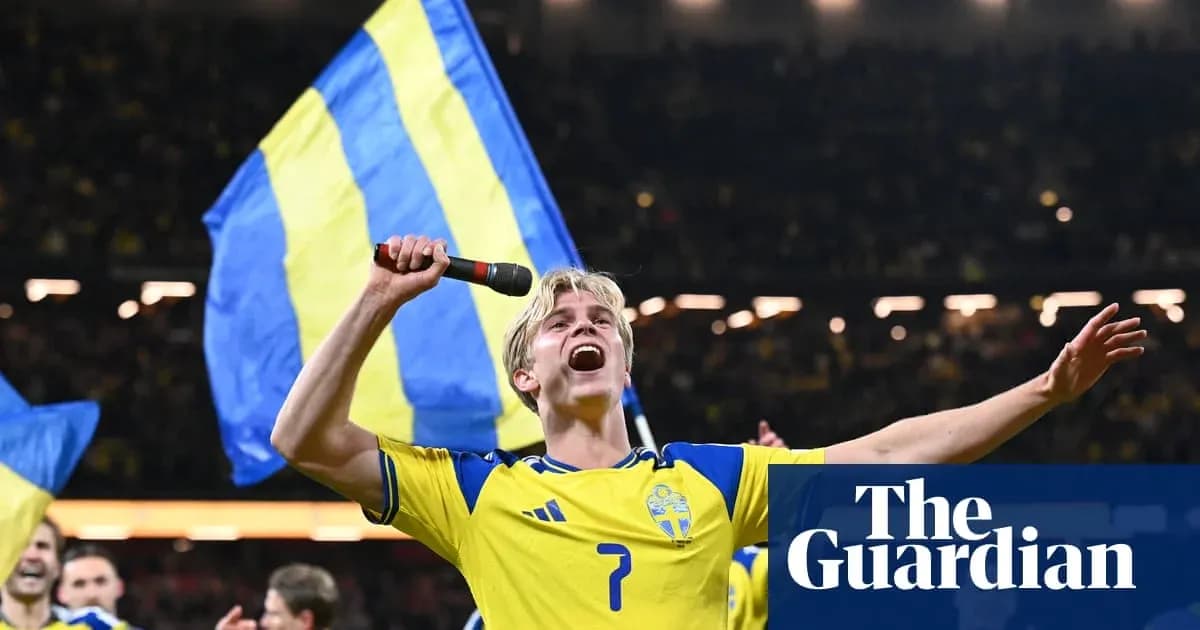
Sweden’s Journey to the World Cup: The Potter Effect
Sweden were dead. Or as good as. One point from four World Cup qualifiers under Jon Dahl Tomasson, a 1-0 defeat in Kosovo that felt like the final straw, and a campaign drifting towards irrelevance. In October 2025 the Swedish FA cut the cord, sacking the Dane and reaching for a familiar name with unfinished business in the country.
Graham Potter walked back into Swedish football like someone returning to a city where they once changed their life.
The Östersund miracle – from the fourth tier to Allsvenskan, a cup win, a Europa League night that stunned Arsenal – had made his reputation. Now he was being asked to salvage a national team that had forgotten what it was.
Potter strips it back
Potter did not arrive with grand tactical manifestos. He went back to what Swedish football trusts: discipline, shape, and the cold, ruthless joy of a well-timed counterattack.
He had spoken of preferring a back four. When the pressure rose in the playoffs, he parked that idea. Sweden lined up in a 5-3-2, the message clear – keep it tight, be hard to beat, and let the forwards carry the chaos.
The Nations League had thrown Sweden a lifeline, a back door into the World Cup qualifying process. They grabbed it with both hands.
In Spain, in the playoff semi-final, Ukraine were swept aside 3-1. Viktor Gyökeres, still adjusting to life at Arsenal, chose that night to announce himself as the national team’s undisputed talisman. A hat-trick, full of power and conviction, dragged Sweden into the final.
The decider against Poland was very different. Nerve-shredding. At times, grim. The visitors controlled long spells, moved the ball with more confidence, and looked the likelier side. Sweden clung on, fought for territory, and waited.
The pressure finally told – at the right end.
In the 88th minute, with the tie balanced on a knife-edge at 2-2, Gyökeres struck again. A late winner in a 3-2 thriller that detonated the Swedish bench and rewrote the mood of an entire campaign.
Potter, usually measured, looked almost dazed. “It’s hard to explain, hard to describe,” he said afterwards. He spoke of pride, of an “out-of-body experience”, of watching his own bench sprint past him towards the celebrating players and wondering if he was really there. For a coach who had endured bruising spells at Chelsea and West Ham, this felt like redemption in yellow and blue.
From two points in six group games to a World Cup ticket. That is the Potter effect, and it has changed how Sweden view their chances in North America.
They land in a group with Tunisia, Netherlands and Japan. On paper, it is unforgiving. In the Swedish camp, it is seen as an opportunity.
A coach who wanted this job
Potter did not stumble into the role. He chased it.
In October 2025, days before his appointment, he sat down with Fotbollskanalen and all but sent a formal invitation. “I have feelings for Sweden,” he said. “I love the country and I love Swedish football. Coaching the national team would be an incredible opportunity for me, absolutely.”
The FA listened. Within days, he had the job. He did not win either of his first two matches, yet by March the federation had seen enough. They tied him down to 2030, convinced he was the man to reshape a drifting side.
His fluent Swedish helps, but this goes beyond language. After the turbulence of the Premier League, the national team has given Potter a stage where he is trusted again. In return, he has given Sweden clarity.
A star in the mask of Bane
On club form and transfer fee, Alexander Isak should be the headline act. Last year he became the most expensive signing in Premier League history, swapping Newcastle for Liverpool for £125m. His first season at Anfield, though, has been uneven, and his fitness and form remain under scrutiny.
He did score after coming off the bench in a sobering 3-1 defeat to Norway on 1 June, but the questions have not gone away.
No one is asking those questions of Viktor Gyökeres.
The Arsenal forward, too, needed time to settle in London. Now he looks like a striker playing with a sense of inevitability. Four of Sweden’s six playoff goals were his. The late winner against Poland elevated him from important to iconic.
Across the country, fans posted their own versions of his celebration – a nod to Bane, the Tom Hardy character from The Dark Knight Rises. The mask, the stance, the menace. It has become a ritual, a shared joke, and a symbol of a player who now carries the hopes of a nation.
Sweden will go to the World Cup without their captain, Dejan Kulusevski. His absence cannot be glossed over. His influence on this team is enormous, his creativity and leadership impossible to replicate like-for-like. They will miss him in every phase of play.
Isak’s condition, Kulusevski’s injury, Gyökeres’s rise – this is the attacking puzzle Potter must solve on the fly.
A baron at the back
If there is a defender built for knockout football, it might just be Gustaf Lagerbielke.
The Braga centre-back stepped into the spotlight in the playoff final against Poland and refused to blink. At one end, he powered in a thunderous header. At the other, he kept Robert Lewandowski largely quiet, a task that has broken far more experienced defenders.
His story adds a layer of intrigue. A former Celtic defender, a baron, and 254th in line to the Swedish throne, he is not short of narrative. There is already talk of a move to one of Europe’s big-five leagues this summer. A strong World Cup would only harden that interest.
Alongside Celtic’s Benjamin Nygren, Lagerbielke looks ready to take on a bigger role than many had expected when this campaign began.
Karlström, the anchor
For all the focus on forwards and fairy-tale defenders, Sweden’s World Cup could hinge on someone less glamorous but every bit as vital: Jesper Karlström.
The Udinese captain is a late bloomer. He had to fight for his place at Djurgården, then rebuilt his career at Lech Poznan in Poland. Away from the pitch he has spoken openly about battling a gambling addiction during his time at Djurgården, crediting the club and his family for helping him overcome it.
On the field he brings exactly what this Swedish midfield needs. Strong in the tackle, calm on the ball, and capable of dictating tempo from deep. In a group where they must outlast the technical craft of the Netherlands and the relentless, intricate aggression of Japan, Karlström’s presence becomes non-negotiable.
At 30, he is the grown-up in a room that will also feature younger talents such as Yasin Ayari and Lucas Bergvall. If Sweden are to impose themselves rather than simply react, he will have to set the tone.
The people behind the noise
Sweden do tournaments properly. Blågult rarely travel in silence or in small numbers.
At World Cups and European Championships, the sea of yellow and blue tends to roll into host cities days before kick-off, filling squares and bars, trading jokes with opposition fans. They are loud, boisterous, and generally good company.
Their soundtrack is “Kanna på”, a song about beer pitchers that keep arriving, a cheerful nod to the national fondness for “a beer or six”. Its chorus promises: “We are coming with 100,000 men.” There will not be a Viking invasion of North America, but there will be a sizable Swedish delegation, and they will make themselves heard.
A complicated echo from the US
When Sweden’s name crops up in American political discourse, it is often for reasons that have little to do with football.
In 2017, Donald Trump told a rally: “Look what happened in Sweden last night,” linking the country to immigration and terrorism. The problem was simple: nothing dramatic had happened the night before.
He later said he had been referring to a Fox News report. Confusion reigned. Swedish newspaper Aftonbladet responded by listing the day’s actual events: Owe Thörnqvist, a famous singer, suffering technical problems in rehearsals; a man setting himself on fire in central Stockholm; road closures in northern Sweden due to harsh weather.
It was a surreal moment that said more about perception than reality. This summer, Sweden would rather shape their own American story – on the pitch.
From a campaign that began in crisis to a World Cup berth snatched via the side door, Sweden arrive in North America with scars, belief, and a coach who has already rewritten their script once. The question now is simple: how far can this improbable revival really go?
Related News

Raphinha’s Hat-Trick Powers Barcelona to 7-2 Victory Over Racing Santander
Carabao Cup Fourth Round Draw: Liverpool Set to Clash with Chelsea, Arsenal to Face Fleetwood Town
Key Football Matches to Watch in Azerbaijan This Autumn
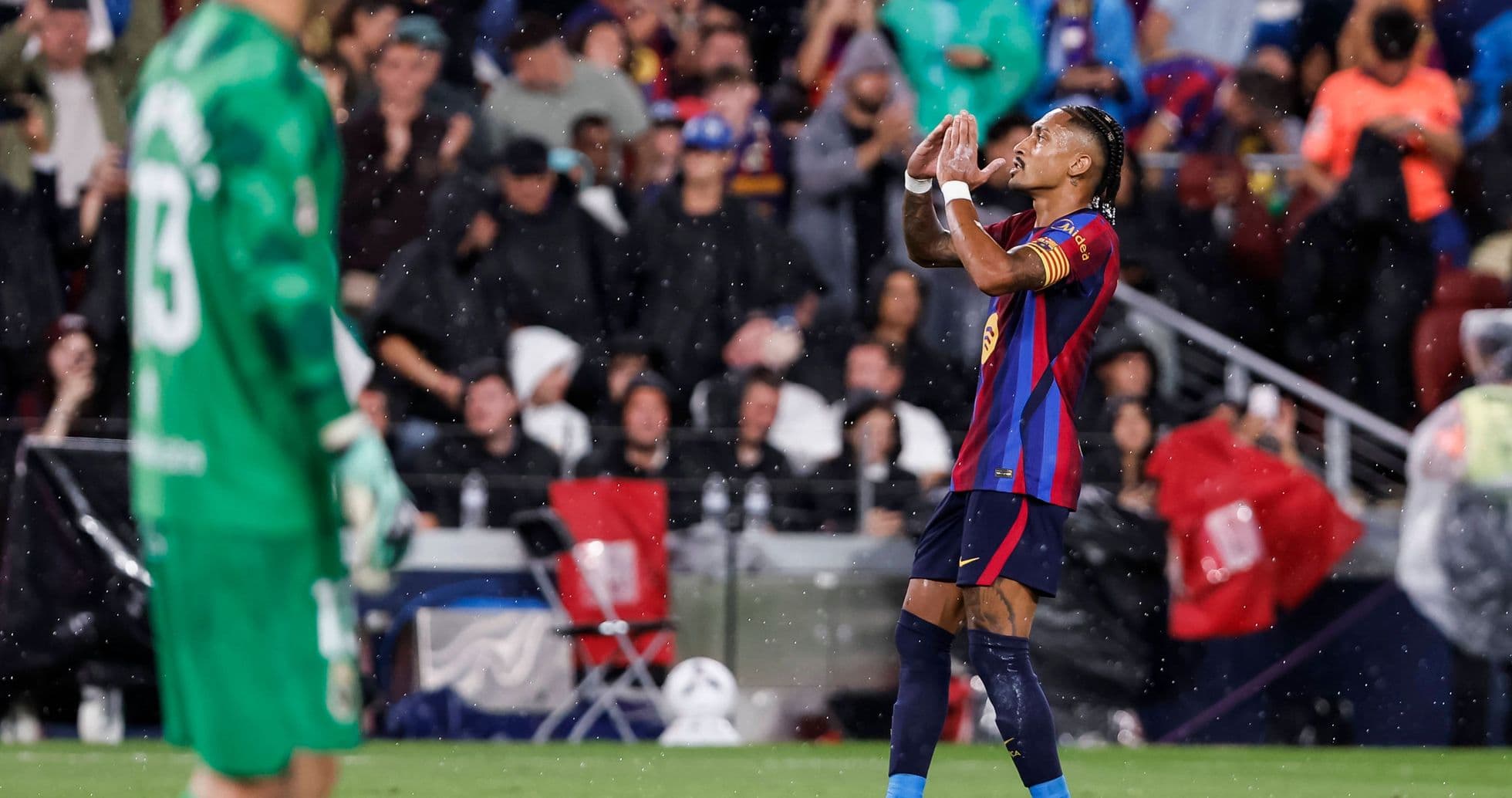
Raphinha's Hat-Trick Drives Barcelona to 7-2 Triumph Over Racing Santander
Hansi Flick Leads Barcelona to Record-Breaking Seven Wins in a Row
Gavi Reflects on Injury Return as Barcelona Dominate Racing Santander 7-2