
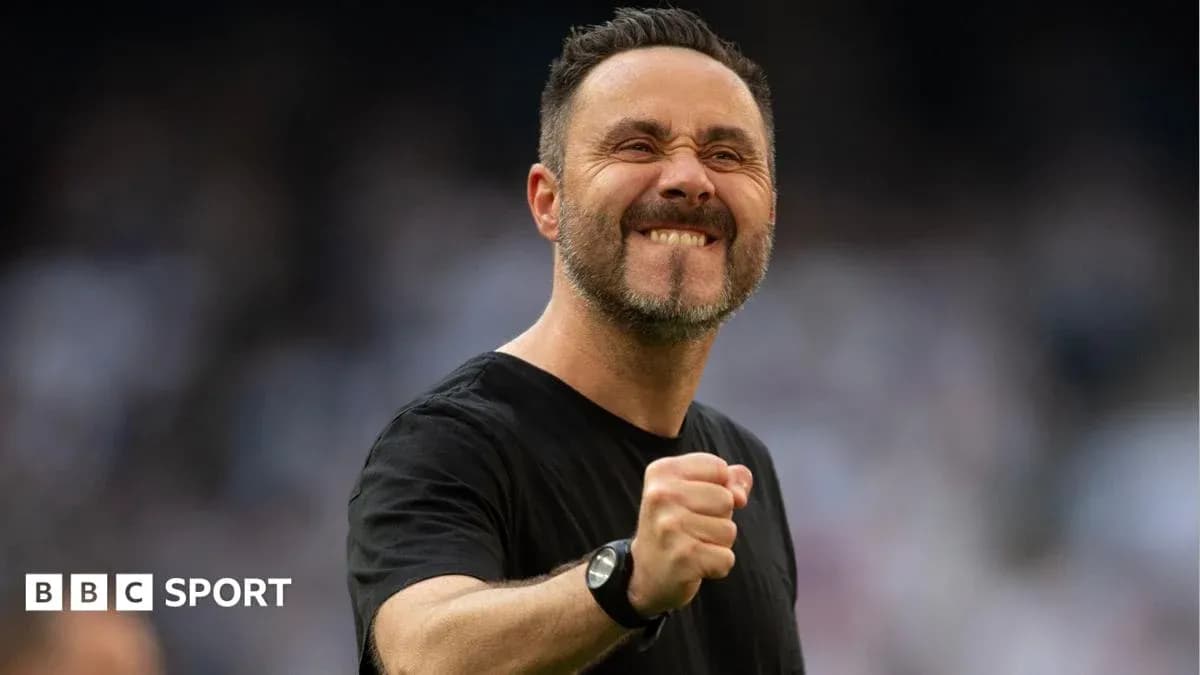
From Sunderland Tears to Sydney Smiles: Tottenham's Transformation
There was a point last spring when Roberto De Zerbi walked into the away dressing room at the Stadium of Light, looked around at his new Tottenham squad and wondered out loud: “Did we pass away?”
Players lay on their backs. Some were in tears. Spurs had just lost 1-0 at Sunderland in his first game in charge, the first of seven matches to save a listing club from relegation. The mood was not that of a Premier League giant in crisis. It was of something closer to a wake.
Four months on, the scene could hardly be more different.
From Sunderland tears to Sydney smiles
In Sydney, on a private floor of the team hotel a short stroll from the Harbour Bridge and Opera House, the same club looks reborn. Laughter carries down the corridor. Players drift between coffees made by their own barista and fiercely contested table tennis games. The body language has changed; so has the squad.
A club-record £237m has already been poured into new signings, and they are everywhere you look on this pre-season tour. Sandro Tonali, the £100m centrepiece from Newcastle. Mateus Fernandes, brought in from West Ham for £85m. Jan Paul van Hecke at the back. Andrew Robertson at full-back. Martin Dubravka in goal.
Only Marcos Senesi, granted extra time off after reaching the World Cup final with Argentina, has missed the Australia and New Zealand leg. He has now started work at Hotspur Way, another piece in a rapidly rebuilt puzzle.
De Zerbi, 47, does not pretend this is anything other than a club trying to haul itself out of the wreckage of a turbulent 2025-26 season. Survival was only secured on the final day, but he talks now like a man who sees the chance to do far more than just survive.
“I deserve to want the top players, because now Tottenham deserves to build up a top team,” he says. The line is delivered without apology. He has lived the alternative.
Two plans, one shark
When he walked through the door in April, Tottenham had drawn up two transfer plans: one for relegation, one for survival. De Zerbi insists he would have stayed even if the club had dropped into the Championship. He is relieved he never had to find out.
Plan A is now in full swing, but it is not just about arrivals. It is also about “respecting the will” of key figures such as captain Cristian Romero and goalkeeper Guglielmo Vicario, who could still leave.
“At the beginning of my time in April I had one million individual meetings,” he jokes. The conversations were blunt. If a player wanted out, he could go – but only on one condition.
“They told me if they didn't want to be here. I said: ‘Yes, help me to stay up, and then I help you to leave. If you don't help me to stay up, you stay underwater with me’.”
That edge runs through everything he does. Around him, the club has been reshaped. New chief executive Vinai Venkatesham now fronts the organisation on behalf of the Lewis Family Trust. Technical director Johan Lange, the lone survivor of the previous regime, works alongside him on deals. Director of football operations Rafi Moersen and performance director Dan Lewindon have arrived from City Football Group, with Lewindon charged specifically with improving an alarming injury record.
De Zerbi, though, is not content to leave recruitment to the boardroom.
“In the transfer market, when I want one player, I become like a shark. No chance to say no,” he says. It sounds like a line, but the summer’s business backs it up.
That “shark” mentality helped push through those record-breaking moves for Fernandes and Tonali, deals that required Tottenham to stare down competition from clubs who have dominated this market for years.
“I love working in the transfer market. It's not a pressure, it's one of the nicest parts in my work, in my job,” he explains. The attraction, he says, lies in the weight of the decision – and the personal bond it can create.
“When you take the decision, you take the responsibility. If the coach calls the player, you can build a special connection at the beginning. With Mateus Fernandes, I spoke with the mum, with the father.”
To Fernandes’ father, De Zerbi promised he would be his son’s “second dad” in England. The pitch landed.
Beating the heavyweights
Tottenham have not just been spending; they have been competing in corridors of power where they were recently outmuscled. Van Hecke arrived despite interest from Chelsea. Fernandes and Tonali chose Spurs even with Manchester United and Manchester City circling.
Transfers at this level are as much psychology as finance. Those involved in the talks describe a club that knew it had to be aggressive and quick. Aggressive with fees. Aggressive with wages. Aggressive with De Zerbi’s own involvement.
He has not been shy. After a 2-2 draw with Brighton in April, when Georginio Rutter’s 95th-minute equaliser slashed Spurs’ survival hopes, De Zerbi went straight to his phone. Van Hecke had assisted the goal.
“You wanted to push down Tottenham for Brighton when you made the assist to Rutter, now you have to come to me, you have no choice,” he later revealed.
With Tonali, the approach was even more direct. De Zerbi messaged him the day after Spurs secured their Premier League status with a final-day win over Everton. Then he flew to Brescia to sit down in the midfielder’s home. That meeting proved decisive. Club staff handled the rest.
Now he is talking about one more attacking “bomba” – his word – with two forwards expected, including a move for Manchester City’s Savinho. The rebuild is not finished.
Money, control and a five-year vision
The spending has raised eyebrows, but De Zerbi bristles at the idea of recklessness. The Lewis family injected £100m into the club in June. He insists there is “no pressure” attached to that cash, describing it as a necessary step to keep pace with rivals who have already gone down similar routes.
Chelsea, Arsenal, Liverpool – he points to all of them as examples. Tottenham, he argues, are simply joining the arms race, not starting it.
There have been exits too. Luka Vuskovic’s £45m move to Brighton brought in a substantial fee. The futures of Lucas Bergvall and Djed Spence remain uncertain. Each case, De Zerbi says, is weighed carefully.
“We assessed the request of Vuskovic [to join Brighton], with Vinai, with Johan together, because I consider Tottenham's money my money,” he explains. “It's like the owner is my father, I think you don't want to ask your father to lose money.”
The principle is clear. Sell as high as possible, buy as smart as possible. This is not a one-summer gamble; it is, in De Zerbi’s words, “a plan of five seasons because we are building.”
That logic also underpinned a harder call: the decision not to sign Joao Palhinha permanently from Bayern Munich. It was not about quality. De Zerbi rated him. The numbers, though, did not fit the structure the club is trying to protect.
Cleaning the air
The transformation has not been confined to the pitch or the balance sheet. After that bleak afternoon at Sunderland, the gloom seeped into the training ground. Staff felt it. The club felt it.
“The day after I organised a meeting without players and I said, ‘The first one I see say something negative, I send you home immediately’,” De Zerbi recalls. It was not a joke. He wanted to kill the atmosphere that had dragged Tottenham towards the drop.
He talks about changing “behaviour, attitude and spirit” at a club scarred by two brutal seasons. Spurs had finished 17th the previous year as well, though that campaign carried the balm of a Europa League triumph under Ange Postecoglou and nothing like the same fear of relegation.
To reconnect a fractured group, De Zerbi went old school. “One big dinner in Mayfair, with alcohol,” as he puts it. A manager-led night out, designed to loosen shoulders and, perhaps, tongues.
He remains convinced Tottenham were unlucky in their final matches and could have secured safety earlier. The players, he felt, had begun to see themselves as worse than the outside world judged them.
“I think they considered themselves in that moment worse than the people thought,” he admits. The healing is not complete. “I hope next time they organise [dinner and drinks] for themselves.”
That is the real aim. A squad that does not need the manager to drag it together. A club that does not flinch at the first sign of trouble. A dressing room that no longer feels like a morgue after a defeat.
“With love, friendship and care, you become top, top, top,” De Zerbi says.
From Sunderland’s tears to Sydney’s table tennis, Tottenham are trying to prove him right. The question now is whether this shark in the transfer market can turn survival specialists into contenders before that five-year clock runs down.
Related News
Carlos Alcaraz Urges Tennis Organizers to Stop Matches Finishing in the Early Morning
Carlos Alcaraz Frustrated by 3:30 a.m. US Open Finish: 'Too Much'
Jannik Sinner Set for ATP 500 Return in Beijing with Novak Djokovic Also Competing
Meet Iva Jovic: The Rising American Tennis Talent
Flavio Cobolli Shares Insights on Training with Jannik Sinner Ahead of His Tennis Return
Till vs Romero: Fight Details, Undercard, and Viewing Info for This Weekend