
StubHub Faces Class Action Over Canceled World Cup Tickets
Mark Gallagher did everything by the book. Bought early. Paid big. Trusted the platform.
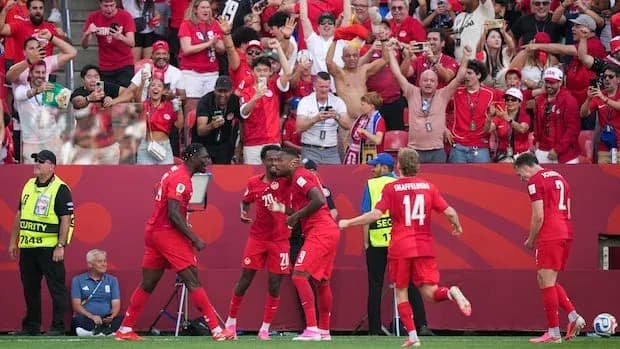
Hours before kick-off in Vancouver, with Canada set to face Qatar on June 18, his World Cup dream vanished with a cancellation notice from StubHub.
The price of those “prime seats” was $11,407. The price of missing the game? That, he says, can’t be measured.
Now he’s taking StubHub to court.
The Vancouver resident has filed a proposed class action on behalf of Canadian ticket buyers after the resale giant cancelled his tickets and those of thousands of other fans. He got his money back, but he wants something far bigger: accountability, and a change in how the industry operates.
The lawsuit, filed Wednesday in Vancouver, accuses StubHub of a “conspiracy of deception” for advertising and selling tickets “which they knew would not or could not be honoured.” The claims haven’t been tested in court, but Gallagher is the first to launch a class action against the company in Canada, following similar legal fights in New York and California over mass World Cup cancellations.
StubHub, which trades heavily on its “FanProtect Guarantee,” insists publicly that its aim is simple: get every fan into every event, every time. When asked detailed questions about its refund and dispute practices, the company declined to answer directly, offering only a broad statement that it wants to find replacement tickets and “never” wants to give refunds.
For many fans, that promise has rung hollow.
Travel costs? You’re on your own
Ask Kelly Mongillo.
She drove 10 hours from Barrie, Ont., to New Jersey with her elderly father for a June 13 World Cup match, spending about $2,500 on hotels, gas and food, on top of $1,800 for tickets through StubHub.
Game day. Outside the stadium. Then the email.
Cancelled.
Mongillo says she leaned on StubHub’s assurances that if anything went wrong, replacement tickets would be provided. Instead, she says, she was left with “significant financial losses and disappointment” that the company’s FanProtect Guarantee doesn’t touch.
StubHub’s Global User Agreement contains a waiver aimed at blocking Canadian and U.S. customers from pursuing anything beyond a ticket refund — no travel expenses, no legal fees, no compensation for the lost experience.
After Mongillo went public in June, StubHub stepped in with a partial solution: a refund and replacement tickets for another World Cup match in Toronto. Her father couldn’t attend, but she took the tickets.
She says the refund never came. The travel money is gone. So is the trust.
The legal threat that speeds everything up
The pattern repeats across North America: cancellation, confusion, then a long wait.
Jennifer Hale in Toronto paid nearly $3,000 for tickets to a Canada match on June 12. StubHub cancelled. She immediately asked for her money back. More than a month later, she was still waiting.
Dozens of calls. Endless promises of “72 hours.” One agent told her it could take up to 45 days. No refund. No clear timeline. No resolution.
Others decided to fight fire with lawyers.
After a month of delays, excuses and call-centre scripts, Denis Radetic of Georgetown, Ont., hired a U.S. lawyer who has been contacted by hundreds of StubHub customers. In a formal letter, Radetic demanded a refund and an additional $3,000 US in legal fees, accusing the company of “potential fraud … negligent misrepresentation, breach of contract.”
The tone changed quickly.
On Sunday, StubHub reached out and refunded his credit card. The company would not explain why legal representation or media exposure appears to fast-track cases like his while others sit in limbo.
Then came the final twist: StubHub sent Radetic a survey asking how he enjoyed the game he never saw.
A maze called arbitration
When refunds stall or get denied, StubHub points angry customers toward a U.S.-based arbitration process. On paper, it looks like a path to justice. In practice, some lawyers say, it’s a wall.
Brad Clements, a Menlo Park, Calif., lawyer who helped Radetic and now represents hundreds of StubHub buyers and sellers, calls the system “a total farce.” He argues the company has built an intentionally confusing process designed to intimidate and exhaust customers before they ever reach a hearing.
One example: the address where fans are told to send their “notices of dispute” by certified mail has changed seven times in 14 months, according to Clements. Every change adds another layer of uncertainty, another chance for paperwork to go astray.
StubHub’s Canadian site, StubHub.ca, doesn’t list any address or step-by-step instructions for filing a formal dispute at all.
StubHub declined to explain the shifting addresses or the missing information online.
From Clements’ vantage point, the strategy is obvious: make the route to arbitration so punishing that most people simply give up, never tell their stories and never collect the refunds — or damages — they might be owed.
How StubHub profits when fans lose
Behind the cancelled tickets sits a business model that still pays StubHub, even when it fails to get fans into the stadium.
Randy Nichols, a New York-based band manager who has studied the resale market, says StubHub earns money on dropped sales. When a fan’s order is cancelled, StubHub refunds the buyer — then turns to the seller and charges them the full ticket price as a penalty, even though StubHub itself never held the ticket.
The company says that’s to deter fraudulent listings. The effect, Nichols argues, is stark: “StubHub makes money on every order that they don’t fulfill.”
StubHub declined to comment on his claim. Its own seller policies, however, are blunt. If a seller “dropped” a sale, StubHub can charge “the greater of (i) 100% of the price of the ticket(s) sold or (ii) the full amount incurred by us to remedy the dropped sale.”
Fans see a cancellation and a refund. StubHub sees a fine to collect.
The interest game
Then there’s the money StubHub holds while disputes drag on.
Jeff Ripley from Spokane, Wash., is pushing his case through arbitration after his World Cup tickets, bought in December, were cancelled on game day. He wants more than just the face value back.
His argument is simple: StubHub kept his money for months. That money earns interest. Why should the company pocket that gain when it failed to deliver the tickets?
“How many thousands of people has this happened to?” he asked.
StubHub reported earning $41 million in interest in its November 2025 earnings report for the previous year. It facilitated the resale of $9.2 billion worth of tickets globally in that period. That’s a vast river of cash flowing through StubHub’s accounts, often long before fans know if their seats are truly secure.
StubHub declined to comment on the interest it earns or how long it holds customer funds.
Ripley compares the operation to a bank enjoying free loans. Fans deposit money in pursuit of a once-in-a-lifetime event. StubHub holds it, earns on it, then can still walk away from the deal with a refund and no ticket delivered.
“There has to be some accountability for companies that are taking money, earning interest on it and then not providing a product,” he said.
For Gallagher in Vancouver, that accountability now moves to a courtroom. His lawsuit asks a basic question that will resonate far beyond one World Cup: when a company promises to get you through the turnstiles, what is that promise really worth?
Related News

Ilia Topuria Accuses Justin Gaethje After UFC Defeat

Tyson Fury vs Anthony Joshua Fight Date and Venue Confirmed

Switzerland Calls Up In-Form Sion Striker Winsley Boteli for Nations League

Bournemouth Secures Historic 2-1 Win Over Real Sociedad in Spain

Portugal Announces Squad for 2026 UEFA Nations League; Cristiano Ronaldo Expected to Play

Raphinha Channels Ronaldo Nazario as Barcelona's Leading Striker After Position Change