
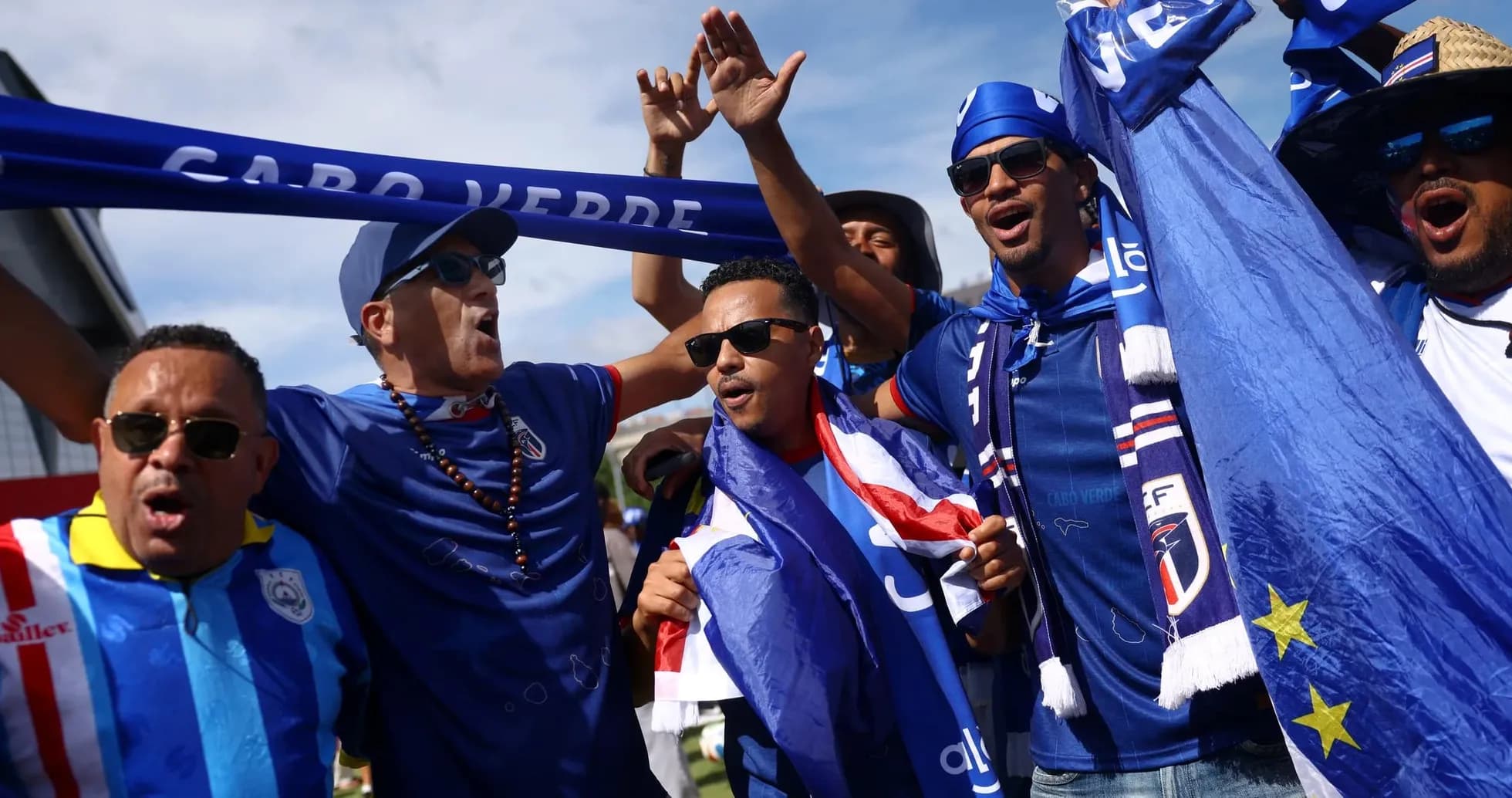
Spain Dominates but Draws 0-0 Against Cape Verde Islands
Spain’s 0-0 draw with Cape Verde Islands at Mercedes-Benz Stadium was a study in territorial domination without end product. In a World Cup group opener where Luis de la Fuente’s side owned the ball and the space, Cape Verde Islands, coached by Pedro Leitao Brito, accepted an ultra-reactive role, defending deep, compressing the central lane and relying on their goalkeeper and compact back line to survive a sustained siege.
Spain’s structure was built around overwhelming control. With no formation explicitly provided, the personnel suggest a back four of Marcos Llorente, Pau Cubarsí, Aymeric Laporte and Marc Cucurella behind a midfield trio of Rodri, Fabián Ruiz and Pedri, with Ferran Torres, Mikel Oyarzabal and Pablo Gavi as the nominal front line. The pattern was clear in the numbers: 74% possession, 801 passes with 734 accurate (92%), and 27 total shots, 16 of them inside the box and 8 blocked. Spain constantly pushed their full-backs high, using Cucurella and Llorente as width providers to pin Cape Verde’s wide players and create repeated crossing and cutback situations.
Rodri was the positional anchor, recycling possession and locking Cape Verde Islands out of central transitions. With Spain committing both full-backs forward, his screening role was essential to prevent counters; Cape Verde managed only 6 shots in total and just 2 inside the box. The visitors’ xG of 0.3 underlines how effectively Spain controlled the defensive transition phase, with counter-pressing around the ball and good rest defence from Laporte and Cubarsí squeezing any attempted outlet passes to Dailon Rocha Livramento.
In the final third, Spain’s approach was heavily oriented toward patient circulation and late box occupation rather than direct penetration. The 11 corner kicks and 27 shots point to sustained pressure, but the lack of a goal reflects issues in timing and occupation of the most dangerous zones. Many of the 16 shots inside the area came from semi-wide or crowded positions, with Cape Verde’s centre-backs and holding midfielders able to get bodies in the way – hence the 8 blocked shots. Spain generated a healthy xG of 2.29, but their finishing and final ball lacked the ruthlessness to match the volume of chances.
Cape Verde Islands, by contrast, played a low-event, damage-limitation game by design. Their 26% possession and 279 passes (205 accurate, 73%) show they rarely tried to build sustained attacks. Instead, they focused on compactness between the lines, funneling Spain outside and defending crosses. The discipline in their back four and double pivot limited clear central combinations for Pedri and Fabián Ruiz, forcing Spain to attempt more speculative deliveries and shots from just inside the area.
The key individual on the Cape Verde side was Vozinha (Cape Verde Islands). With Spain recording 7 shots on goal, his 7 saves were decisive and directly underpinned the 0-0 scoreline. He combined shot-stopping with good positioning on crosses and cutbacks, and his goals prevented figure of 1.46 matches Spain’s own tally, highlighting how many of Spain’s chances were of genuine scoring quality. On the other side, Unai Simón (Spain) had a largely quiet evening, making 1 save as Spain’s territorial control and counter-pressing kept Cape Verde at arm’s length.
Spain’s substitutions at 71 minutes were a clear tactical attempt to inject more verticality and 1v1 threat. Mikel Merino (IN) came on for Fabián Ruiz (OUT), adding more late runs and aerial presence from midfield, while Lamine Yamal (IN) came on for Pablo Gavi (OUT), offering a more natural wide dribbler to destabilize Cape Verde’s low block. Later, Dani Olmo (IN) came on for Ferran Torres (OUT) at 81 minutes to bring more between-the-lines creativity, and Nico Williams (IN) came on for Rodri (OUT) at 87 minutes, a bold attacking switch that sacrificed the holding midfielder for an additional winger. These changes tilted Spain even further towards an all-out attacking structure, but Cape Verde’s compactness and Vozinha’s interventions held.
Cape Verde’s own triple substitution at 61 minutes — Deroy Duarte (IN) for Laros Duarte (OUT), Nuno Da Costa (IN) for Dailon Rocha Livramento (OUT), and Willy Semedo (IN) for Jovane Cabral (OUT) — was more about refreshing legs and adding counter outlets than changing the defensive scheme. Later, João Paulo (IN) for Sidny Lopes Cabral (OUT) at 76 minutes and Telmo Arcanjo (IN) for Jamiro Monteiro (OUT) at 79 minutes further reinforced midfield energy to survive Spain’s late waves of pressure.
Discipline played a minimal but telling role in the game’s rhythm. There were two yellow cards in total, one per side:
- 16' Sidny Lopes Cabral (Cape Verde Islands) — Foul
- 90+3' Pedri (Spain) — Foul
Both bookings arose from Spain’s territorial dominance: Cape Verde’s caution came as they tried to break Spain’s tempo early on, while Pedri’s late card reflected Spain’s urgency and occasional overcommitment as they chased a winner in stoppage time.
Statistically, the verdict is stark. Spain’s 74% possession, 27 shots to 6, 11 corners to 1, and xG of 2.29 to 0.3 all point to a game they controlled comprehensively and should, on balance, have won. Cape Verde Islands committed only 1 foul compared to Spain’s 10, a function of their deep, passive block and Spain’s more proactive pressing. Yet the defensive metrics and goalkeeping performance flipped the outcome away from the expected: Vozinha (Cape Verde Islands) made 7 saves and, with 1.46 goals prevented, effectively erased the statistical advantage Spain had built.
For Luis de la Fuente, the tactical framework — control, high pressing, and structural stability — functioned as intended, but the lack of incision in the penalty area and the difficulty in turning volume into goals will be the central concern. For Pedro Leitao Brito, this was a tactical success: a disciplined low block, limited fouling, and an outstanding goalkeeper performance combined to earn a valuable point against a superior on-paper opponent.
Related News
Thomas Tuchel Reflects on England's 10-Man World Cup Triumph and a Surprising Regret
Robert Moreno Takes Over as Interim South Korea Coach After World Cup Setback

Jude Bellingham Returns to Form with Real Madrid After World Cup Success

Chloe Kelly, Beth Mead & 13 Lionesses Who Must Shine in the Upcoming WSL Season for England’s 2027 World Cup Bid
Barcelona Cancels World Cup Tribute Amid Political Tensions
Messi Breaks Record for Most Penalties Taken and Missed in FIFA World Cup History