
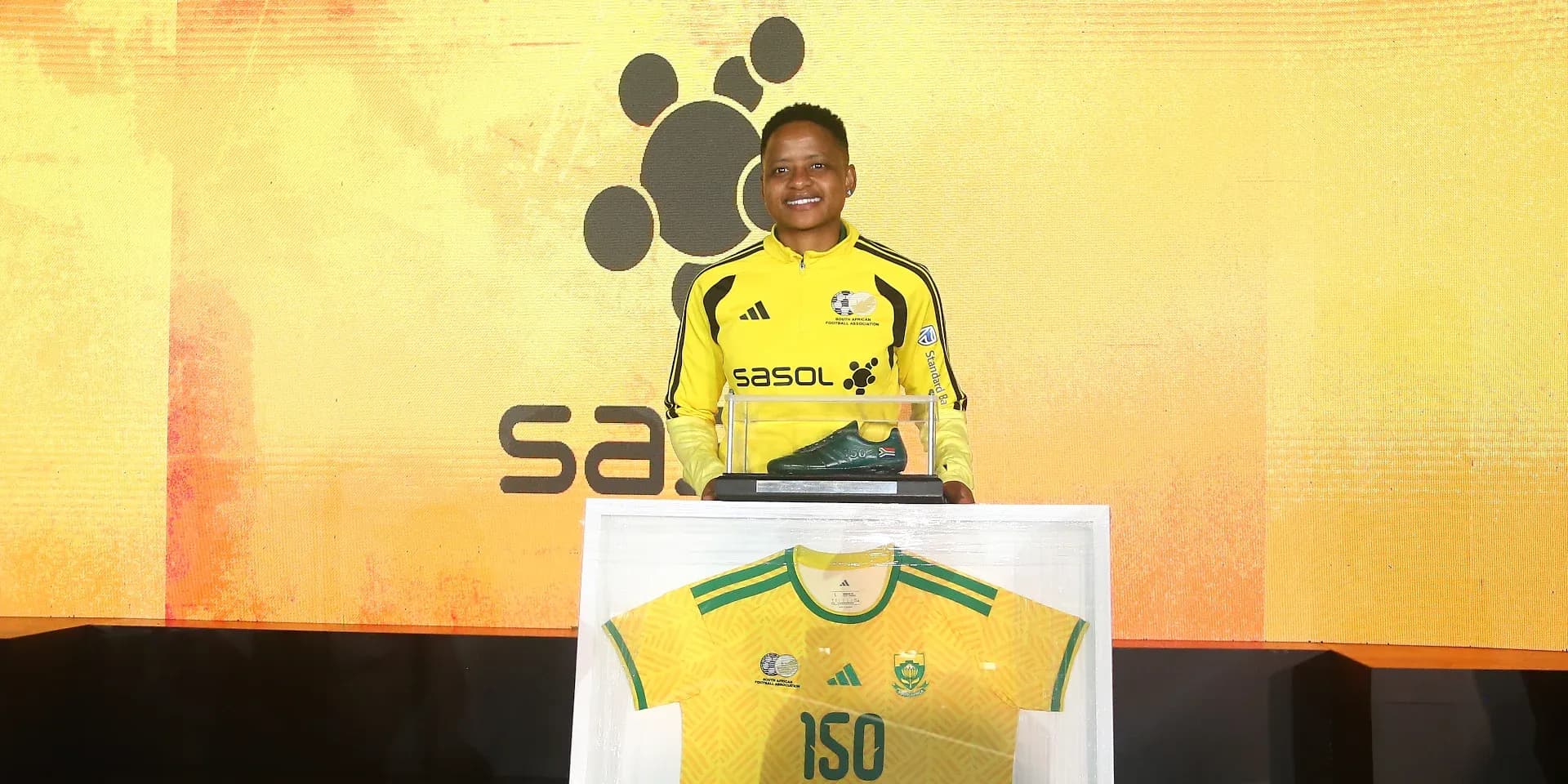
South Africa's WAFCON Title Defence Squad Named by Desiree Ellis
Desiree Ellis has nailed her colours to the mast. South Africa’s coach has gone with battle-hardened experience, World Cup know-how and a couple of striking personal comebacks in a 26-player squad tasked with defending the Women’s Africa Cup of Nations crown – and punching a ticket to Brazil 2027.
The tournament in Morocco, running from July 26 to August 16, is more than a continental showpiece. It is the gateway to the next FIFA Women’s World Cup, with the four WAFCON semi-finalists guaranteed a place on the global stage and two more nations handed a lifeline via intercontinental playoffs.
Ellis has responded by calling on the core of the group that has already lived this pressure.
Core of champions stays intact
Up front, Thembi Kgatlana leads the line again, the face of Banyana Banyana’s attacking ambition. Behind her, midfield metronomes Linda Motlhalo and captain Refiloe Jane return to steer the tempo, while the defensive spine remains reassuringly familiar: Lebohang Ramalepe and Bambanani Mbane anchor a backline that has been through the wars together.
Between the posts, Kaylin Swart and Andile Dlamini are back, joined by Kebotseng Moletsane, giving Ellis a trio of keepers who understand the demands of tournament football.
Then there is the player who has already written her name into South African football folklore: Hildah Magaia. Currently unattached at club level, she still forces her way into the squad on the strength of what she has done when it matters most. Her two goals in the 2022 final against Morocco delivered South Africa’s first and only continental title. That kind of pedigree is impossible to ignore.
A remarkable reunion
The most striking subplot, though, belongs to the Moodaly-Salgado family.
Robyn Moodaly-Salgado, who had previously stepped away from the game, returns to the national team and will share a dressing room – and a dream – with her spouse, Gabriela Moodaly-Salgado. Gabriela’s presence is a story of resilience in itself. She suffered a horrific broken leg at the last WAFCON, the kind of injury that can end careers and test resolve. Now she is back in a squad built to chase another title.
Around them, Ellis has blended stalwarts with emerging talent: a strong Mamelodi Sundowns FC contingent across the backline and midfield, the university pipeline of The University of the Western Cape FC and University of Fort Hare FC, and overseas-based craft from FC Nordjaelland in Denmark, Glasgow City in Scotland and Club Tijuana and Tigers UANL in Mexico.
Jane: “We know what is at stake”
No one in this group needs a reminder of the stakes, least of all the captain.
Refiloe Jane, now fit again after an injury setback, was blunt about the task ahead. The last edition did not go to plan, and the players have not forgotten it. For them, WAFCON is not just about defending a trophy; it is about securing a place at the World Cup.
She underlined that qualifying for Brazil 2027 is the “main objective”, with everything else to follow. The delay to the tournament, she admitted, has been a quiet blessing. When WAFCON was pushed back, many players were still in the off-season. Now, with domestic leagues up and running, they arrive with minutes in their legs and rhythm in their play. Jane herself has used that time to regain full fitness and re-establish her club form, and she enters camp intent on starting “on a high note” and building from there.
Filling a giant’s void
There is, however, a hole that no tactical tweak can fully fix.
Jermaine Seoposenwe’s retirement has left a sizeable gap in the heart of this side. Jane spoke openly about the absence of a player whose influence stretched far beyond her position on the pitch. Seoposenwe was a reference point in the dressing room, a senior figure whose standards and personality shaped the environment.
When such a player walks away, a vacuum follows. Jane’s hope is that the younger members of the squad have absorbed enough from Seoposenwe’s example to carry those standards forward. The message is clear: there is no time for nostalgia. The group must move on with the players available, and they must do it quickly.
Route to Morocco’s knockouts
The path to the latter stages is set. South Africa have been drawn in Group B and will open their campaign against Tanzania in Casablanca on July 27. Four days later comes Ivory Coast, a different kind of test, before Burkina Faso on August 4 rounds off the pool phase.
Only the top two in each group will reach the quarterfinals. From there, the margins shrink and the pressure spikes. For Banyana Banyana, survival in Morocco is about more than staying in the tournament; it is about staying on course for the World Cup.
Jane has been clear: qualify first, then talk about titles. Yet this is a squad built to chase both. They arrive as defending champions, with scars from the last campaign, a veteran core, and a handful of players who have already changed the course of South African women’s football.
Now they must do it again, with the continent watching and a World Cup place on the line.
Related News
Ilia Topuria Accuses Justin Gaethje After UFC Defeat

Tyson Fury vs Anthony Joshua Fight Date and Venue Confirmed

Switzerland Calls Up In-Form Sion Striker Winsley Boteli for Nations League
Bournemouth Secures Historic 2-1 Win Over Real Sociedad in Spain
Portugal Announces Squad for 2026 UEFA Nations League; Cristiano Ronaldo Expected to Play

Raphinha Channels Ronaldo Nazario as Barcelona's Leading Striker After Position Change