
Socceroos Face USA in Tense Match at Golden Barley
The roar inside the Golden Barley had been deafening. Standing room only, pints in the air, boos raining down every time Mauricio Pochettino’s face flashed onto the big screen. The military flyover before kick-off copped it too, jeered with the kind of venom usually reserved for a dodgy VAR call.
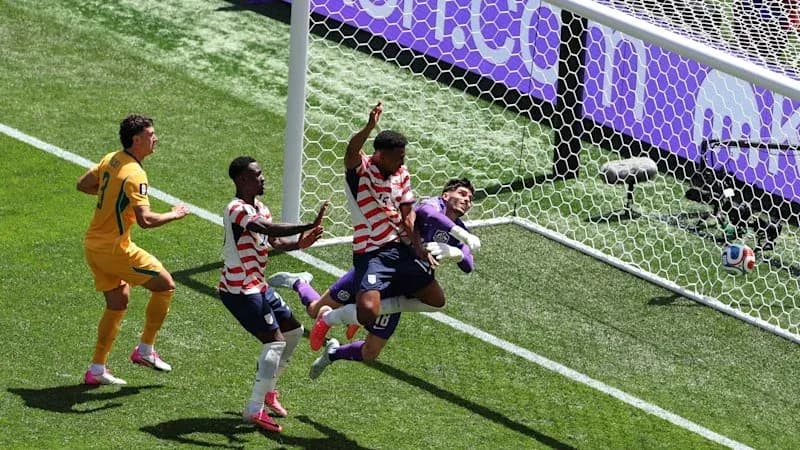
Then Cameron Burgess scored early for the USA.
Silence. The kind you feel in your chest. You could hear the clink of a glass at the back of the pub.
The mood in this little pocket of Sydney flipped in an instant. All that early swagger drained away as the Americans took control of the ball and, with it, the game. Every US passing move tightened the knot in local stomachs. When a contentious decision – “controversial” if you ask anyone in green and gold – paved the way for the USA’s second, the disbelief turned to fury.
One punter muttered he’d had enough and threatened to head home. He didn’t. Nobody did. Not yet.
Half-time arrived like a mercy bell. The bar filled again with movement and noise: more pints, more party pies, a dash for the bathrooms. The Socceroos were trailing, outplayed and outmuscled, but this crowd refused to surrender the night. There were still 45 minutes left. And there was still the name everyone in the room wanted to see on the screen: Nestory Irankunda.
“It’s not over yet,” came the shout from another fan, cutting through the chatter.
Wise words. The kind that keep people in their seats.
Heat, mistakes and a tactical bind
On the touchline and in the commentary box, the diagnosis was blunt. The Socceroos had been second best everywhere.
“Conceding so early wasn’t ideal,” assistant coach Paul Okon told SBS, summing up the first-half damage with a wry understatement.
The conditions weren’t helping. “It’s hot out there. We struggled a little bit in the heat,” he said. The Australians couldn’t get their defensive line high enough, couldn’t apply meaningful pressure on the ball, and every attempt to step up seemed to open more gaps for the USA to exploit.
“We’re not getting our line high enough to put pressure on the ball. But it’s difficult,” Okon admitted. The danger, he warned, was panic – abandoning structure, chasing shadows, getting picked apart.
“What we don’t want to do is fall out of our structure and start chasing the ball. We need to stay compact as much as possible and obviously try and have enough legs that once we get the ball we can hurt them.
“We’ll see some fresh legs in the second half, a bit of speed to hurt them once we have the ball.”
Fresh legs arrived right on cue. Last weekend’s scorers, Nestory Irankunda and Connor Metcalfe, came on, joined by Jason Geria. Toure, Velupillay and Burgess made way. Mathew Leckie shifted across to the left, Metcalfe sliding into the right-sided role.
It was a gamble Tony Popovic had to take. The Americans were superior physically, sharper mentally, cleaner technically. They were winning every 50-50, forcing Australian errors and feeding off them. From the stands to the screen, the verdict was brutal: USA looked superb, and the road back for the Socceroos looked brutally steep.
Attack, or fade quietly. There was no safe option.
Fed Square soaks, sings and waits
Across the country, in Melbourne’s Fed Square, the story had a different soundtrack but the same scoreboard.
Fans had queued from 2am, huddling through the small hours for a prime spot in front of the big screen. Persistent rain turned the famous square into a slick, shimmering bowl of plastic ponchos and dripping scarves. Nobody seemed to care.
Flares cut through the drizzle. A beach ball bobbed from hand to hand over a sea of green and gold. The party never really stopped, even as the USA tightened their grip on the match.
Mel, a veteran of two decades’ worth of Fed Square football vigils, turned up in a Socceroos jersey and a Donald Trump costume that made it look like he was being carried on Trump’s shoulders. It was ridiculous, loud and perfectly in tune with the occasion.
He didn’t blink when asked who would win. “Aussies of course.”
Not everyone had that long memory of late-night kick-offs and shared heartbreak. For Madison Cambora, this was the first time setting an alarm for the middle of the night to get into Fed Square. The result on the screen wasn’t what she’d hoped for, but the atmosphere made it worth the lost sleep.
“I hope they come back from this,” she said. “I’m hoping all good things, but it’s not looking good.”
She wasn’t alone. Around her, the realism was creeping in. The USA had been better in every department. Stronger in the duels. Cooler under pressure. Slicker with the ball. Australia were being forced into mistake after mistake, and every one of them seemed to fuel another American surge.
Yet nobody left.
Because everyone knew the same thing: if there was any spark left to light this contest, it probably wore the name Irankunda on its back.
The tactical picture was clear. Popovic’s side had to attack after the break. Sit back and they’d be smothered. Open up and they risked being torn apart on the counter. Either way, the USA would fancy it.
“At a minimum, Nestory Irankunda needs to start the second term to give them something to worry about,” came the assessment.
He did. The fresh legs arrived, the shape shifted, and the hope – stubborn, defiant, maybe irrational – flickered again in Sydney pubs and under the wet Melbourne sky.
For now, at least, the USA had nothing to worry about. The next 45 minutes would decide whether that stayed true, or whether this night of boos, rain and nerves would be remembered for something else entirely.
Related News
Raphinha’s Hat-Trick Powers Barcelona to 7-2 Victory Over Racing Santander
Carabao Cup Fourth Round Draw: Liverpool Set to Clash with Chelsea, Arsenal to Face Fleetwood Town
Key Football Matches to Watch in Azerbaijan This Autumn
Raphinha's Hat-Trick Drives Barcelona to 7-2 Triumph Over Racing Santander
Hansi Flick Leads Barcelona to Record-Breaking Seven Wins in a Row
Gavi Reflects on Injury Return as Barcelona Dominate Racing Santander 7-2