
Socceroos Rewrite Narrative After Historic Win
Mike Grella lit the match. The Socceroos poured on the petrol.
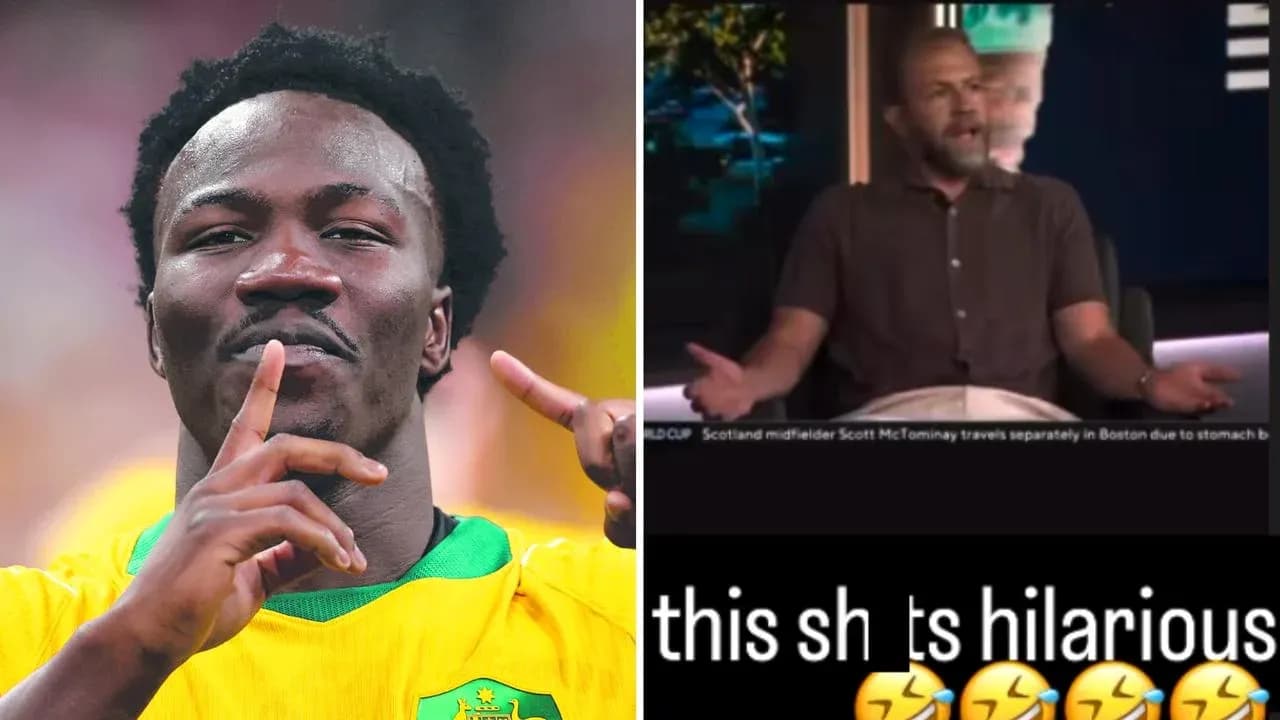
Days out from a clash that could shape the group, the former US international is once again the lightning rod, his now-infamous pre‑tournament spray about Australia ricocheting around the football world as Tony Popovic’s side turns quiet contempt into very loud points.
“They have no shot of doing anything at the World Cup,” Grella said on CBS Sports Golazo before a ball was kicked. “They are the weakest team in the group… There’s no shot Australia can compete with the US.”
That clip aged in dog years.
From punchline to problem
Australia’s 2-0 win over Turkiye in Vancouver did more than rip up the script. It rewrote how this team is viewed outside its own borders.
Nestory Irankunda’s blistering breakaway and Connor Metcalfe’s second-half rocket bookended a performance that was part siege, part street fight, and part coming‑out party. Behind them, Patrick Beach – a goalkeeper most Australians would have walked past on the street without a second glance – produced a World Cup debut that now sits in the nation’s sporting folklore.
The win, just Australia’s fifth ever at a men’s World Cup, silenced doubters and lit up timelines. It also dragged Grella’s words back into the spotlight.
Former AFL player Dan Gorringe re-posted the Golazo clip with a gleeful “we’re gona f*** you up”, a message Grella himself then shared with: “Yo this sh*t’s hilarious” and a “see you Friday” for good measure. The crying-laughing emojis did little to hide the fact that, right now, he is the face of American overconfidence.
His own colleagues can see it.
“Grella’s going to be hired as their motivational speaker at this point,” former US midfielder Benny Feilhaber joked on CBS Sports Golazo. “He willed them to three points yesterday.”
“Everybody keeps discounting Australia and that seems to be not the right thing to do,” added ex‑US defender Jimmy Conrad. “So, thanks Grella. We appreciate that.”
The banter is sharp. The subtext is sharper. The USA, co-hosts and self-anointed contenders, now walk into a 5am AEST showdown in Seattle knowing the team they dismissed as a “lay up” is suddenly a very awkward opponent with momentum and a grudge.
Irankunda ignites the world’s imagination
If Beach became a national hero overnight, Irankunda became a global story.
The Watford winger, already a rising name in the Championship, has exploded into the broader consciousness. His speed, his swagger, the ease with which he shredded Turkiye on the counter – all of it has captured imaginations far beyond Australia.
The BBC’s Chris McKenna framed it as the latest chapter in a remarkable journey, from refugee to World Cup star, noting that just a year ago Irankunda was learning from Harry Kane at Bayern Munich.
In the UK, The Sun splashed the Socceroos and Irankunda across its website with the headline: “Watford star born in refugee camp scores historic World Cup goal.” Football magazine FourFourTwo went more nostalgic, branding him “The new Michael Owen?” after spotting echoes of Owen’s iconic 1998 goal against Argentina in Irankunda’s breakaway strike.
On ITV, the Australian flavour in the coverage came from Ange Postecoglou, who knows both the shirt and the stage as well as anyone.
“It doesn’t matter what level of football you play at, in the park or World Cup, that is fantastic speed,” the former Socceroos and Tottenham manager said. “A massive moment. Sometimes in World Cups, you just need a good couple of weeks and your whole world can change. Let’s hope that is the start for him.”
For Irankunda, it might be. For Popovic’s team, it already feels like it is.
Popovic’s “street wise” Socceroos
Behind the viral clips and breathless commentary sits a more uncomfortable truth for Australia’s rivals: this wasn’t a fluke. Popovic’s side knew exactly who they were and played to it.
The Athletic’s senior football writer Simon Hughes, in Vancouver for the match, called it as he saw it.
“They were street wise,” he told CBS Sports Golazo. “Some of the darker arts in the game, they weren’t afraid to get involved in that side of it.”
In his post‑match column, Hughes urged readers to “never underestimate true Australian grit” and expanded on that theme on air.
“What really impressed me about them was they really understood what their limitations were and they got the maximum out of what they could do,” he said. “I think they deserved to win. The game isn’t always defined by who had the most shots and the most possession. Sometimes it can be quite misleading.
“I always felt like Australia had control of what was going on. Occasionally they needed the goalkeeper to step in and do his thing, but that’s what goalkeepers are there for. People forget this.”
He also pointed to something less tangible but just as real.
“I really felt in Vancouver yesterday that they really had the fans behind them. That’s a massive thing in World Cup football. A lot of nations’ fans turn up and want the team to do well, but Australia really, really believed they could effect this game and make an imprint on this tournament.
“I think they’re going to be quite difficult to stop. The US, if they underestimate them, might have a few problems.”
The numbers back up the shift. The Athletic’s projections now give Australia an 85 per cent chance of getting out of the group. For a team Grella didn’t recognise and wrote off as a formality, that is a sharp and awkward swing.
“Giants at the back” and lightning on the break
Scroll through social media and a pattern appears. Neutrals have adopted the Socceroos as their second team. The jokes fly – likening Australia’s deep block to Arsenal’s title‑winning pragmatism or labelling it “Haram Ball”, a tongue‑in‑cheek nod to ultra‑defensive, “anti‑football” tactics – but the respect is real.
Comedian and football obsessive Trevor Noah captured it neatly on the Men in Blazers podcast.
“Australia has giants at the back. You don’t just swing the ball in and hope for the best against Australia,” he said. “If there’s one thing the Socceroos know how to do, it’s compact their defence, make sure that nothing gets in. You score by keeping it on the floor against these boys and they didn’t pick that up.”
Then he turned to the other end of the pitch.
“And their new attack up top is completely different to what we’ve seen in years before from like the (Tim) Cahill and Harry Kewell days. This was fast. It was like a lightning quick counter-attack and can I tell you, that boy (Jordan) Bos, number five. Yo, yo, I want to see which team he’s (playing for next)... that man is silky on the ball!”
That blend – giants at the back, burners up top – has given Australia a clear identity. It is not romantic, but it is ruthless. And it travels.
A team that looks like its country
Off the pitch, the Socceroos are winning as many admirers as they are on it.
A pre‑tournament video, now recirculating in the wake of the Turkiye win, shows players sharing their backgrounds and explaining how this squad mirrors modern Australia. One line has stuck: “our diversity is our strength”.
It is not a slogan for them. It is the lived reality of a group featuring refugees, first‑generation Australians and kids who grew up a long way from the traditional football heartlands. It is also why their story is resonating across borders.
From Vancouver to Watford, from late‑night podcasts in the US to back pages in London, the Socceroos have shifted from afterthought to narrative driver in a matter of days.
And now comes the twist.
The team Mike Grella didn’t recognise, the side he said had “no shot of doing anything”, walks into Seattle with three points, global goodwill and a growing sense of menace. The USA, with all their Champions League names and home‑soil expectations, must decide whether those words stay as pre‑tournament bravado or become the quote that haunts their World Cup.
Related News
Raphinha’s Hat-Trick Powers Barcelona to 7-2 Victory Over Racing Santander
Carabao Cup Fourth Round Draw: Liverpool Set to Clash with Chelsea, Arsenal to Face Fleetwood Town
Key Football Matches to Watch in Azerbaijan This Autumn
Raphinha's Hat-Trick Drives Barcelona to 7-2 Triumph Over Racing Santander
Hansi Flick Leads Barcelona to Record-Breaking Seven Wins in a Row
Gavi Reflects on Injury Return as Barcelona Dominate Racing Santander 7-2