
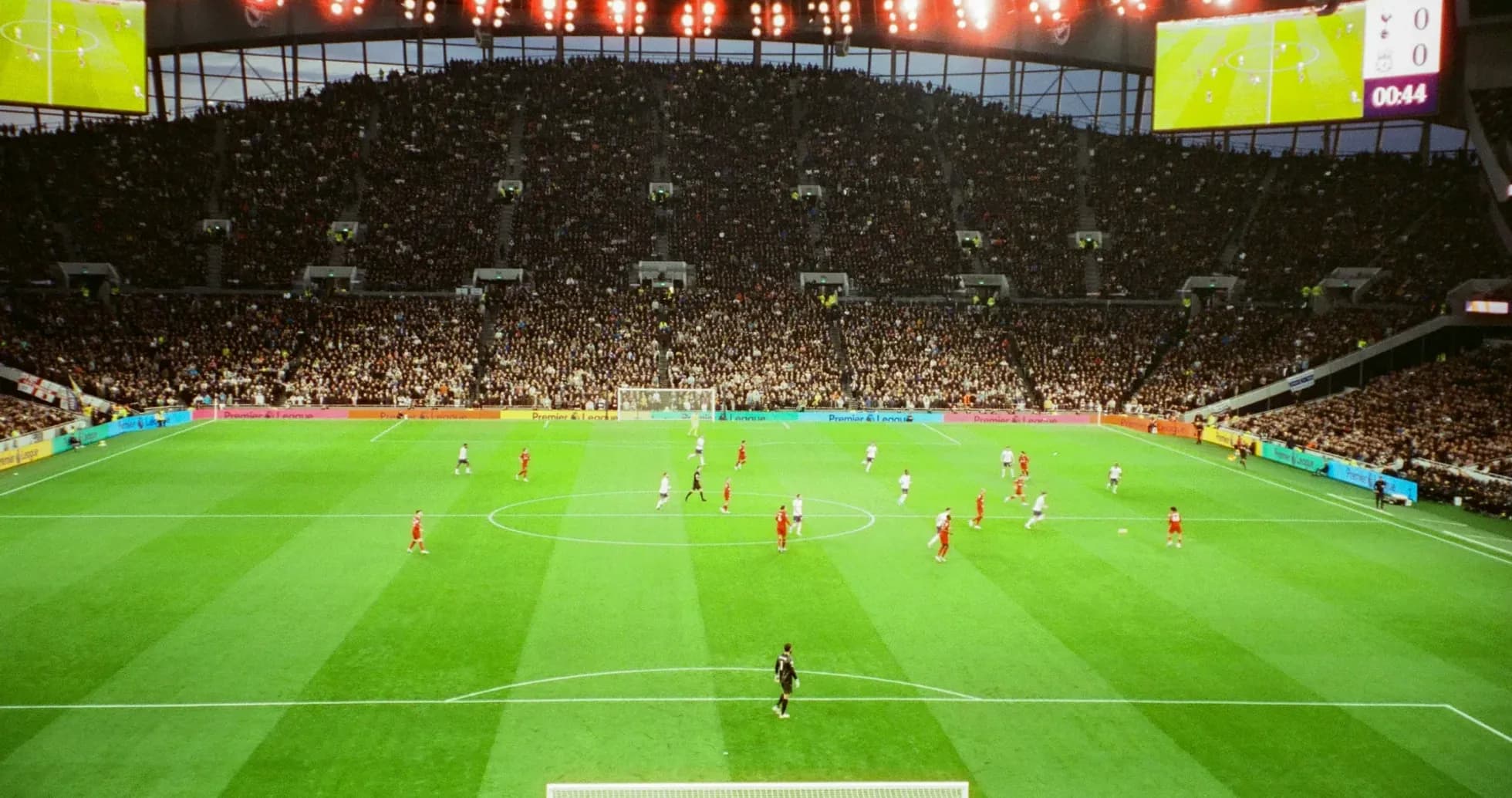
Sheriff Tiraspol Secures 1-0 Victory Over Aluminij in UEFA Europa League
Aluminij’s 0-1 home defeat to Sheriff Tiraspol at Ljudski vrt in the UEFA Europa League 1st Qualifying Round was defined far more by structure and game-state management than by volume of chances, with the visitors protecting an early lead and the hosts chasing from a tactically awkward position for most of the evening.
Sheriff’s 3-4-3 under Victor Mihailov established control almost immediately. The back three of B. Ciss, B. Fomba and Rai gave a stable rest-defence platform, allowing the wide midfielders V. Fratea and A. Pergjoni to advance aggressively and pin Aluminij’s wing‑backs. Central midfielders D. Forov and D. Klas acted as dual pivots: Forov more progressive, stepping into half-spaces, and Klas more screening, protecting the zone in front of the back line. Ahead of them, S. Kone and L. Jaures-Ulrich worked between the lines around central forward J. Asprilla Moreno, stretching Aluminij’s back three horizontally.
The decisive tactical moment came early. On 5 minutes, L. Jaures-Ulrich finished a move created by D. Forov, whose involvement underlined Sheriff’s plan to attack through a high, ball‑playing double pivot rather than pure wing play. That goal immediately forced a re-framing of the match: Sheriff could now sit in a compact mid-block 5-4-1/5-2-3 shape out of possession, with the wing‑backs dropping and the wide forwards tucking in, while looking to counter through Asprilla’s running and Kone’s ball-carrying.
Aluminij, set up by Jure Arsic in a 3-5-2, had a structurally solid base but struggled to convert it into penetration. The back three of R. Schaubach, M. Boben and D. Simunic were primarily occupied with rest-defence and first-phase build-up, while the nominal wing-back V. Tezak and left-sided outlet V. Koderman were often pinned back by Sheriff’s width. In central areas, the trio of M. Vrbanec, T. Jagic and E. Taylor faced a numerical equality against Sheriff’s central quartet, which made progression through the middle difficult once Sheriff dropped behind the ball.
The discipline pattern underlined how the tactical burden shifted onto Aluminij. All three of their yellow cards fell to midfielders or wide defenders: Matic Vrbanec, Vito Težak and Tomislav Jagić. That cluster in the middle and wide lanes reflects repeated defensive transitions and late pressures as they tried to recover possession after turnovers while chasing the game. Sheriff, by contrast, picked up only one caution, to Jayder Asprilla, consistent with a side that spent more time in a controlled block and countered selectively rather than pressing high in sustained fashion.
Without reliable data for shots, possession or passing, the clearest quantitative signal is discipline: Aluminij’s 3-1 yellow-card deficit and the absence of any red cards for either side. It suggests a match where the home side were forced into more risk and more duels in advanced zones, while Sheriff managed the tempo with fewer last-ditch interventions.
The substitution pattern deepened those tactical themes. Sheriff’s first change at 56 minutes, with V. Fratea (OUT) replaced by Sapata (IN), was a like-for-like rotation in the wide midfield/wing-back corridor, aimed at maintaining energy on the flank responsible for both defending Aluminij’s right side and offering an outlet on transitions. At 75 minutes, L. Jaures-Ulrich (OUT) made way for Ze Flores (IN), indicating a shift from an early-game vertical runner and scorer to a fresh wide forward tasked more with ball retention and counter-pressing as Sheriff defended their lead.
Mihailov’s final change, at 90+5 minutes, saw Rai (OUT) replaced by Mota (IN) in the back line, a classic late-game move to introduce fresh legs into the defensive unit for aerials, clearances and concentration in the closing moments.
Arsic’s changes were more aggressive and structurally disruptive, reflecting the need to chase the equaliser. At 65 minutes he executed a triple substitution: M. Bajraj (OUT) for B. Osuji (IN), M. Vrbanec (OUT) for P. Petrisko (IN), and V. Tezak (OUT) for H. Sorensen (IN). This sequence simultaneously refreshed the front line and rebalanced the midfield and wing-back zones. Bringing on Osuji added direct running and potentially more verticality between the lines, while Petrisko offered a different midfield profile to Vrbanec, likely with more forward thrust. Sorensen’s introduction for Tezak at wing-back suggested a desire for more physical presence and perhaps better delivery from wide areas.
Later, at 80 minutes, M. Boben (OUT) was replaced by A. Bloudek (IN), a move that likely shifted Aluminij towards a more attacking back line or even a back four, sacrificing a central defender for an extra forward presence. The final change at 87 minutes, E. Taylor (OUT) for S. Rogina (IN), further tilted the balance toward attacking profiles in central or half-space zones, signalling an all‑out push in the final minutes.
Goalkeeper evaluation is limited by the absence of explicit saves data, but structurally both keepers operated behind back threes. F. Raduha (Aluminij) was exposed early by Sheriff’s incisive start yet then played largely behind a side in possession more often as they chased the game, while E. Timbur (Sheriff Tiraspol) benefited from a compact block in front of him and a game-state that allowed Sheriff to protect the box and limit high-quality entries rather than face constant, clean one‑on‑ones.
Statistically, beyond the cards, the lack of recorded values for shots, possession, passes, xG and goals prevented forces the analysis to lean on structure and event timing. The single early goal, no further scoring events, and no red cards point to a contest where Sheriff’s game management after going ahead was effective: they neither over-committed in search of a second nor allowed Aluminij to turn pressure into chaotic, high-event football.
From a broader lens, Sheriff leave Ljudski vrt with a valuable 1-0 away win in the 1st Qualifying Round, having translated an assertive opening into a controlled, low‑event game. Aluminij, meanwhile, showed organisational competence in a 3-5-2 but lacked the final-third clarity and risk‑reward balance needed to break down a well-drilled 3-4-3 that was able to drop into a back five and manage the scoreboard from the fifth minute onward.
Related News

Celje vs Red Bull Salzburg Predicted Lineups and Team News

Anderlecht vs Red Bull Salzburg Predicted Lineups and Team News
NEC Nijmegen vs Benfica Predicted Lineups: Team News for UEFA Europa League
Plzen vs Benfica Predicted Lineups: Team News Ahead of UEFA Europa League
Benfica vs Lech Poznan Predicted Lineups and Team News

Benfica vs OFI: Predicted Lineups and Team News for UEFA Europa League