
Scotland’s No 1 and 13-Year-Old’s Morning in Boston
The Scotland squad woke up in downtown Boston today, but nobody bounced into the day quite like 13-year-old Daniel Nevin.
The teenager, who turns out for St Cadoc’s Youth Club in Glasgow, found himself within walking distance of his national team at their hotel. He didn’t waste it. Spotting Angus Gunn, Scotland’s first-choice goalkeeper, Daniel went over, said hello and walked away with a photo and a memory that will probably outlast this World Cup.
His father, Tommy, 55, watched on as his son met the man he usually only sees through a television screen. Daniel, a committed Scotland fan and an aspiring keeper himself, was “delighted” with the encounter and now has one simple wish for tonight’s game against Morocco: a clean sheet from the man he just met in the lobby.
For a boy from Glasgow, Boston suddenly feels very small.
Co-hosts flex their muscles
While Scotland’s day builds towards Morocco, the last 24 hours have belonged to the other co-hosts.
Canada finally arrived at their own World Cup with a statement. A 6-0 demolition of Qatar delivered their first win of the tournament and a jolt of belief for a side still learning how to carry the weight of expectation on home soil. Six goals, no reply, and a sense that the nerves of opening week have started to fall away.
Mexico then kept their perfect record intact. A tight, controlled 1-0 victory over South Korea preserved their 100 per cent start and underlined why they are being spoken about as serious contenders rather than just genial hosts. No chaos, no drama, just three more points.
Elsewhere, Switzerland brushed aside Bosnia-Herzegovina 4-1, showing a ruthless streak in front of goal, while Czech Republic and South Africa shared a 1-1 draw that leaves both with work to do in the group. The tournament is starting to take shape; some campaigns are rolling, others already feel precarious.
A World Cup still young, a World Cup already arguing
We are only days into this edition of the World Cup, yet the battle lines for 2030 are already being drawn.
Spain and Morocco, who will share hosting duties with Portugal in four years’ time, are locked in a dispute over who gets the biggest prize of all: the final. Both want it. Both believe they deserve it. According to The Times’ chief sports reporter Martyn Ziegler, the decision currently sits on a knife-edge, 50-50 between the two nations.
The row is a reminder of what this tournament has become — not just a football festival, but a geopolitical stage where prestige is measured in ceremonies and showpieces as much as in goals and trophies. The games of 2026 are still unfolding, yet the fight for the spotlight in 2030 has already begun.
Pochettino’s scars and a different USA
Mauricio Pochettino knows what a World Cup can take out of a player. In 2002, he went to the tournament with Argentina under Marcelo Bielsa, only to see a star-studded squad crash out in the group stage. The experience bit hard.
Back then, the Argentina camp lived under virtual lockdown, cut off from the outside world. It was intense, joyless, suffocating. Those memories have travelled with Pochettino into management and now, into this World Cup with the United States.
He has chosen a different route with the USA this summer. The mood is looser, the players more empowered, the environment less like a bunker and more like a base camp built for a long stay. The scars of 2002 have shaped his vision: same stage, new script.
The early signs suggest the players have bought in.
USA hit stride, Australia start strong
The United States announced themselves in style in their opener, a 4-1 win over Paraguay that crackled with energy from the first whistle.
They were three up by half-time, their attack tearing into space and their press snapping at Paraguayan heels. Folarin Balogun struck twice, a centre-forward playing with conviction and clarity. Paraguay briefly threatened a revival with a second-half goal, but Giovanni Reyna’s stoppage-time strike — precise, emphatic — slammed the door.
Co-hosts, yes. But also group leaders, and a team already playing with the swagger of a side that expects to be around deep into July.
Australia, meanwhile, have quietly made their own statement. A 2-0 victory over Turkey in Vancouver gave them a winning start to a World Cup for the first time since 2006. This is their sixth consecutive appearance at the tournament, but only twice have they reached the knockout stages. With three points already banked, Tony Popovic’s squad can see a path to making it a third.
It was controlled, efficient, and exactly the sort of opening result a coach dreams of: enough quality to encourage, enough flaws to keep focus sharp.
Pulisic on the clock
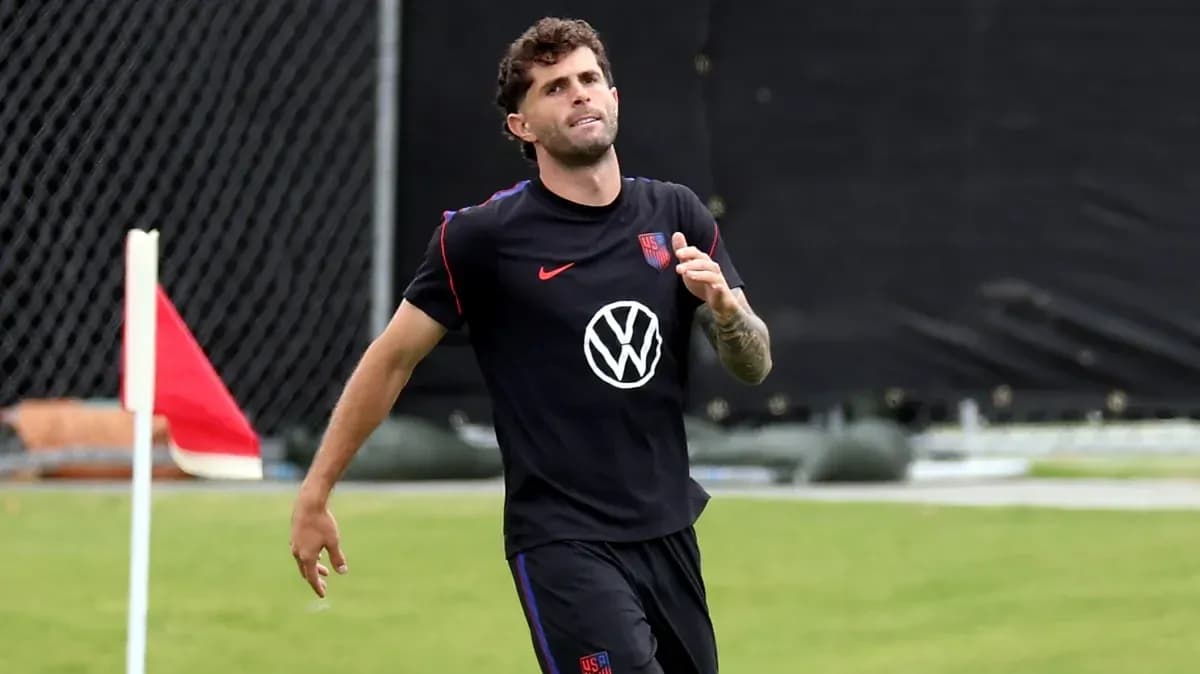
One cloud hangs over the USA’s bright start: Christian Pulisic’s calf.
The 27-year-old forward picked up the injury in the days leading into that win over Paraguay. He still impressed in the first half, knitting attacks together and drawing defenders out of position, but discomfort forced him off at the interval.
Now he faces a race against time to prove his fitness for tonight’s meeting with Australia. Without him, the United States lose their most established attacking reference point, the player who has carried this team’s hopes for much of the last decade. With him, Pochettino has a leader who can tilt tight games with one run, one pass, one moment.
The medical team will be busy. So will the calculators in Pochettino’s head, weighing risk against reward in a group that could still turn quickly.
USA vs Australia: group D’s early reckoning
All of that feeds into the first major showdown of day nine: USA against Australia in Seattle.
Both sides opened with wins. Both see themselves as more than just participants in this tournament. Tonight, they collide in a match that is likely to decide who tops group D and who faces the harder road through the knockouts.
Kick-off is at 8pm in Seattle, 12pm PDT, under lights that have seen their share of big nights. The home crowd will expect the USA to fly out again, to press, to run, to turn this into another statement. Australia will look to spoil the script, lean on their structure and experience, and punish any looseness in possession.
Around it all, the World Cup hums on: Canada resurgent, Mexico relentless, Scotland braced for Morocco, and a teenager from Glasgow still grinning at a hotel selfie with his country’s No 1.
The stakes are rising. The margins are shrinking. And for the co-hosts in Seattle, tonight already feels like knockout football in all but name.
Related News

Raphinha’s Hat-Trick Powers Barcelona to 7-2 Victory Over Racing Santander

Carabao Cup Fourth Round Draw: Liverpool Set to Clash with Chelsea, Arsenal to Face Fleetwood Town
Key Football Matches to Watch in Azerbaijan This Autumn
Raphinha's Hat-Trick Drives Barcelona to 7-2 Triumph Over Racing Santander
Hansi Flick Leads Barcelona to Record-Breaking Seven Wins in a Row
Gavi Reflects on Injury Return as Barcelona Dominate Racing Santander 7-2