
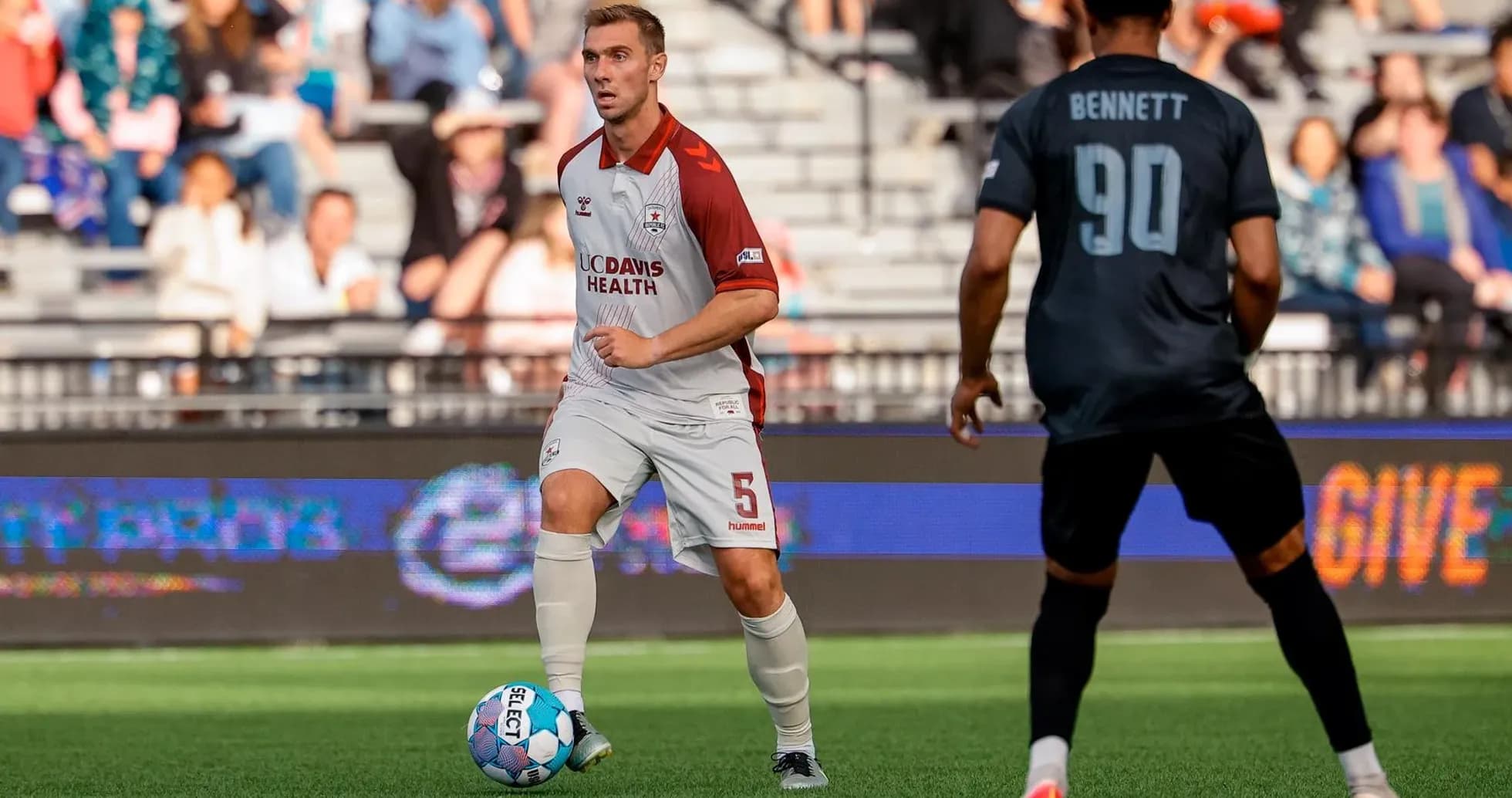
Sacramento Republic Edges Colorado Springs in USL Championship Clash
Under the lights at Weidner Field, this USL Championship Group Stage tie finished with the finest of margins: Colorado Springs 0–1 Sacramento Republic. Following this result, the table tells a clear story. Sacramento, already operating from a position of strength in 5th with 16 points and a goal difference of 2, reinforced their promotion-playoff credentials. Colorado Springs, 11th with 13 points and a goal difference of 0 heading into this game, were reminded again of the thin line between their free-scoring instincts and their structural frailties.
The two sides came in with contrasting seasonal identities. Colorado Springs had been one of the division’s more volatile outfits: in total this campaign they had scored 18 and conceded 18 across 11 matches, averaging 1.6 goals both for and against. At home they had been more expansive and effective, with 10 goals for and 7 against in 5 outings, an average of 2.0 scored and 1.4 conceded. Sacramento, by contrast, arrived as a controlled, defensively disciplined unit: overall 13 goals for and only 11 against in 11 games, with a total average of 1.2 scored and 1.0 conceded. On their travels they were more cautious still, with just 4 goals scored and 6 conceded across 6 away fixtures, averaging 0.7 for and 1.0 against.
That clash of philosophies was written into the lineups. Alan McCann’s Colorado Springs XI, with C. Shutler in goal, leaned on a spine of M. Mahoney and T. Maples at the back, S. Williams and A. Rocha in the middle, and the mobility of Y. Hanya and K. Bennett ahead of them. The bench – featuring the likes of A. Perez, J. Tejada and J. Fjeldberg – offered attacking change, but also hinted at a side still searching for a settled, ruthless front line.
On the other side, Neill Collins set Sacramento Republic up around the security of D. Vitiello in goal and a back line anchored by J. Timmer and L. Desmond, with full-back M. Benitez providing width. The midfield triangle of D. Crisostomo, M. Kaye and M. Rodriguez gave Sacramento a solid “engine room”, while T. Wolff and D. Wanner supported K. Edwards in attack. A deep bench – from A. Rodriguez to F. Ajago and C. Ukaegbu – underlined the squad’s flexibility to shift between control and counter.
Tactically, the match unfolded as a battle between Colorado Springs’ urge to open the game and Sacramento’s preference to compress it. Colorado’s season-long numbers at home – 2.0 goals for and 1.4 against on average – suggest a side comfortable in chaos, often willing to trade chances. Yet their clean sheet record told the other half of the story: in total this campaign they had managed just 1 clean sheet (0 at home), and had failed to score 3 times overall. The absence of a clearly dominant defensive phase meant that every Sacramento transition carried weight.
Sacramento arrived with a more balanced defensive platform. In total this campaign they had kept 4 clean sheets, split evenly between home and away (2 each). On their travels they had conceded only 6 goals in 6 games, a testament to their compactness and game management. That discipline framed the “Hunter vs Shield” matchup: Colorado’s attacking unit, which had produced 10 home goals in 5 games, ran into a Republic defence used to rationing chances and protecting Vitiello.
In midfield, the “engine room” confrontation was decisive. S. Williams and A. Rocha for Colorado Springs were tasked with progressing play and screening transitions, but they faced a Sacramento trio comfortable both with and without the ball. M. Kaye’s experience, D. Crisostomo’s positional intelligence and M. Rodriguez’s ability to link lines allowed Sacramento to dictate tempo in key phases, slowing the game when needed and accelerating through Wolff and Wanner when space appeared.
Discipline was another subtle but important undercurrent. Heading into this game, Colorado Springs’ yellow-card profile was spread relatively evenly, with a slight spike between 46–60 minutes (20.00%) and a notable late-game presence, as 15.00% of their yellows came in the 76–90 range and another 15.00% between 91–105. Sacramento’s card pattern was more volatile, with 29.03% of their yellows arriving just before half-time (31–45) and 25.81% in the 76–90 window. Those numbers sketched a match likely to grow more fractured as each half wore on, with Colorado at risk of losing control in transition and Sacramento flirting with late fouls as they protected leads.
The penalty data added an extra tactical layer. Colorado Springs had been awarded 5 penalties in total and converted all 5, with no misses. Sacramento, with 2 penalties and a 100.00% conversion rate, were equally reliable from the spot. In a game where margins were always likely to be thin, both sides knew that any box contact could tilt the balance decisively. That threat alone helped Sacramento keep their box compact, while Colorado’s need to probe centrally increased the traffic into a congested middle third.
From an Expected Goals lens, the pre-match trends pointed toward a low- to medium-xG contest edged by Sacramento’s structure. Colorado’s total averages of 1.6 scored and 1.6 conceded suggested they would generate chances but also offer some in return; Sacramento’s total 1.2 for and 1.0 against implied fewer but often higher-quality moments, especially in transition. The away side’s ability to keep games in the 1–0 or 1–1 band, combined with their superior clean-sheet record, made a narrow Sacramento win or a tight draw the most logical statistical prognosis.
Following this result, the narrative holds. Colorado Springs once again showed why they are one of the league’s most watchable but exasperating sides: capable of asserting themselves at home, yet still short of the defensive precision needed to turn performances into points. Sacramento Republic, meanwhile, confirmed their identity as a playoff-calibre unit – not explosive, but efficient, with a squad built to manage moments, protect leads, and quietly collect the kind of 1–0 victories that define a season.
Related News
San Antonio Triumphs Over Colorado Springs in USL Championship Clash
Charleston Battery's Dominance Over Loudoun United: A Tactical Analysis
Orange County SC Triumphs 4-2 Over Miami FC in USL Showdown
Colorado Springs vs San Antonio Match Preview
Colorado Springs vs San Antonio: USL Championship Clash Preview
Miami FC vs Orange County SC Match Preview