
Roshn League's World Cup Reflection: No Champions This Time
Two summers ago, the Saudi Roshn League could point at the television and say: those are our men.
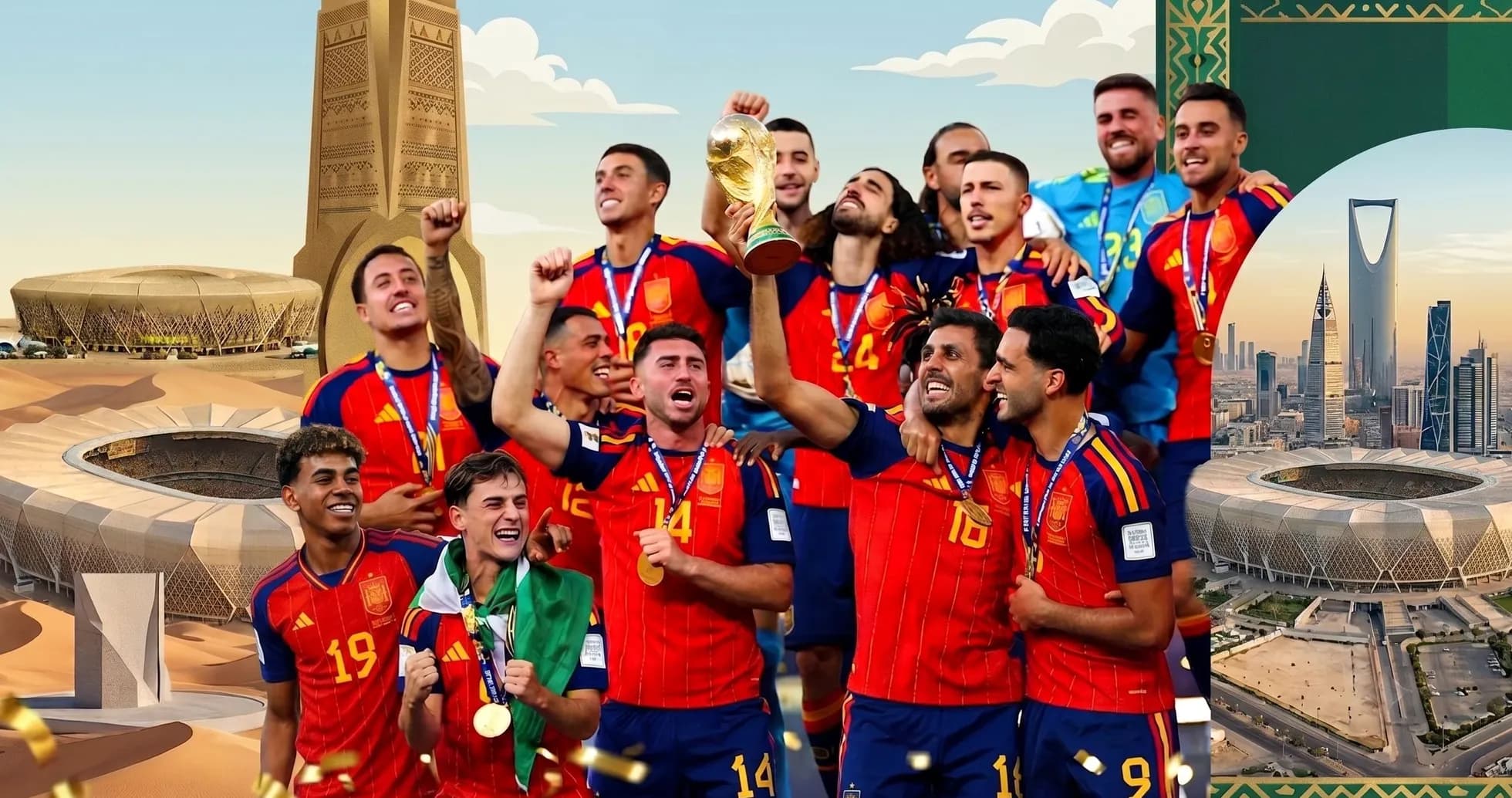
When Spain climbed back to the summit of Europe at Euro 2024, Nacho Fernandez and Aymeric Laporte were flying the flag for Al-Qadisiyah and Al-Nassr. The league basked in reflected glory as La Roja paraded the trophy.
This time, as Spain lift the 2026 World Cup, the mood is very different.
World champions, no Saudi shirts
Spain’s latest triumph has been built on familiar principles: tactical control, a back line drilled in discipline, and the nerve to settle a World Cup final against Argentina with a single, cold-blooded goal. Yet not one of Luis de la Fuente’s champions plays in the Roshn League.
The irony bites. The league has never had more Spanish talent on its books, but when the squad list dropped, none of those names were there. No Saudi-based player got to pull on that red shirt in the biggest game of all.
It could have been another story.
In recent seasons, several deals came close to changing that narrative. Had a handful of transfers not collapsed late in negotiations, Saudi clubs might now be boasting active world champions on their rosters. Instead, they are left with what-ifs and near-misses.
What they do have, though, is scale. Forty-nine Roshn League players went to the 2026 World Cup. That alone underlines the competition’s growing footprint. The final step – placing a current Saudi-based player on the podium as a world champion – still eludes them.
Laporte: the one that got away
No case stings quite like Aymeric Laporte.
The centre-back, once the defensive pillar at Al-Nassr, left Saudi Arabia only a season before he formed a formidable partnership with Pau Cubarsi and helped drive Spain to the title. From building out from the back in Riyadh to building a wall in front of the world, Laporte’s transformation came after he walked away from the Roshn League.
His time at Al-Nassr ended in acrimony. Under Italian coach Stefano Pioli, Laporte found himself sanctioned, training alone, and frozen out of the final matches of the season. He later described the atmosphere at the club as “difficult”, pointing to constant upheaval in management and the coaching staff.
Then he returned to Athletic Bilbao. Then he became a world champion.
For the Roshn League, that arc is painful. They had him. They lost him. Now he stands as one of the defining figures of a World Cup Spain will talk about for a generation.
And he is not the only one. Spain’s squad in North America was packed with players who, at one point or another, flickered across Saudi scouting reports or featured in transfer rumours, only for talks to stall or collapse. Every missed signing now carries an extra layer of regret.
No champions, but plenty of winners
The headline is brutal: Roshn League clubs did not land a single player from Spain’s World Cup-winning squad.
The reality is more nuanced. Saudi clubs still walked away from this tournament with tangible rewards – on the balance sheet and on the pitch.
FIFA’s club benefits programme, as detailed by French newspaper L’Equipe, paid 4,300 euros per day for every player at the World Cup, from 1 June to 19 July 2026. The total pot reached 305.3 million euros. For clubs across the Roshn League, that meant a steady financial drip every time one of their players stepped into a team hotel, onto a training pitch, or into a stadium tunnel.
No club in Saudi Arabia capitalised more than Al-Hilal.
Al-Hilal lead the way
Al-Hilal sent 12 players to the World Cup, more than any other Saudi side. That alone speaks volumes about their recruitment strategy and the weight of their squad.
Their full-back Theo Hernandez stayed with France all the way to the third-place match. Les Bleus missed out on bronze, but his extended run ensured Al-Hilal squeezed every possible day from FIFA’s compensation scheme while keeping one of their key men sharp in elite competition.
Behind them, Al-Ahli and Al-Nassr shared second place among Saudi clubs, each with nine players on World Cup duty. For Al-Ahli, the standout story came in attack.
Ivan Toney played his part in England’s charge to a bronze medal, helping to etch a new chapter into his national team’s tournament history. Every minute he logged, every involvement on the ball, fed back into Al-Ahli’s profile: a Saudi club whose striker had just helped carry England onto a World Cup podium.
Quinones lights it up for Al-Qadsiah
Then there is Al-Qadsiah.
They sent six players to the tournament, but one man carried their banner higher than anyone else. Mexican forward Julian Quinones lit up the group and knockout stages with a blend of power and precision that turned heads well beyond the Kingdom.
Five matches. Four goals. One decisive assist.
Those are not just respectable numbers; they are the kind of return that changes how a player is perceived, how a club is viewed, how a league is discussed in European boardrooms and South American dressing rooms.
Al-Qadsiah may not have a world champion in their ranks. They do, however, return home with a player who proved he can deliver on the biggest stage.
The next step
So the Roshn League stands at an intriguing crossroads.
It can point to 49 World Cup participants, to Al-Hilal’s dozen internationals, to Theo Hernandez’s deep run, to Ivan Toney’s bronze with England, to Julian Quinones’ four-goal showcase with Mexico. It can point to the millions flowing in from FIFA’s benefits programme.
What it cannot yet point to is a current player lifting the World Cup while contracted to a Saudi club.
That is the gap. The question now is simple: when the next global final kicks off, will the Roshn League still be watching its former stars take the glory, or will one of its own finally be standing on that podium in Saudi colours?
Related News
Ilia Topuria Accuses Justin Gaethje After UFC Defeat

Tyson Fury vs Anthony Joshua Fight Date and Venue Confirmed
Switzerland Calls Up In-Form Sion Striker Winsley Boteli for Nations League
Bournemouth Secures Historic 2-1 Win Over Real Sociedad in Spain
Portugal Announces Squad for 2026 UEFA Nations League; Cristiano Ronaldo Expected to Play
Raphinha Channels Ronaldo Nazario as Barcelona's Leading Striker After Position Change