
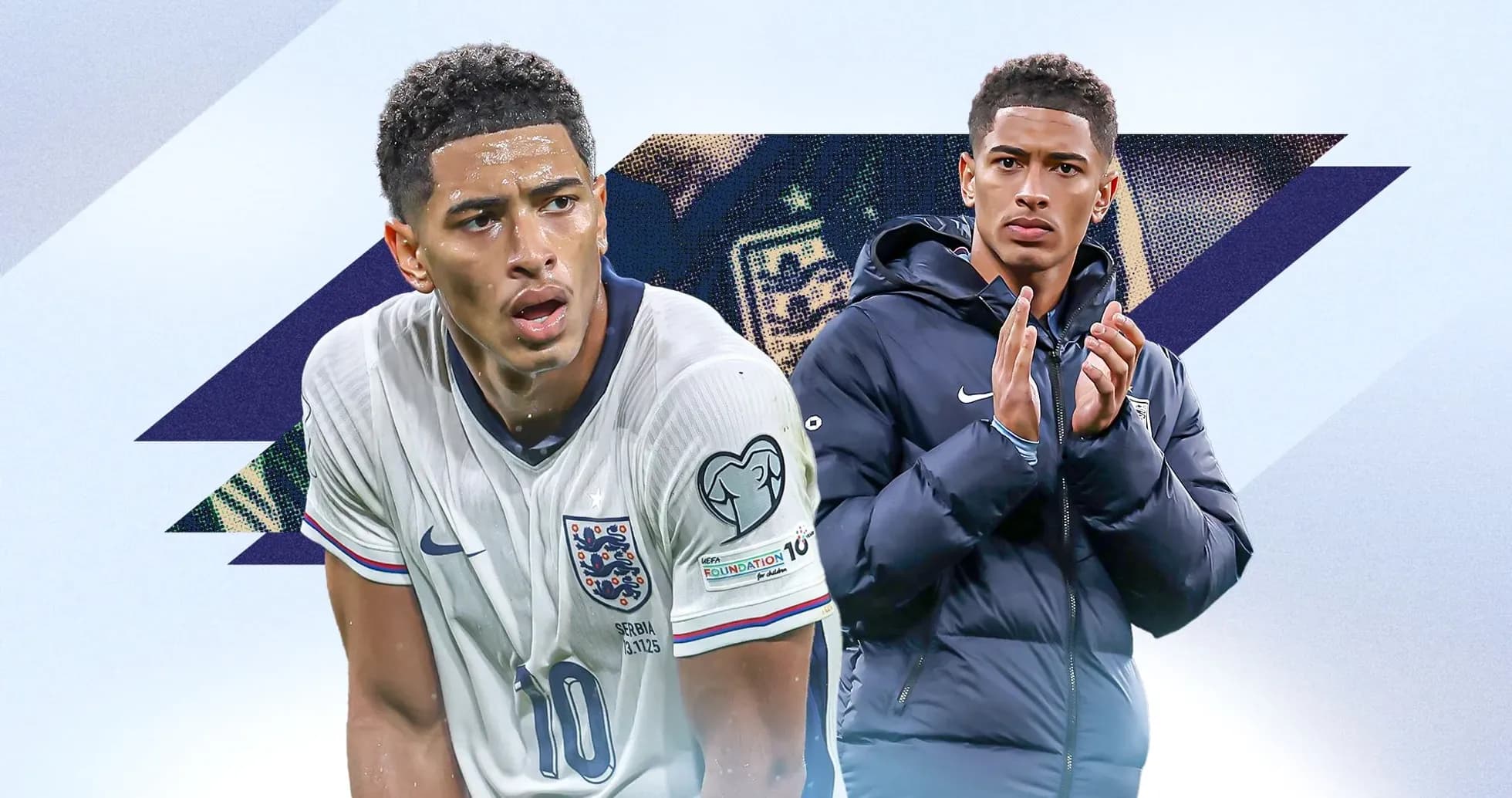
Rogers vs Bellingham: Tuchel's Tough Decision for England
Thomas Tuchel has not come to England to anoint favourites. He has come to pick a team.
Since the day he walked through the door, the message has been blunt: reputations don’t start, players do. And in the shadow of Jude Bellingham’s superstar aura, Morgan Rogers has quietly kicked that door wide open.
Rogers the riser, Bellingham the benchmark
While Bellingham has slipped in and out of camps, nursing injuries and recovering from surgery, Rogers has simply played. And kept playing well.
The Aston Villa midfielder has dragged his club form straight into the England setup, offering Tuchel something he values deeply – clarity of role. Rogers is an old-fashioned No.10 in a modern system, a pure creator who lives between the lines, who understands that his job is to knit attacks rather than headline them.
The goals haven’t flowed for him at international level yet, but the influence has. Tuchel has used qualifying to experiment, to shuffle pieces, to see who can really handle the responsibility of playing behind Harry Kane. Rogers has not blinked.
“Rather than finding the best players a position to just have them on the field, it's maybe better to put everyone in their best position and have a competition. At the moment, the competition is between the two of them,” Tuchel said back in November, laying out the battle between Rogers and Bellingham with typical precision.
That wasn’t a throwaway line. It was a warning shot.
On form alone, Rogers has every right to expect that shirt. For a year, in claret and blue and then in white, he has delivered the kind of consistent, intelligent performances managers trust in tournaments. If Bellingham wants that role in Dallas, he has to rip it back from him.
Fire, edge and an uneasy spotlight
The debate is not just about tactics. With Bellingham, it never is.
He has always played with a certain swagger, a visible edge. It’s part of what makes him so compelling. It’s also what drags him into trouble. The 3-1 defeat to Senegal last June remains the defining flashpoint: a VAR call goes against England, and Bellingham’s furious reaction is beamed into living rooms across the country.
Tuchel was asked about that anger on TalkSport after the game at the City Ground. He didn’t flinch.
“I think he brings an edge, which we welcome and which is needed if we want to achieve big things,” he said. “It needs to be channelled. The edge needs to be channelled toward the opponent, towards our goal and not to intimidate team-mates, or to be over aggressive to team-mates or referees.”
So far, so standard. Managers have been saying versions of that about combustible talents for decades.
Then came the line that has followed Tuchel ever since. The one about his mother.
“I see that it can create mixed emotions. I see this with my parents, with my mum that she sometimes cannot see the nice and well-educated and well-behaved guy that I see… If he smiles, he wins everyone, but sometimes you see the rage, the hunger and the fire, and it comes out in a way that can be a bit repulsive. For example, for my mother, when she sits in front of the TV, I see that, but in general we are very happy to have him, he's a special boy."
It was clumsy. Honest, perhaps, but clumsy. And it fed a narrative that has stalked Bellingham ever since: the idea that his personality, his manner, his refusal to shrink, somehow sits uncomfortably with parts of the audience watching him.
A relationship under the microscope
Bellingham did not pull on an England shirt again until November, his body still catching up after surgery. By the time he returned, his relationship with Tuchel had become a storyline in itself.
Tuchel benched him for the first game of that international break against Serbia. Statement made. Three days later, Bellingham was back in the XI against Albania, the obvious headline act again. Yet even that night ended with a flash of tension.
With six minutes left of England’s final qualifier, his number went up. As he trudged off, he appeared to gesture angrily, frustration written across his face.
Tuchel’s response was as sharp as it was short.
"That's the decision, and he has to accept the decision," he said. "His friend is waiting on the sideline, so you need to accept it, respect it, and keep on going."
No arm around the shoulder in public. No softening of the edges. The hierarchy was made clear: the manager chooses, the player obeys.
Outside that dressing room, the conversation took on a different tone. Former England striker Ian Wright stepped in, not to defend Bellingham’s every action, but to challenge the way some people talk about him.
“I don't think they're ready for a black superstar who can move like Jude is moving. They can't touch him," Wright said of sections of the English media and fanbase. "He goes out there, he performs, he does what he does. It's too uppity for these people.
“They all love N'Golo Kante. He's a humble Black man, gets on with what he's doing. Someone like Jude frightens these people because of his capability and the inspiration he can give. Because if you are outspoken, Black, and playing to that level and not caring, that frightens certain people. It's a tiring exercise to speak about.”
Those words cut to the heart of something much bigger than a selection debate. They also underlined why every flicker of emotion from Bellingham is picked apart in a way others rarely face.
Tuchel’s biggest call
Strip away the noise, and one thing remains obvious: a fully firing Bellingham still makes England a better team. He bends games to his will when he is at his sharpest. The problem is that those performances have not come as often in recent months.
So Tuchel stands at the edge of the World Cup with a choice that feels both simple and seismic.
Does he back one of the most gifted midfielders on the planet, knowing that the same fire that drives him can spill over? Or does he reward Rogers, the in-form craftsman with no tournament scars, and trust that his control and discipline will serve England better in the heat of a group opener?
Tuchel has tried to provoke Bellingham, to challenge him publicly and privately, to turn that edge into something even more ruthless. Instead, the storm around his comments, and the endless chatter about attitude, have drowned out the cold analysis of what Bellingham has actually produced on the pitch.
The No.10 shirt on his back this summer feels symbolic. It is not a guarantee. When England walk out against Croatia in Dallas, there is no certainty that the player wearing that number will be the one starting behind Kane.
What is certain is this: Jude Bellingham will dominate the World Cup conversation, whether he is on the pitch or off it. He will either drag England forward with match-winning performances or drag the spotlight back onto his temperament.
That coin is still spinning. Where it lands may define not just England’s tournament, but the way a generation sees its brightest talent.
Related News
Raphinha’s Hat-Trick Powers Barcelona to 7-2 Victory Over Racing Santander
Carabao Cup Fourth Round Draw: Liverpool Set to Clash with Chelsea, Arsenal to Face Fleetwood Town
Key Football Matches to Watch in Azerbaijan This Autumn
Raphinha's Hat-Trick Drives Barcelona to 7-2 Triumph Over Racing Santander
Hansi Flick Leads Barcelona to Record-Breaking Seven Wins in a Row
Gavi Reflects on Injury Return as Barcelona Dominate Racing Santander 7-2