
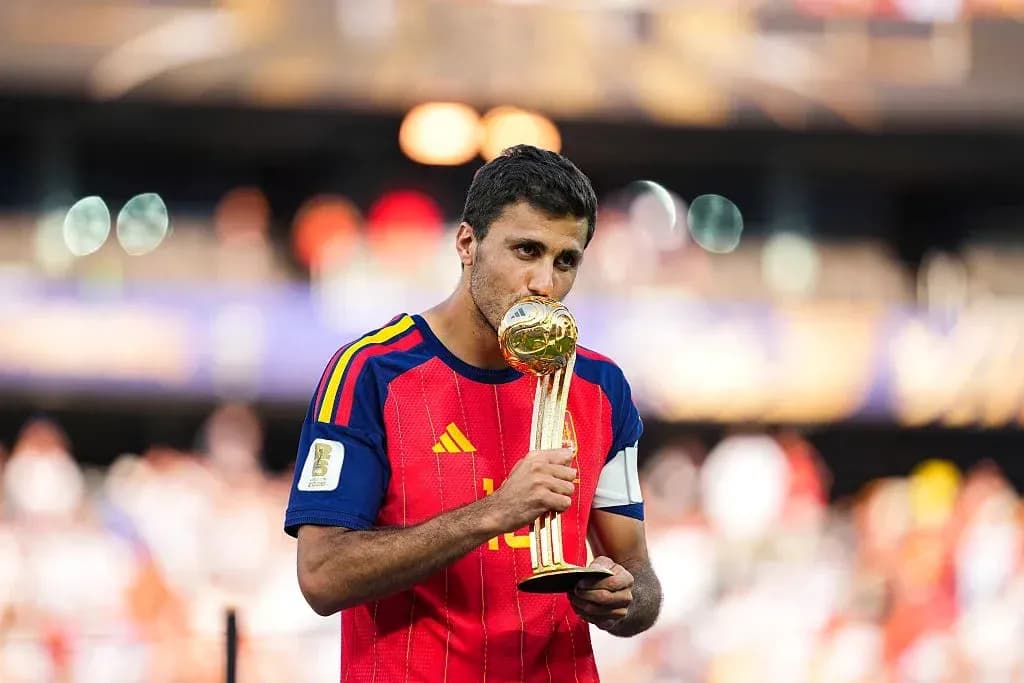
Rodri's World Cup Triumph: A Blueprint for Future Generations
Rodri stood on the podium with the World Cup trophy in his hands and the Golden Ball at his feet, but his mind was already somewhere else. Not on Argentina, not on the 1-0 extra-time win that had just crowned Spain champions of the world, but on the long, lonely months that made this moment possible.
A serious knee injury in September 2024 had threatened to rip the heart out of his career. Setbacks followed, each one a reminder of how fragile form and fitness can be at the elite level. For a while, the idea of dictating a World Cup final, let alone being named the tournament’s best player, felt distant.
Yet there he was, the midfield metronome at the centre of Spain’s triumph, asking the next generation to look not at the medals, but at the scars.
“We're a bit shocked right now, even myself,” he told Fox Sports in the aftermath. “I cannot express with words. I think now we're like in a cloud but, for me, it's been a very tough time.”
The contrast could not be sharper. On one side, the chaos and colour of a World Cup final, Spain edging past Argentina 1-0 in extra time to lift the trophy. On the other, the grind of rehab rooms, repeated scans, and the constant doubt that creeps in when the body refuses to respond.
Rodri chose to turn that doubt into a message.
“I just want the new generations to see my example as an opportunity. When you go down, you can rise again. This is my philosophy for my entire life.
“Of course, sometimes things go well, things go wrong, but always the positiveness.”
Spain needed that mindset against Argentina. A final of fine margins, decided by nerve, detail and the willingness to step into the fight rather than wait for it. Rodri made sure his teammates understood that before a ball was kicked.
“I said to the lads before the game, ‘we have to go for the game.’ We need to face them, we have to look to their eyes. We want this game.”
It was not just tactical instruction. It was a reflection of how he had lived the previous year. Face the problem. Don’t hide. Don’t wait. Go towards it.
“And then life gives you the World Cup or not,” he continued, “but we were brave and I was brave in that moment I was down, so I want to thank all the people that helped me.
“But I want to thank myself, to be honest, in those moments.”
That final line cut through the usual post-match noise. No false modesty, no attempt to airbrush the mental battle behind the physical recovery. Rodri did what many athletes rarely admit: he acknowledged the role of his own resilience.
For young players watching, the image is powerful. Not just Rodri the champion, lifting the trophy and the Golden Ball, but Rodri the survivor, who refused to let a damaged knee define his ceiling.
Spain’s title will live in the record books. His journey to the centre of that story might live longer in dressing rooms, academies and quiet rehab gyms, where the next wave of talent decides how it wants to respond when football, as it always does, knocks them down.
Related News
Ilia Topuria Accuses Justin Gaethje After UFC Defeat
Tyson Fury vs Anthony Joshua Fight Date and Venue Confirmed
Switzerland Calls Up In-Form Sion Striker Winsley Boteli for Nations League
Bournemouth Secures Historic 2-1 Win Over Real Sociedad in Spain
Portugal Announces Squad for 2026 UEFA Nations League; Cristiano Ronaldo Expected to Play
Raphinha Channels Ronaldo Nazario as Barcelona's Leading Striker After Position Change