
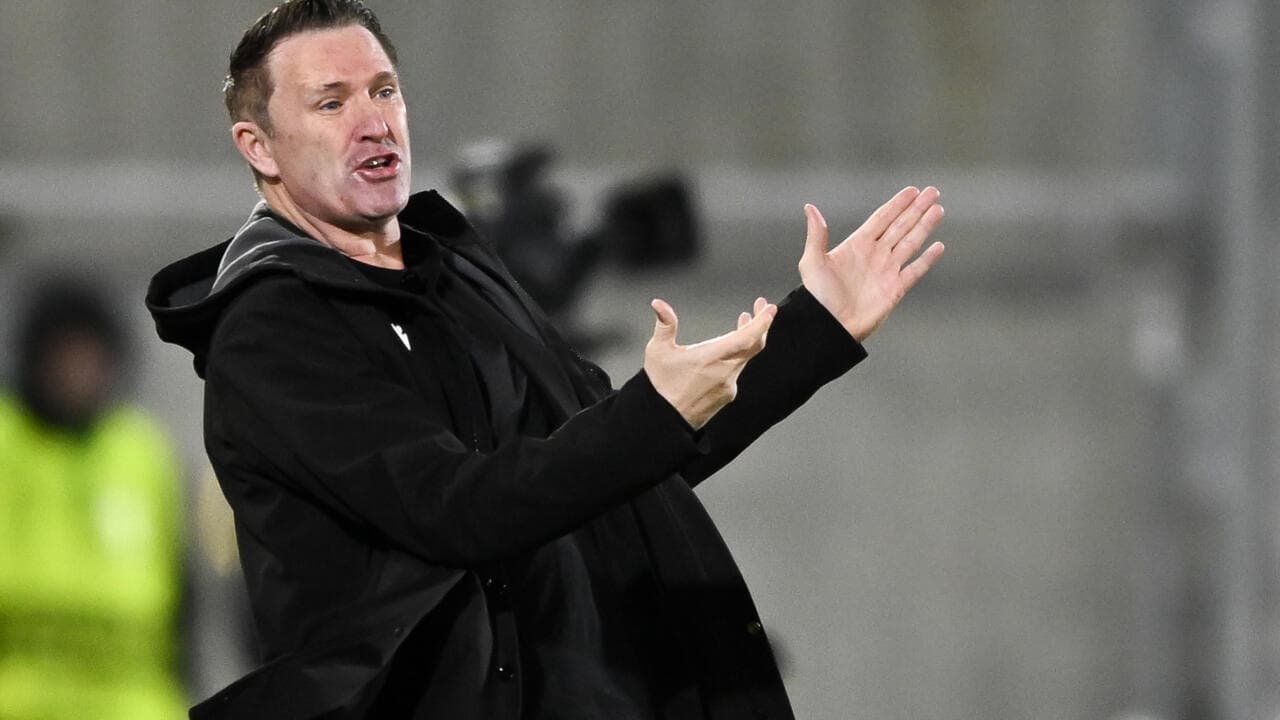
Robbie Keane's Potential Return to Celtic: A Controversial Saga
Robbie Keane’s path back to Celtic, once a romantic notion built on goals and nostalgia, has turned into one of the most politically charged managerial sagas the club has faced in years.
The former Republic of Ireland striker is the leading contender to take charge of the Scottish champions after reportedly entering talks with principal shareholder Dermot Desmond. On paper, it makes a kind of football sense: a high-profile name, a man who knows the club, a coach fresh from winning trophies abroad.
But this is not just about football.
From loan hero to lightning rod
Keane’s relationship with Celtic began in a very different climate. In 2010, he arrived on loan and did what Robbie Keane always did: score. He was prolific, embraced by supporters who revelled in the sight of Ireland’s record goalscorer in green and white.
That goodwill has eroded dramatically.
His decision to remain in Israel after the conflict in Gaza erupted drew sharp criticism in Ireland and, crucially, turned a vocal section of the Celtic support against him. While Keane stayed in charge of Maccabi Tel Aviv, Celtic Park became one of the most visible stages in European football for pro-Palestinian solidarity, with fans regularly displaying Palestinian flags during matches.
Those two realities have now collided.
Graffiti, banners and a hard line from the stands
Outside Celtic Park, the opposition has moved from online debate to physical protest. Graffiti and banners have appeared around the stadium in Glasgow, explicitly rejecting the prospect of Keane becoming manager.
A statement from a group calling itself “Celtic Fans for the Liberation of Palestine” described the potential appointment as “deeply divisive among the support”. The message has not come from a fringe corner of the fanbase. The “North Curve Celtic” account on X has published a list of 67 groups said to have endorsed the statement, underlining the breadth of organised resistance.
The wording leaves little room for ambiguity.
“Celtic supporters have a long and proud history of solidarity with the Palestinian people,” the statement reads. “For us, Robbie Keane’s decision to manage Maccabi Tel Aviv during the genocide in Gaza is impossible to ignore.
“To choose to manage a club in Israel while, less than 40 miles away, the same country was using indiscriminate weapons of mass murder against defenceless people is unconscionable.
“Celtic was founded by a community shaped by the legacy of genocide, displacement and famine. Our club’s roots lie in solidarity with those who suffered injustice and oppression.
“We urge the Celtic board to listen to supporters’ concerns and reconsider this appointment.”
For many inside the ground, this is not a debate about tactics or formations. It is about identity, history and the moral stance they expect their club to uphold.
Keane’s timeline in Israel
The context around Keane’s time in Israel is complex and fiercely emotive.
He was appointed by Maccabi Tel Aviv in June 2023, months before the Hamas-led attacks on October 7 and the subsequent Israeli bombardment of Gaza. Once the war began, the pressure around his position intensified, yet he chose to stay through the season.
On the pitch, his record was outstanding. The 45-year-old guided Maccabi to a league and cup double, the kind of success that would usually strengthen a manager’s candidacy for a job like Celtic’s. He resigned in 2024 and then moved on to Hungarian side Ferencvaros in 2025.
Keane has previously explained that his decision to remain at Maccabi was influenced by a sense of duty to the staff he had brought with him.
“I have a duty of care,” he said. “My analyst, for example, was at Middlesbrough for 12 years. For him to come with me to Israel and then for me to just walk away, leaving him and his family.”
That argument, grounded in loyalty to his backroom team, has not softened the stance of those Celtic supporters who see his presence in Israel during the conflict as fundamentally incompatible with the club’s values.
A board caught between success and principle
Inside the Celtic boardroom, the calculation is stark.
On one side stands a decorated former player with recent silverware on his CV, already in discussions with Dermot Desmond. On the other, a highly mobilised support that has made its position clear, invoking the club’s origins and its long-standing alignment with causes of social justice.
This is not a simple popularity contest. Celtic’s hierarchy must weigh the potential footballing benefits of appointing Keane against the risk of a deep rift with a significant section of the fanbase, including the vocal and visually influential North Curve.
The timing only sharpens the dilemma. Interim boss Martin O’Neill, 74, has just delivered the Scottish Premiership title on the final day of the season and added the Scottish Cup for good measure. The team is winning, the trophy cabinet is filling, and yet the club stands on the brink of a decision that could reshape the atmosphere around Celtic Park.
Does the board push ahead with a candidate whose very arrival would be greeted by protests outside the stadium? Or does it step back, absorb the message from the stands and look elsewhere?
For a club that prides itself on its roots and its resonance beyond the pitch, the answer will say as much about what Celtic wants to be as it will about who leads the team next.
Related News

Raphinha’s Hat-Trick Powers Barcelona to 7-2 Victory Over Racing Santander
Carabao Cup Fourth Round Draw: Liverpool Set to Clash with Chelsea, Arsenal to Face Fleetwood Town
Key Football Matches to Watch in Azerbaijan This Autumn
Raphinha's Hat-Trick Drives Barcelona to 7-2 Triumph Over Racing Santander
Hansi Flick Leads Barcelona to Record-Breaking Seven Wins in a Row
Gavi Reflects on Injury Return as Barcelona Dominate Racing Santander 7-2