
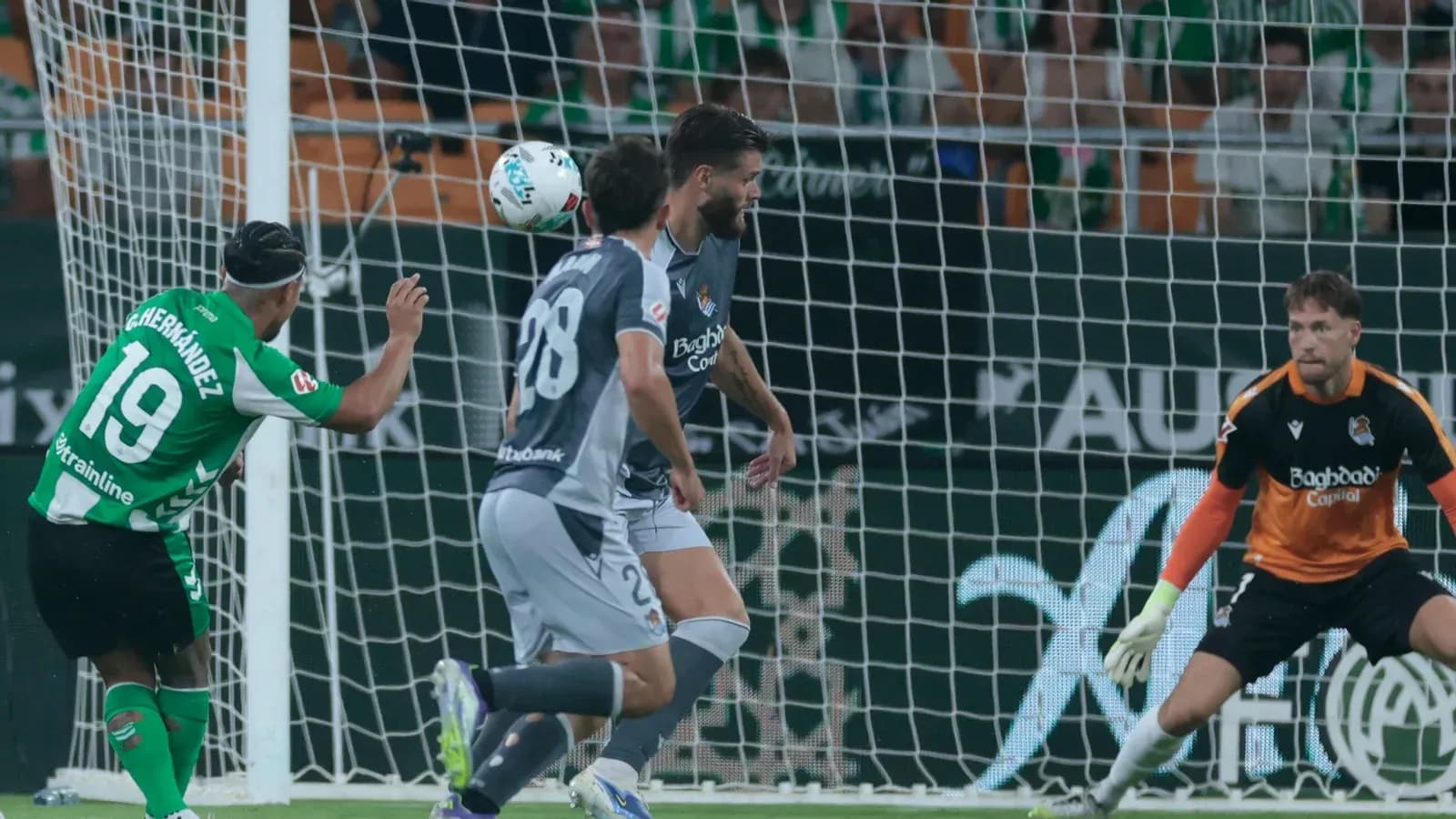
Real Sociedad vs Real Betis: Tactical Insights from a 2-2 Draw
At the Reale Arena, under the eye of Alejandro Muñiz Ruiz, Real Sociedad and Real Betis played out a 2-2 draw that felt like a distilled version of their 2025 La Liga campaigns. Heading into this game, Real Sociedad sat 8th on 44 points, with a goal difference of -1 (54 scored, 55 conceded overall). Real Betis arrived in San Sebastián in 5th, on 54 points and a goal difference of 11 (54 scored, 43 conceded overall), firmly tracking a Champions League push.
The match itself mirrored the table: Betis the slightly more polished, structured side, Sociedad the volatile, emotional one. Betis led 1-0 at half-time and were twice in control, but the hosts, true to a season defined by swings of momentum, clawed their way back to 2-2 by full time.
Sociedad’s season-long profile is that of a high-variance Europa-chaser. Overall they average 1.5 goals for and 1.6 against, and at home they are even more extreme: 1.9 goals scored and 1.5 conceded per game. Betis, by contrast, are the more balanced machine: overall 1.5 goals for and 1.2 against, with away figures of 1.3 scored and 1.4 conceded. This clash of profiles – the open, attacking home side against the compact, technically sharp visitor – played out exactly as the numbers suggested.
Tactical Voids – Suspensions, Injuries and Discipline
Both coaches had to rewire key sectors of their squads. For Real Sociedad, the absence list was brutal in defensive and wide zones: J. Aramburu (suspended for yellow cards), G. Guedes (toe injury), J. Karrikaburu (ankle), A. Odriozola and I. Ruperez (both knee injuries), plus I. Zubeldia (muscle injury). That stripped Pellegrino Matarazzo of his first-choice right-back in Aramburu, a high-volume tackler with 96 tackles and 9 blocked shots this season, and removed rotation depth in both full-back and attacking roles.
For Betis, Manuel Pellegrini was without M. Bartra (heel injury) and A. Ortiz (hamstring). Bartra’s absence particularly mattered: his experience and aerial presence are usually central to Betis’ ability to defend their box when they drop into a low block, especially away from home.
The disciplinary backdrop framed the risk levels. Sociedad are card-prone: their yellow cards peak between 46-60 minutes at 21.62% and again in the 76-90 window at 17.57%. Betis, meanwhile, are notorious late-card collectors, with 24.64% of their yellow cards and all their red cards (100.00% of reds) coming from 91-105 minutes. Antony, who started on the right of the Betis three behind the striker, embodies that edge: 5 yellows and 1 red this season, a winger who lives on the line between provocation and punishment.
Key Matchups – Hunter vs Shield, Engine Room Battles
The “Hunter vs Shield” narrative was written around Mikel Oyarzabal and the Betis back line. Oyarzabal came into the fixture as one of La Liga’s elite forwards this season: 15 total goals and 3 assists, with 61 shots and 36 on target. He is not just a finisher; his 40 key passes and 7 penalties scored (with 0 missed) show a complete attacking leader.
Betis’ shield has been robust this campaign, conceding only 43 goals overall, with an away average of 1.4 goals against per game. Without Bartra, though, the responsibility fell heavily on D. Llorente and V. Gomez in central defence, and on A. Valles in goal. Their task was not just to track Oyarzabal’s movements between the lines in Sociedad’s 4-4-2, but to deal with the secondary runs of O. Oskarsson and the wide threats of T. Kubo and A. Barrenetxea.
On the other side, Betis’ own “Hunter” was Cucho Hernandez, backed by a creative battery that is among the most productive in the league. Cucho arrived with 10 total goals and 3 assists, supported by A. Ezzalzouli (9 goals, 8 assists) and Antony (8 goals, 6 assists). Ezzalzouli, in particular, is a complete modern attacker: 731 passes at 79% accuracy, 28 key passes, 80 dribbles attempted with 38 successful, and a massive 345 duels contested, winning 179. His ability to carry Betis up the pitch and attack isolated full-backs was central to Pellegrini’s plan.
The “Engine Room” duel revolved around C. Soler and J. Gorrotxategi for Sociedad against M. Roca and S. Altimira for Betis. Roca, with his positional discipline and distribution, is the metronome, while Altimira provides legs and coverage. Their job was to prevent Kubo from receiving on the half-turn and to stop Oyarzabal from finding pockets between the lines. Conversely, Soler’s task was to connect Sociedad’s double pivot to the front two, and to track the late arrivals of Pablo Fornals, who has 7 goals and 5 assists with 82 key passes and 86% passing accuracy – one of La Liga’s most efficient creative midfielders.
Statistical Prognosis – A Draw Written in the Numbers
Following this result, the statistical story remains consistent. Sociedad’s overall goal difference of -1 (54 for, 55 against) encapsulates a side that scores freely but always leaves the door open. Betis, with a goal difference of 11 (54 for, 43 against), continue to project as a Champions League-level outfit built on structure and efficiency.
From an xG-style perspective, the profiles suggest parity. Sociedad’s home attacking average of 1.9 goals against Betis’ away defensive average of 1.4 points towards a narrow home edge in chances created. Betis’ away attacking average of 1.3 goals against Sociedad’s home defensive average of 1.5 implies that the visitors were always likely to find space on transitions and set plays.
Discipline tilted the risk towards chaos: Sociedad’s tendency to collect cards in the 46-60 and 76-90 windows intersects dangerously with Betis’ late-game aggression, where 24.64% of their yellows and all of their reds arrive from 76 minutes onward and into added time. Yet both sides managed to finish this particular evening without the kind of meltdown that has occasionally scarred their campaigns.
In the end, 2-2 at the Reale Arena feels like the logical outcome of two clearly defined footballing identities: Real Sociedad, the high-variance home side chasing Europa League dreams; Real Betis, the more controlled, creative unit with Champions League ambitions. The squads, shaped by absences and driven by their attacking stars, delivered exactly the kind of open, tactically rich contest their season-long numbers had promised.
Related News

LaLiga 2026-27 Season Schedule Released: Kickoff on August 15, Clásico on October 25

Atletico Madrid vs Real Madrid: Head-to-head Stats and Past Meetings
Real Madrid Dominates Rayo Vallecano in La Liga Clash
Atletico Madrid Dominates Real Sociedad 3-0 at Reale Arena

Barcelona Dominates Levante in High-Scoring Clash

Sevilla vs Barcelona Stats: Head-to-Head Record and Past Meetings