
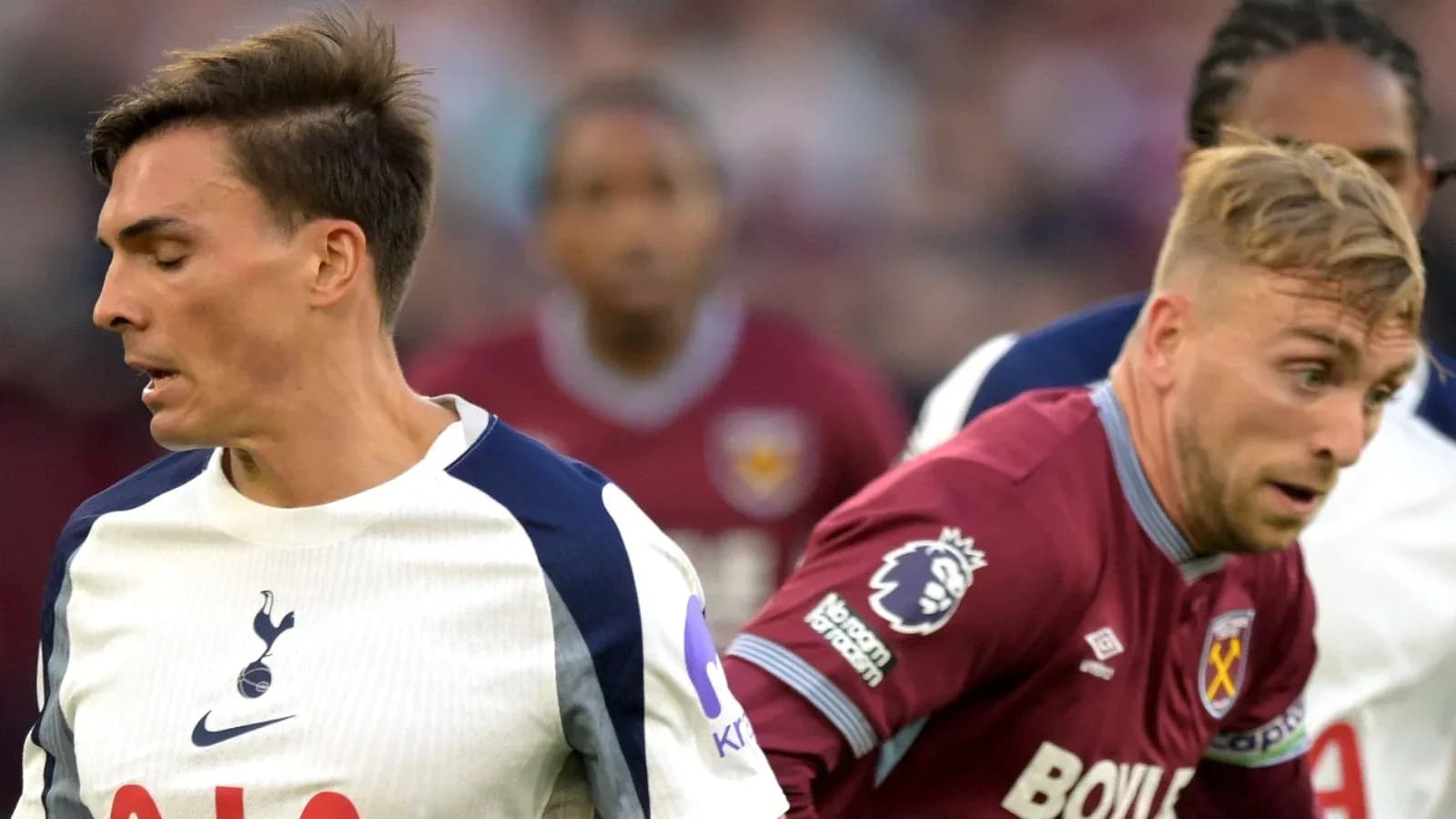
Tottenham Faces Relegation Threat on Final Day of Premier League
Final day. Ten games. One table twitching in real time. No title race, no grand coronation, but still that familiar end-of-season crackle: radios on, phones out, eyes everywhere at once.
What we do have is something rawer. Tottenham, of all clubs, trying to avoid the kind of punchline that would live forever.
Game to watch: Tottenham v Everton
James Maddison called it “embarrassing”. He wasn’t wrong. Tottenham Hotspur, a Champions League regular not so long ago, walk into the final day of the Premier League season in genuine relegation danger.
The numbers are cruel in their simplicity. Spurs sit on the same points total that gave them 17th place last season. Back then they were safe with weeks to spare because three clubs had disappeared over the horizon at the bottom. This time there are only two lost causes. The trapdoor is open.
Last year they could at least point to the Europa League as a distraction once a three-game winning run in February had calmed the nerves. The mitigation was overstated, but it existed. This time the excuses are thinner. Yes, the injury list has again been catastrophic. But that, in itself, is an indictment. Spurs already knew in January that their squad was shredded and still chose to sit on their hands, terrified of being accused of panic.
How’s that caution looking now?
The January window remains the defining misstep. Spurs did something uncharacteristic and, on the face of it, smart: they sold Brennan Johnson for good money. Nothing he produced in a Spurs shirt, nor since at Crystal Palace, suggests that was an error. The problem came next. Within a game, Mohammad Kudus suffered a serious injury and has not returned since. With three weeks of the window still to run, Spurs watched both go down and still failed to properly replace either.
If Sunday ends in disaster, that inaction will sit at the heart of every post-mortem. And even if they survive, it will be hard to argue that Chief Executive Vinai Venkatesham or sporting director Johan Lange should emerge unscathed from a season that has lurched between drift and outright negligence.
Roberto De Zerbi has at least given this team some structure and bite. The improvement is visible. The ceiling, though, remains low because the forward line is so thin and so blunt. Once again he is expected to send out a front three of Richarlison, Mathys Tel and the desperately out-of-sorts Randal Kolo Muani, then pray that a half-fit Maddison can change the game when he appears after the hour.
Maddison’s recent cameos against Leeds and Chelsea have been damning in two directions. They show exactly what Spurs have missed while he has been out, but they also expose how little the rest of the attack offers. In the 20 minutes or so he has managed in each game, Tottenham have looked sharper, more inventive, more dangerous – even though Maddison himself is miles off full fitness and rhythm.
The equation is simple. A point guarantees safety, unless West Ham beat Leeds by twelve, which would be a level of cosmic Spursiness even the most fatalistic supporter would struggle to take seriously. On paper, Everton are the right opponent: a side that has run out of legs and ideas, without a win since early March, their own hopes of European football at the Hill-Dickinson next season all but gone.
On paper, though, is rarely where Spurs live.
This is a side with confidence so brittle it may as well be glass. Under De Zerbi, they have folded quickly once punched in the mouth. They were fine at Sunderland and Chelsea until they conceded, then visibly shrank. Against Leeds at the Tottenham Hotspur Stadium, they went from cruise control to rattled and second best the moment the visitors equalised.
So the first goal here feels enormous. Tottenham need it. Not just to settle themselves, but to avoid the stadium turning into a live experiment in mass anxiety. You can already hear the sound if word of a West Ham goal drifts in from London Stadium. You can already see the players’ shoulders tightening, the simple passes going astray, the old doubts rushing back.
There are nine possible combinations of results between Spurs v Everton and West Ham v Leeds. Eight of them keep Tottenham up. This is the club, though, that has turned self-sabotage into an art form. You can’t quite shake the thought that there might be one last catastrophe left, something so on-brand it almost feels scripted.
If they lose – and they absolutely could – the whole thing swings east.
Team to watch: West Ham
West Ham United arrive on the final day with hope, but not control. Their fate depends on events elsewhere, and they face a Leeds side that, on current form, looks a far tougher assignment than Everton.
This, at least, is an upgrade on where they were after that miserable capitulation at Newcastle. They needed a miracle just to reach this point. They’ve got one: a sliver of opportunity.
The problem is that Leeds do not look like a team inclined to oblige anyone. They had nothing tangible to play for last weekend either and still rolled over a Brighton team fighting for their season. Eight games unbeaten tells its own story. This is not a group that strolls into flip-flops and sunglasses at the first whiff of summer.
West Ham have lost three in a row, each defeat worse than the last in its own way. On normal terms, you’d barely make a case for them here. But the final day does strange things. If they can summon the all-or-nothing performance they so conspicuously failed to produce at St James’ Park, the door is open a crack.
The plan writes itself. Strike first. Score early. Force Tottenham to feel every second of their own game. In a stadium already twitchy, the roar that would greet a West Ham goal against Leeds could do half the Hammers’ work for them.
It’s long odds. But if West Ham take care of their own business, the cards can still fall their way.
Manager to watch: Pep Guardiola
Elsewhere, there is a different kind of farewell. Pep Guardiola steps onto a Premier League touchline for what is expected to be the last time. Like Sir Alex Ferguson, Arsène Wenger and Jürgen Klopp before him, it is almost impossible to picture him in charge of anyone else in this league.
There is nothing riding on the game itself against Europa League winners Aston Villa. Manchester City’s draw at Bournemouth in midweek – a point they scarcely deserved – ended any faint chance of hunting down Arsenal and turned this into a low-key lap of honour.
A domestic cup double with a reshaped side in transition means this final season cannot be branded a failure. It still feels short of success by Guardiola’s own brutal standards. For a decade he has forced the rest of the league to live at altitude, winning six titles in seven seasons and making 95 points feel like the going rate for a serious challenge.
He will leave England having overseen one season without a title race and another with a stuttering, imperfect one. That will nag at him. It should. But he departs as the Premier League’s second-greatest manager.
Given the identity of the man in first place, that is not a bad way to walk away.
Player to watch: Mohamed Salah
Another goodbye, this one laced with more tension than affection. Mohamed Salah’s final season at Liverpool has unravelled into something sour. He has looked moody, at times lost without Trent Alexander-Arnold dovetailing on that right flank, and has picked unnecessary fights in post-match interviews and on social media.
It is a strange way for an all-time Liverpool and Premier League great to bow out, especially a year after Alexander-Arnold’s own awkward departure from Anfield. A front line that redefined an era now breaks up under a cloud that never needed to form.
From a purely practical point of view, though, Salah is a gift for days like this. Normally, any “player to watch” tag comes with risk: late injuries, surprise rotations, or the sudden discovery that your chosen star is suspended. Many a big build-up has ended with 90 minutes of a key name sulking in a tracksuit.
Not this time. Whether Salah starts, sits on the bench, comes on for the final half-hour or disappears from the matchday squad entirely, he will dominate the narrative. Liverpool need a point to secure Champions League football. Every camera will search for his face, his reaction, his body language.
On an afternoon with ten games kicking off together, he is still the player who pulls the eye – even, perhaps especially, if he is nowhere near the pitch.
Football League game to watch: Hull City v Southampton Middlesbrough
At Wembley, the Championship play-off final rarely needs extra spice. The prize – promotion and a financial windfall that can reshape a club – is drama enough. This year, though, the story comes loaded with farce as well.
Southampton’s “Spygate” fiasco has already cost them dear. The stupidity of it almost defies belief. No drones. No elaborate tech. Just someone with a phone, pointed where it should not be, without even the sense to blend in as a golf-club regular on their chosen escape route. The club may end up paying a price close to £200m for something that small-time.
Middlesbrough, in one sense, are victims. In another, they have landed the biggest let-off of all. While arguments rage about whether Southampton’s punishment fits the crime, it is just as valid to look at the scale of Boro’s good fortune. They lost a semi-final. In every normal universe, that’s the end of it.
Hull City are the true innocents here. They did it the old-fashioned way: win a two-legged semi-final, book your place in the final, plan accordingly. Instead, they spent days not knowing who they would face, only discovering their opponent less than 72 hours before the game.
Southampton cheated. Middlesbrough lost. Hull did everything right and got messed around more than anyone.
And yet you can feel the narrative tugging in one direction. The banter gods rarely miss an open goal. Middlesbrough, the first play-off semi-final losers ever to be dragged back into contention, now stand 90 minutes from a £200m promotion. You can almost see the trophy ribbons already.
European game to watch: Bayern Munich v Stuttgart
Across the border, Harry Kane chases another medal. Runaway Bundesliga champions Bayern Munich face holders Stuttgart in the DFB Pokal final, a fixture that sounds routine but carries its own weight.
For Bayern, this is not just another cup. They have not lifted the Pokal since their 20th triumph in 2020 and have not even reached the final in the five years since. For a club that measures itself in doubles and trebles, that is a long absence.
Stuttgart arrive as defending champions, hunting back-to-back Pokal wins for the first time in their history. They have four titles already and have twice fallen at the final hurdle against Bayern, in 1986 and 2013.
History leans one way. Form and confidence, perhaps, lean another. On a weekend built on tension and jeopardy, Kane and Bayern know there is only one acceptable ending.
Related News

Raphinha’s Hat-Trick Powers Barcelona to 7-2 Victory Over Racing Santander
Carabao Cup Fourth Round Draw: Liverpool Set to Clash with Chelsea, Arsenal to Face Fleetwood Town
Key Football Matches to Watch in Azerbaijan This Autumn
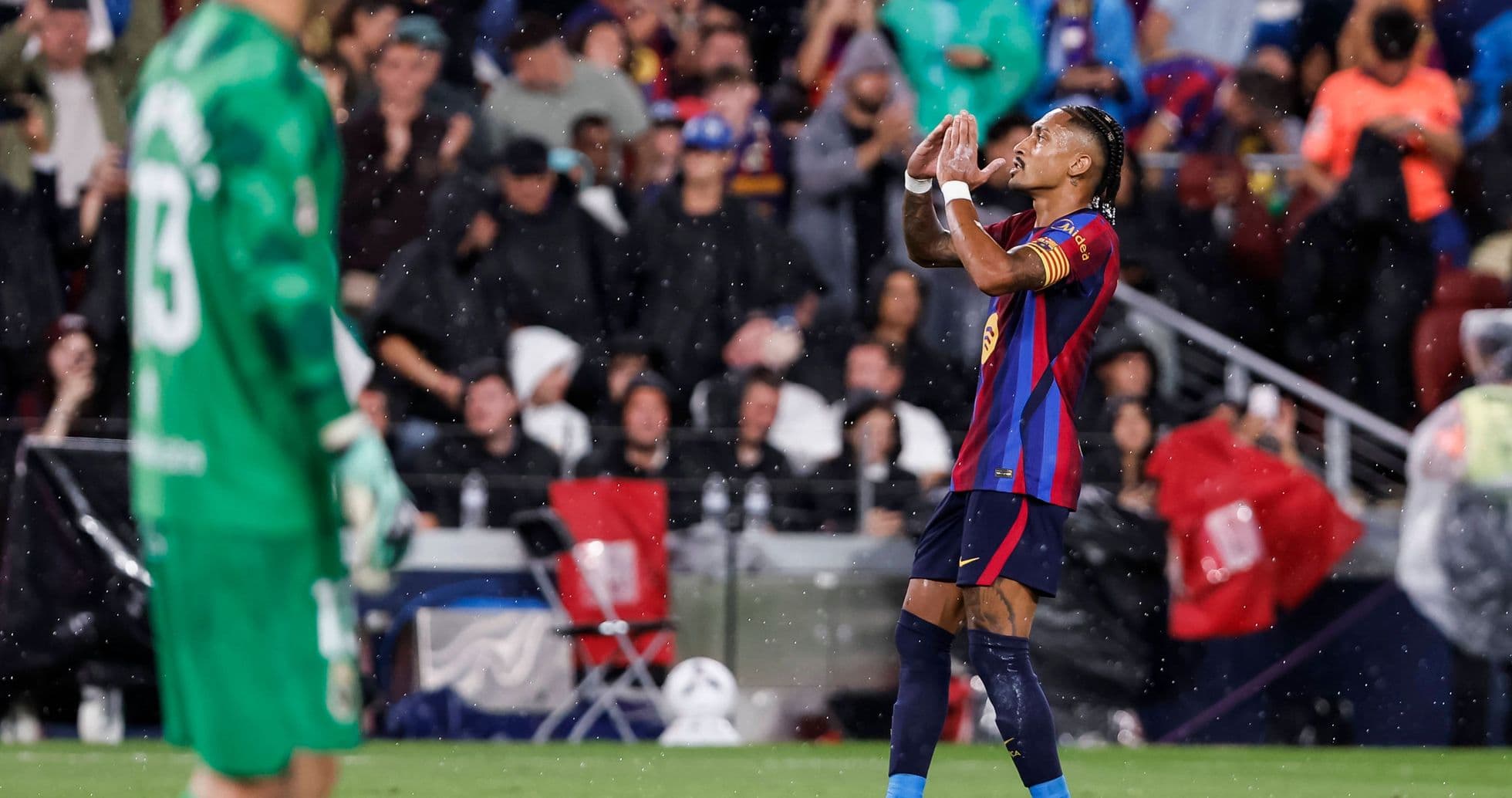
Raphinha's Hat-Trick Drives Barcelona to 7-2 Triumph Over Racing Santander
Hansi Flick Leads Barcelona to Record-Breaking Seven Wins in a Row

Gavi Reflects on Injury Return as Barcelona Dominate Racing Santander 7-2