
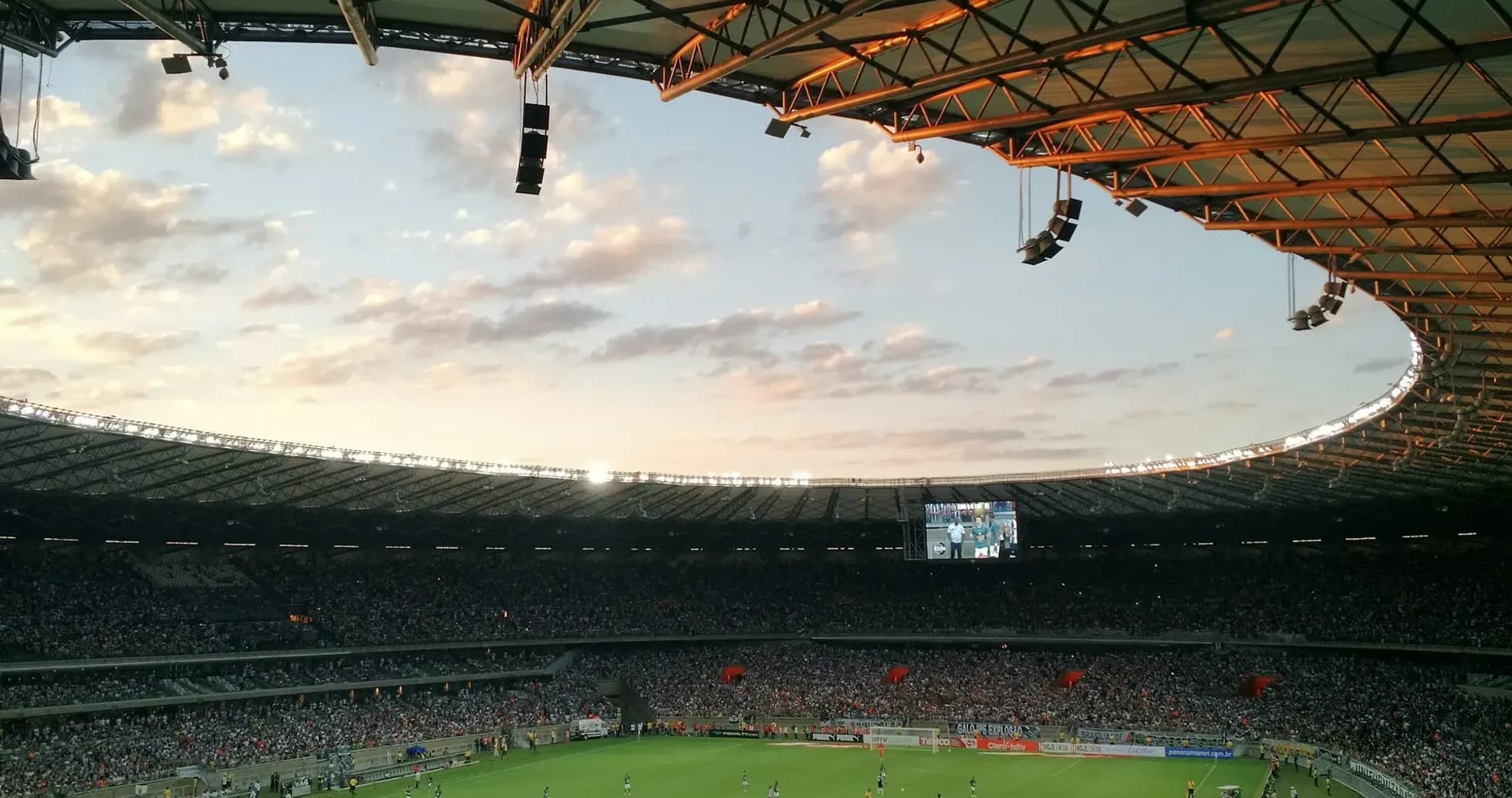
Rayo Vallecano Defeats Villarreal 2–0: A Season Defined
The evening at Campo de Futbol de Vallecas closed with a statement. In a season where Rayo Vallecano have lived on the edge of tight margins, a 2–0 win over high-flying Villarreal in La Liga’s Regular Season - 37 felt like a distillation of their 2025 identity: compact, disciplined, and opportunistic in front of their own crowd.
Following this result, the table tells a nuanced story. Rayo sit 8th with 47 points, their overall goal difference at -4, the product of 39 goals for and 43 against. Villarreal, despite defeat, remain 3rd on 69 points with a far healthier overall goal difference of 22, built on a prolific 67 goals scored and 45 conceded. Yet for ninety minutes in Vallecas, the script flipped: the Champions League-chasing visitors were blunted, the mid-table hosts in control.
I. The Big Picture – Vallecas as a Fortress
Rayo’s season has been defined by a stark home/away split. At home they have played 19 league games, winning 7, drawing 10, and losing only 2. They score an average of 1.3 goals at home and concede just 0.8, underpinned by 8 home clean sheets. On their travels, Villarreal usually carry a different menace: 7 away wins, 5 draws and 7 defeats from 19, with 24 goals scored (1.3 on average) and 27 conceded (1.4 away).
In that context, this match was a collision between one of La Liga’s most stubborn home defences and one of its most dangerous attacking units. The 1–0 half-time lead, then a controlled 2–0 full-time scoreline, felt like the logical extension of Rayo’s season-long defensive structure when playing in Madrid.
Inigo Perez stayed true to Rayo’s most-used shape: the 4-2-3-1 that has started 23 league games. A. Batalla in goal, protected by a back four of A. Ratiu, P. Ciss, F. Lejeune and P. Chavarria, set the foundation. U. Lopez and O. Valentin anchored the double pivot, with J. de Frutos, O. Trejo and S. Camello operating behind the lone forward Alemao.
Marcelino, predictably, trusted Villarreal’s signature 4-4-2, the formation used in 36 league matches. A. Tenas started in goal, behind a defensive line of S. Mourino, W. Kambwala, R. Marin and S. Cardona. The midfield four of T. Buchanan, S. Comesana, P. Gueye and A. Moleiro supported the front two A. Perez and T. Oluwaseyi. On paper, it was Villarreal’s tried-and-tested balance between structure and verticality; on the pitch, Rayo’s block repeatedly smothered their rhythm.
II. Tactical Voids – Suspensions and Injuries Shape the Chessboard
Both managers had to navigate conspicuous absences. Rayo were without I. Akhomach (muscle injury), A. Garcia, Luiz Felipe, D. Mendez and, crucially, I. Palazon, suspended after a red card. Losing Palazon – a creative hub who has 3 goals, 3 assists and has already drawn 51 fouls in the league – stripped Rayo of a natural right-sided playmaker and a key set-piece threat. Perez responded by leaning even harder into collective structure and the direct thrust of J. de Frutos.
Villarreal, for their part, travelled without P. Cabanes, J. Foyth and R. Veiga, the latter sidelined through yellow-card accumulation. Foyth’s absence removed an experienced defensive organiser, while Veiga’s suspension disrupted Marcelino’s midfield rotation, placing more responsibility on S. Comesana and P. Gueye to control central zones.
The disciplinary backdrop of both clubs also coloured the contest. Rayo’s season-long yellow card timing shows a sustained intensity: 19.80% of their yellows arrive between 61–75 minutes, and another 15.84% from 76–90, with a notable late-game red streak (33.33% of reds between 91–105 minutes). Villarreal, meanwhile, skew even more towards late aggression: 25.32% of their yellows fall in the 76–90 window, and 66.67% of their reds come in that same period. This was always likely to be a match where the final quarter-hour would be a test of nerve as much as of tactics.
III. Key Matchups – Hunter vs Shield, and the Engine Room
The marquee duel was always going to be Villarreal’s attacking firepower against Rayo’s home defensive shield. Overall this campaign, Villarreal average 1.8 goals per game, with a devastating 2.4 at home and a still-strong 1.3 away. Rayo, however, concede just 0.8 at home and have kept 8 clean sheets in Vallecas.
At the heart of that shield stood P. Ciss. Across the season he has not only been a defensive midfielder of range and timing but has also blocked 16 shots, a reflection of his reading of danger. Deployed here in the back line, his anticipation and aerial presence were central to denying A. Perez and T. Oluwaseyi the spaces they usually exploit. Alongside him, F. Lejeune’s positioning and calm distribution allowed Rayo to reset under pressure rather than simply clear their lines.
Out wide, A. Ratiu’s duel with Villarreal’s left-sided combinations was pivotal. Over the campaign he has contributed 4 assists and attempted 117 dribbles, succeeding 62 times. His ability to step out, win duels (172 won from 348) and then carry the ball forward gave Rayo a release valve against Villarreal’s press.
On the other side of the narrative stood J. de Frutos, Rayo’s leading scorer in the league with 10 goals. His season numbers – 49 shots, 28 on target, plus 30 key passes – underline his dual role as both finisher and creator. Against Villarreal’s back four, particularly the combative S. Mourino, De Frutos’ movement between the lines and willingness to attack space behind full-backs constantly asked questions.
Mourino himself arrived as one of La Liga’s most combative defenders: 101 tackles, 9 blocked shots, and 53 fouls committed. His aggressive front-foot defending is a weapon, but also a risk against a side like Rayo that thrives on drawing contact and exploiting free-kicks. The battle between Mourino’s physicality and De Frutos’ mobility was a microcosm of the larger contest: Villarreal’s insistence on duels versus Rayo’s preference for controlled chaos.
In midfield, the engine-room confrontation was defined by S. Comesana versus Rayo’s double pivot of U. Lopez and O. Valentin. Comesana’s season is a study in balance: 1208 passes at 83% accuracy, 46 tackles, 15 blocks and 30 interceptions. He is Villarreal’s metronome and enforcer rolled into one. But Rayo’s structure narrowed his passing lanes, forcing him sideways rather than into his preferred vertical punches through the lines. With Rayo’s central block denying space for A. Moleiro to receive between the lines – despite Moleiro’s 10 goals, 5 assists and 36 key passes this season – Villarreal’s 4-4-2 often looked like a flat line of four unable to pierce Rayo’s compact 4-2-3-1.
IV. Statistical Prognosis – Why the 2–0 Felt Inevitable
Even without explicit xG data, the season-long patterns frame this 2–0 as more than a one-off. Rayo’s home average of 1.3 goals for and 0.8 against, combined with Villarreal’s away profile of 1.3 scored and 1.4 conceded, sketches a likely narrow home win or hard-fought draw. Add in Rayo’s 8 home clean sheets and Villarreal’s modest 3 away clean sheets, and the probability of Rayo finding a way through while keeping things tight at the back grows stronger.
Rayo’s overall form line – WLDLDLLWWWLDDDLDLDWLLLWDDWDDLWLWDWDDW – reveals a team that rarely collapses, even when they do not win. Villarreal’s own sequence – WWDLWWWLDWWWWWWLWWLLDWLWWLWDWLWDWWDLL – shows bursts of brilliance, but also the occasional away stumble when faced with organised, aggressive blocks.
Following this result, the numbers and the narrative align. Rayo Vallecano, with their disciplined 4-2-3-1, their home defensive record and the cutting edge of J. de Frutos, executed a game plan that has been building all season. Villarreal, despite the individual quality of players like G. Mikautadze, N. Pepe and A. Moleiro in the wider squad, ran into a structure designed precisely to suffocate their strengths.
The 2–0 scoreline at Vallecas was not an upset against the run of a season; it was the season, distilled into ninety minutes.
Related News

LaLiga 2026-27 Season Schedule Released: Kickoff on August 15, Clásico on October 25

Atletico Madrid vs Real Madrid: Head-to-head Stats and Past Meetings
Real Madrid Dominates Rayo Vallecano in La Liga Clash

Atletico Madrid Dominates Real Sociedad 3-0 at Reale Arena

Barcelona Dominates Levante in High-Scoring Clash

Sevilla vs Barcelona Stats: Head-to-Head Record and Past Meetings