
Real Madrid's Pursuit of Rodri: A Challenge for Perez
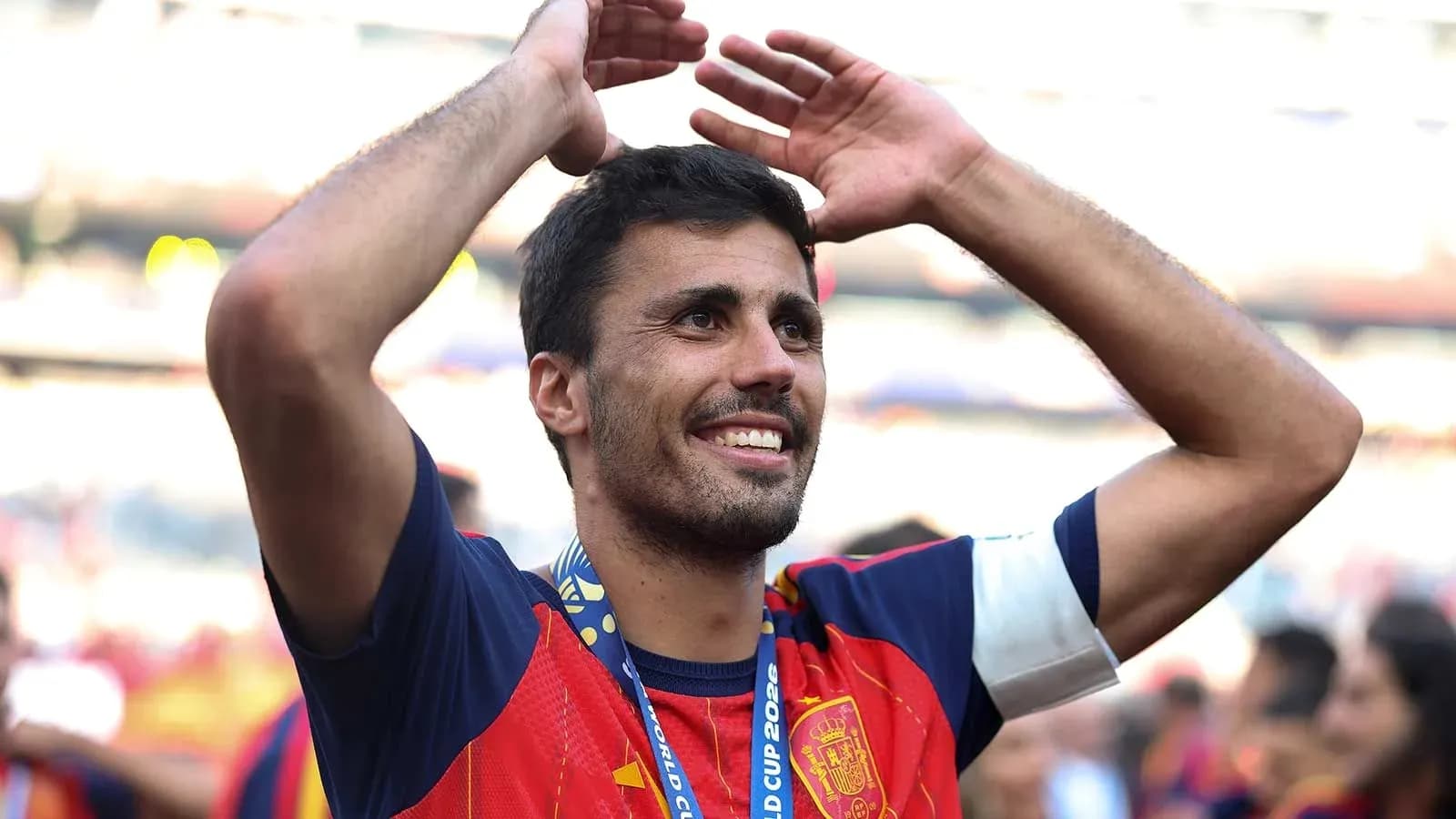
The club that calls itself “the biggest in the world” has a simple rule: the best players belong in white. Real Madrid have repeated that line for so long it has become part of their identity, a sales pitch and a mission statement rolled into one. So when Rodri walked away from the World Cup in the USA, Canada and Mexico with the best player award and a winner’s medal for Spain, the rumours almost wrote themselves.
Real looked. They had to. Whether they should actually sign him is a far more complicated question.
Perez’s promise and a missing blockbuster
The Rodri debate in Madrid is not just about tactics or age. It circles back, as it so often does, to Florentino Perez.
At the start of June, the Real president was still fighting off challenger Enrique Riquelme in an election that briefly threatened his iron grip on the club. He won comfortably, of course, and did so with a familiar flourish: a promise of a mega signing. A €150 million offer, he said, for a star of “the calibre of Cristiano Ronaldo or Kaka”.
The reality has been more sober.
The figure that emerged for that supposed mega bid was not attached to a galáctico but to Julian Alvarez. Real were ready to put €150 million on the table for the Atletico Madrid forward, only for their city rivals to swat the proposal away. The rejection felt abrupt, almost contemptuous, and there were whispers in Madrid that the bid itself was more theatre than conviction.
The summer rolled on. The grand statement never came.
Jose Mourinho returned first, a nod to a previous era of titles and tension, when Real’s war with Pep Guardiola’s Barcelona defined European football. Mourinho won trophies at the Santiago Bernabeu, but he also spent much of that time chasing shadows cast by Guardiola’s football. Now he is back to find a club without a recent blockbuster signing and with a fanbase still waiting for Perez’s promise to materialise after two trophyless seasons.
Full-backs, free transfers – but no centrepiece
The transfer work has been busy, if not exactly glamorous.
Marc Cucurella arrived from Chelsea. Denzel Dumfries came in from Inter Milan. Two full-backs for a combined €75 million. Ibrahima Konate joined from Liverpool on a free, bolstering the defence again. Bernardo Silva, 31 and out of contract at Manchester City, also walked through the door without a fee.
Useful players. Experienced players. Not the sort of names that make the Bernabeu hum with anticipation.
Rodri would change that instantly.
Even after an anterior cruciate ligament rupture in 2024, his level has barely dipped. At the World Cup he again dictated games with that familiar calm authority, controlling tempo and territory as if the ball belonged to him by right. Manchester City know his value and, according to Sky Sport, have already put a new contract on the table beyond his current deal, which runs until 2027. No agreement yet.
Real, the same report claims, have offered him a contract to 2030. A bid in the region of €50–60 million is said to be in the works, with other figures around €100 million also circulating as a potential asking price for a 30-year-old who still looks built for several elite seasons.
Not everyone in Spain is convinced the interest is real. AS has reported that sources inside Real dismiss the Rodri chase as narrative fuelled by Spain’s World Cup win. The line from those voices: the noise is about the trophy, not about a genuine plan.
If Rodri did arrive, though, Mourinho’s blueprint would need a serious rethink.
A conductor for a team that learned to live without the ball
With Rodri, you don’t just sign a midfielder. You sign a way of playing.
He is a possession magnet, a metronome. He decides when to accelerate and when to pause, when to squeeze and when to breathe. Every attack, almost by default, starts with him. That profile fits the Real Madrid of Toni Kroos and Luka Modric, a side that built dynasties by passing teams into submission.
The recent version of Real went in a different direction. From Carlo Ancelotti onwards, the team learned to live without the ball. They sat deeper, absorbed pressure, then exploded in transition through the pace and chaos of Vinicius Junior and Kylian Mbappe. It worked often enough to feel like a deliberate evolution rather than a temporary compromise.
Drop Rodri into that, and the axis of the team changes. The ball has to go through him. The rhythm slows at times, the structure tightens. Mourinho, who has long favoured compact blocks and quick counters, would suddenly have the best deep-lying controller in the game at his disposal. Does he bend to the player or bend the player to him? That is not a small question.
The other obvious issue is the price. €100 million for a 30-year-old, even one of Rodri’s stature, is a number that makes any sporting director pause. Yet his performances this summer suggested he still has years at the top, and his profile is so rare that the usual age calculations don’t quite apply.
He has also been clear about the badge on the other side of Madrid not being a barrier. “The fact I played for Atletico doesn't stop me from playing for Real. There are other players who have taken that path,” he said in the spring, inviting speculation about a return to the Spanish capital on the opposite side of the divide.
Surgery, suitors and a softening stance at City
Then came the twist. Last week, Manchester City announced Rodri would undergo immediate back surgery and would be out for an indefinite period.
“He will have the operation on Monday. Then he needs a holiday, has to rest and recover. And then he will come back to us,” explained City coach Enzo Maresca. On Tuesday, City confirmed the procedure had gone well and wished him a speedy recovery.
Even that has not cooled the market.
RMC reported that Paris Saint-Germain are also in the hunt, surgery or not. On paper, PSG’s midfield looks crowded already: Vitinha, Fabian Ruiz, Joao Neves and a group that has underpinned two consecutive Champions League titles. Yet when a player like Rodri becomes even theoretically available, clubs of that size at least join the conversation.
The advantage for Real lies elsewhere. After seven years in England, Rodri is said to favour a return to Spain. Convincing him personally would not be the hardest part of the operation.
Convincing City used to be. Early reports spoke of a firm refusal to even contemplate his exit. Now, according to Marca, that line has softened. The English champions, it is said, “hold the player in the highest regard” but will accept his departure if that is what he wants.
The door is not open, but it is no longer locked.
Perez’s promise, Rodri’s choice
All of this leads back to Perez and the pledge he made when he secured another term in power. He promised a mega signing. He talked about Ronaldo and Kaka. He sold the dream of one more galáctico.
The summer so far has brought Mourinho, full-backs, free transfers and pragmatism. What it has not brought is that one name to reset the mood around the Bernabeu after two empty seasons.
Rodri would be that name. He would also be a test: of Mourinho’s flexibility, of Real’s tactical identity, of how far Perez is willing to go for a player who offers control more than fireworks.
The president has never hidden his ability to persuade when he truly wants something, especially with a cheque book in his hand. Now a world champion midfielder, fresh from being crowned the best player of the tournament, is closer than ever to a decision.
Does Real Madrid’s self-image still demand the very best? Or does Perez’s promise fade into another summer of almosts and what-ifs?
Related News
Ilia Topuria Accuses Justin Gaethje After UFC Defeat
Tyson Fury vs Anthony Joshua Fight Date and Venue Confirmed
Switzerland Calls Up In-Form Sion Striker Winsley Boteli for Nations League
Bournemouth Secures Historic 2-1 Win Over Real Sociedad in Spain
Portugal Announces Squad for 2026 UEFA Nations League; Cristiano Ronaldo Expected to Play
Raphinha Channels Ronaldo Nazario as Barcelona's Leading Striker After Position Change