
Real Madrid Dominates Rayo Vallecano in La Liga Clash
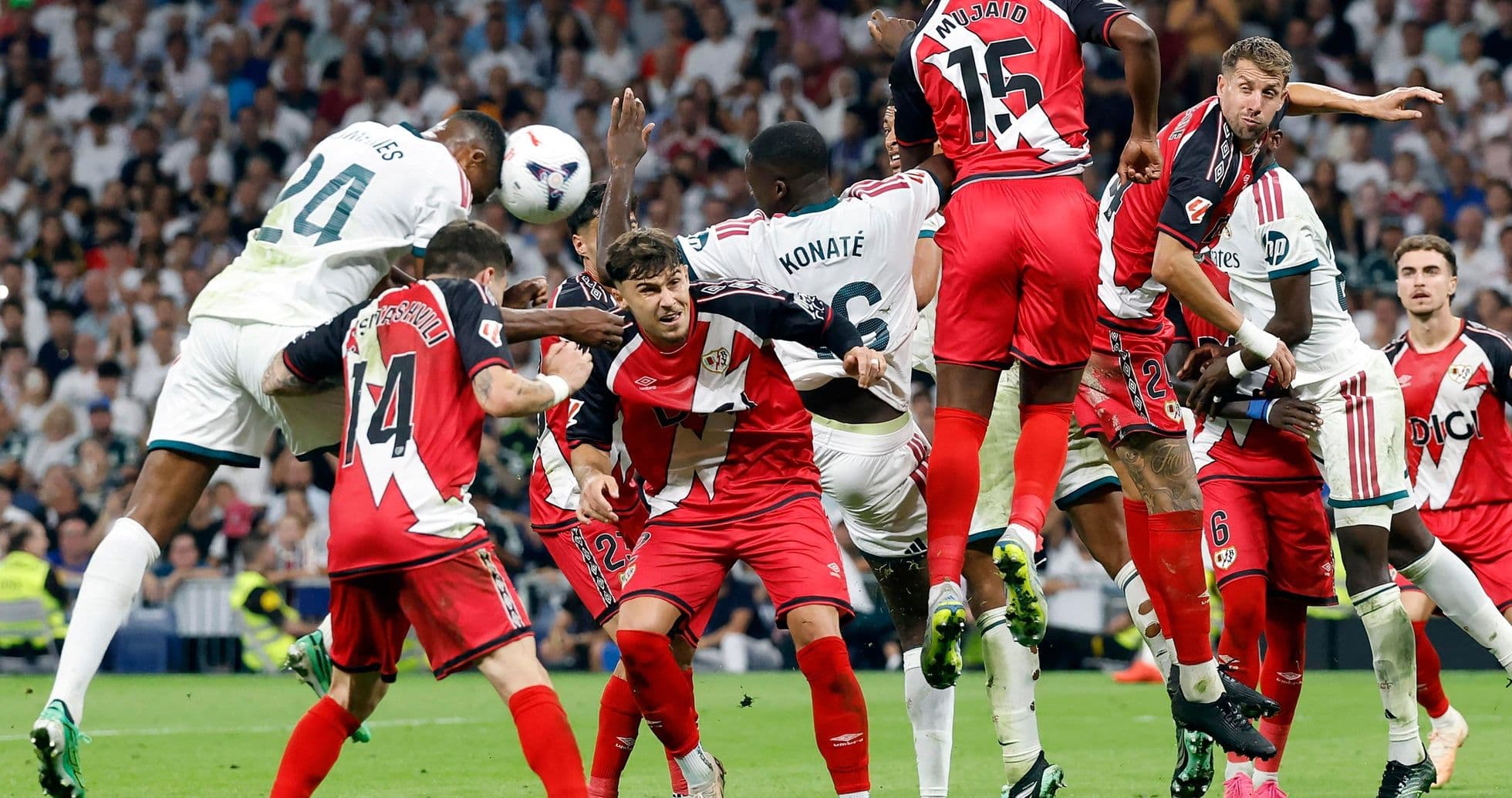
Under the lights of the Bernabéu, this Regular Season - 5 clash in La Liga felt less like an early‑season checkpoint and more like a statement of intent. Real Madrid, second in the table with 12 points and a goal difference of +10 (14 scored, 4 conceded overall), imposed a 4–1 verdict on a Rayo Vallecano side sitting 16th, marooned on 4 points with a goal difference of -6 (8 scored, 14 conceded overall). The scoreline mirrored the broader shape of their seasons so far: Madrid ruthless and vertical, Rayo brave but brutally exposed.
I. The Big Picture – Systems, context, and seasonal DNA
Both sides lined up in a 4-2-3-1, but the shared formation masked very different identities. Real Madrid’s structure under José Mourinho has been defined by power and direct incision. Heading into this game, they had averaged 2.8 goals per match overall, with an extraordinary 4.0 at home, while conceding just 0.8 overall and 0.7 at home. The Bernabéu has quickly become a scoring machine: 12 home goals from three games, with only 2 conceded.
Rayo Vallecano arrived as a paradox. On their travels, they had yet to collect a single point: three away games, three defeats, with 4 goals scored but 11 conceded. Their overall defensive record — 14 conceded in 5 matches, an average of 2.8 per game — was always going to be stress‑tested by Kylian Mbappé and company. Yet they also carried threat: 8 goals overall at 1.6 per game, powered by the league’s joint‑top scorer Sergio Camello with 6 goals in 5 appearances.
The script was written in the numbers: Madrid’s home attacking avalanche against Rayo’s away fragility. Over 90 minutes, the fixture simply played that logic out.
II. Tactical Voids – Absences and disciplinary shadows
The team sheets told their own tactical story. Real Madrid were without Eder Militao (hamstring), F. Mendy (hip) and Rodrygo (knee). That stripped depth from both central defence and the left flank, forcing Mourinho to lean into a hybrid back line: D. Dumfries, Ibrahima Konaté, Antonio Rüdiger and Álvaro Fernández ahead of Thibaut Courtois. It was a back four built for duels and aggressive front‑foot defending rather than delicate buildup.
Further ahead, Madrid doubled down on technical control and verticality. F. Valverde and Bernardo Silva formed the double pivot, with Y. Diomande, J. Bellingham and Vinícius Júnior operating behind Mbappé. It was a selection that effectively turned a 4-2-3-1 into a 2-4-4 in possession, with Bellingham roaming into the half‑spaces and Vinícius holding width to isolate his marker.
Rayo’s absentees were even more structurally damaging. A. Batalla, Luiz Felipe, R. Nteka, I. Palazon and J. Vertrouwd were all out injured, while Fran Pérez and Jorge de Frutos missed the game through suspension after red cards. That meant Beñat San José had to field a back four of A. Rațiu, F. Lejeune, P. Ciss and Adrià Pedrosa in front of E. Audero, with a double pivot of G. Bouare and Unai López, and an attacking line of G. Tsitaishvili, Pedro Díaz, Álvaro García behind Camello.
Losing Fran Pérez and de Frutos, both high on the red‑card charts, stripped Rayo of two aggressive, line‑breaking presences. Their absence forced Rayo into a more cautious, ball‑to-feet approach, blunting transitions that might have punished Madrid’s high line.
Disciplinary trends only deepened the risk for the visitors. Rayo’s yellow cards are heavily concentrated late: 40.00% between 61–75 minutes and 30.00% between 76–90, with red cards also skewed toward the closing stages. Madrid, by contrast, spread their cautions more evenly, with 25.00% of yellows each in the 46–60, 61–75 and 91–105 ranges. Over 90 minutes, that meant Madrid were likelier to finish strong; Rayo, to unravel.
III. Key Matchups – Hunter vs Shield, Engine Room battles
The headline duel was always going to be Mbappé against a defence that, away from home, had been conceding 3.7 goals per match. Mbappé came into the fixture with 6 league goals from 5 appearances, 29 shots (21 on target), and an 8.14 average rating. His ability to attack the space between full‑back and centre‑back was a direct threat to Lejeune and Ciss, who prefer defending deeper and facing the play.
Behind him, Bellingham — 3 goals, 2 assists and an 8.18 rating — functioned as Madrid’s “second striker” from midfield. His 205 completed passes at 91% accuracy and 12 key passes underscored a dual role: tempo‑setter and late box runner. Against a Rayo midfield anchored by Bouare and Unai López, Bellingham’s physicality and timing tilted the “Engine Room” battle decisively Madrid’s way.
On the flanks, Vinícius Júnior versus Rațiu was another asymmetrical contest. Vinícius arrived with 3 assists, 1 goal, 27 dribbles attempted and 19 fouls drawn in 5 games. Rayo’s defensive unit, already leaking 11 away goals, struggled whenever Vinícius received early switches from Bernardo Silva or Valverde. Every one‑v‑one forced Rayo’s back line to collapse inward, opening corridors for Mbappé and Bellingham.
For Rayo, the “Hunter” was Camello. Six goals from just 11 shots (10 on target) is an elite conversion rate, and his movement between Konaté and Rüdiger was their clearest route back into the contest. Supported by Unai López — 3 assists, 12 key passes and 83% pass accuracy — Rayo tried to thread vertical passes into Camello’s feet rather than attacking Madrid’s back line in the air. But with Madrid conceding only 4 goals overall so far, and just 2 at home, the margin for error was tiny.
IV. Statistical Prognosis – Why the game tilted white
Heading into this game, every macro trend pointed toward a Madrid win with a healthy scoring margin. Madrid’s home attack at 4.0 goals per match against Rayo’s away defence at 3.7 conceded was a brutal mismatch. Defensively, Madrid’s 0.8 goals conceded per match overall, coupled with just one clean sheet but strong control of territory, suggested Rayo would likely score but be overwhelmed.
Even from the spot, Madrid’s numbers hinted at both danger and waste: 2 penalties overall this season, with only 1 scored and 1 missed. That underlined the sheer volume of box entries they generate — and the fact they can afford a miss without losing control of the narrative.
Layered over all this is tactical continuity. Madrid have used the 4-2-3-1 in all 5 league matches, building automatisms between Valverde, Bernardo Silva, Bellingham, Vinícius and Mbappé. Rayo, by contrast, have already alternated between 4-2-3-1, 4-1-4-1 and 4-3-3, a sign of a coach still searching for a stable structure.
In the end, the 4–1 full‑time score felt less like a surprise and more like the logical endpoint of the data: a dominant home side at the peak of its attacking powers, exploiting an away defence that has yet to find a way to survive the storm.
Related News

LaLiga 2026-27 Season Schedule Released: Kickoff on August 15, Clásico on October 25
Atletico Madrid vs Real Madrid: Head-to-head Stats and Past Meetings
Real Madrid Dominates Rayo Vallecano in La Liga Clash
Atletico Madrid Dominates Real Sociedad 3-0 at Reale Arena

Sevilla vs Barcelona Stats: Head-to-Head Record and Past Meetings
Barcelona vs Racing Santander Predicted Lineups and Team News