
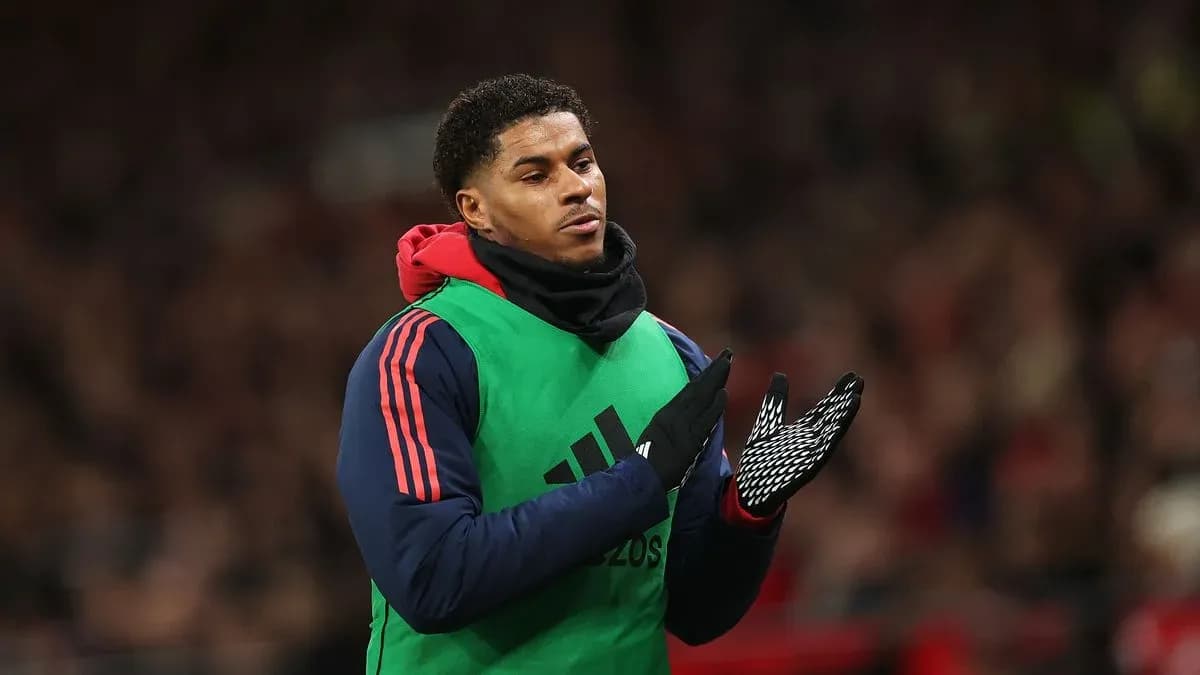
Marcus Rashford's Champions League Clause Impacts Manchester United's Finances
Marcus Rashford’s lucrative Champions League clause has forced Manchester United into an uncomfortable financial reality – and underlines why the club’s margin for error in the transfer market has shrunk.
A few years ago, qualification for Europe’s elite competition triggered automatic pay rises across the dressing room. Minutes played didn’t matter. If United were in the Champions League, the cheques went out.
Rashford is one of the last big winners from that old regime.
Rashford’s £4m boost for a season he didn’t play
Because of a clause in his contract, Rashford will earn around £4million more this year than he would have if United had missed out on the top four – despite not playing a single minute for the club last season.
United’s absence from the Champions League the previous campaign had already triggered a wage cut across the squad. Finishing third in the Premier League has now flipped that switch back on for those covered by the old rules.
For Rashford, that means a 25 per cent uplift on an already heavyweight salary, taking him back above £300,000 a week. The bonus is automatic. Performance is irrelevant. Availability is irrelevant. The clause is king.
It is precisely the sort of legacy contract United have been trying to move away from.
The new rule: minutes or no money
Under the revamped structure, simply qualifying for the Champions League is no longer enough. Players must have been on the pitch for at least 60 per cent of the previous season – just over 2,000 minutes – to activate the bonus.
That threshold would have shut the door on Rashford’s windfall. It would also have denied Mason Mount a seven-figure uplift.
Mount, who joined in the same window that Rashford signed his latest deal, also has the older-style clause. He only just reached around half the required minutes last season, so under the new system he would have fallen well short of the 60 per cent mark.
Instead, because his contract was agreed before the rule change, he too will cost United more than £1m extra in wages over the coming year.
Joshua Zirkzee, by contrast, did not hit the minutes threshold last season and was signed before the new policy kicked in. His pay packet stays flat. No automatic Champions League bump.
The line between old and new is brutally clear.
Onana, loans and a distorted wage bill
Andre Onana sits in a similar bracket to Rashford and Mount. He arrived in the same summer, his deal also containing the Champions League uplift.
For now, United have dodged the immediate cost. Trabzonspor are covering his wages during his loan spell, sparing the club another rise on the balance sheet. The clause still exists, though. The obligation doesn’t disappear; it only moves down the road.
These legacy terms, written when United were still paying a premium to attract and retain talent, now collide with a more disciplined, performance-linked wage structure. The result is a dressing room split between those who cash in regardless and those who must earn every extra pound on the pitch.
Hard to sell what you overpaid for
That split is hurting United in the market.
Both Rashford and Onana have been made available for permanent transfers, but attempts to move them on have run into the same brick wall: their wages and the baked-in bonus clauses that travel with them.
Any buying club has to match or come close to those numbers. Few can. Fewer still are willing to, especially when the players in question are not arriving as undisputed centrepieces.
Rashford’s loan spell at Barcelona underlined the dilemma. He impressed in Spain, yet Barça ultimately walked away from a permanent deal, citing financial constraints. The numbers simply didn’t add up.
That left United with a high-earning forward who had been earmarked for sale and a contract that pays out Champions League money even when he doesn’t feature. No wonder the club were so keen to move him on.
Now, there has been a significant change of heart. With options limited and the squad in need of goals, the expectation is increasingly that Rashford will stay at Old Trafford. Not as a financial burden to be shifted, but as a player they may have to lean on again.
Recruitment squeezed as clauses bite
While the wage bill inflates, the transfer budget tightens.
United have managed a couple of astute deals, bringing in Youri Tielemans and Andrey Santos on terms that fit the new financial reality. Those moves hinted at a smarter, more disciplined approach.
But when they pushed for Elliot Anderson and Mateus Fernandes, the numbers stopped working. The deals stalled. The club stepped back.
Now, there is a real possibility United will not be able to bring in a third midfielder at all. Attention has turned to other areas – a new left-back, a centre-forward – as the squad’s needs jostle against the limits of the budget.
This is where those old Champions League clauses truly bite. Money that might have gone towards fees and fresh salaries is instead tied up in bonuses for players who either barely featured or played their football elsewhere.
United wanted a clean break from the past. Instead, they are still paying for it – literally – while trying to build a squad capable of going deep in the very competition that keeps inflating their wage bill.
Related News
Carlos Alcaraz Urges Tennis Organizers to Stop Matches Finishing in the Early Morning
Carlos Alcaraz Frustrated by 3:30 a.m. US Open Finish: 'Too Much'
Jannik Sinner Set for ATP 500 Return in Beijing with Novak Djokovic Also Competing

Meet Iva Jovic: The Rising American Tennis Talent
Flavio Cobolli Shares Insights on Training with Jannik Sinner Ahead of His Tennis Return

Till vs Romero: Fight Details, Undercard, and Viewing Info for This Weekend