
Qatar vs Switzerland: World Cup 2026 Opener Ends in 1–1 Draw
Under the California evening sky at Levi’s Stadium, Qatar and Switzerland opened their World Cup 2026 stories with a 1–1 draw that said as much about identity as it did about points. Following this result, both sides sit on 1 point in Group B, Switzerland officially ranked 1st in the group table snapshot and Qatar 3rd, yet the narrative feels more nuanced than the standings suggest.
The Big Picture – Two 4-3-3s, Two Different Intentions
Both coaches showed their hand with mirrored 4-3-3 shapes. Julen Lopetegui trusted a proactive Qatar at “home” in the United States, using the same 4-3-3 that defines their current campaign – it has been their only formation so far, played in 1 match overall. Across that single outing, Qatar have drawn 1 and lost none, scoring 1.0 goals at home on average and conceding 1.0 at home, a statistical equilibrium that perfectly reflects this opener.
Murat Yakin matched the structure, sending Switzerland out in their own 4-3-3, also used in 1 match overall. On their travels, Switzerland’s record now reads 1 draw, 0 wins, 0 defeats, with 1.0 away goals scored and 1.0 away goals conceded on average. The symmetry in goals for and against on both sides (1 for, 1 against overall for each) underlined the sense of a contest finely balanced between Swiss control and Qatari resilience.
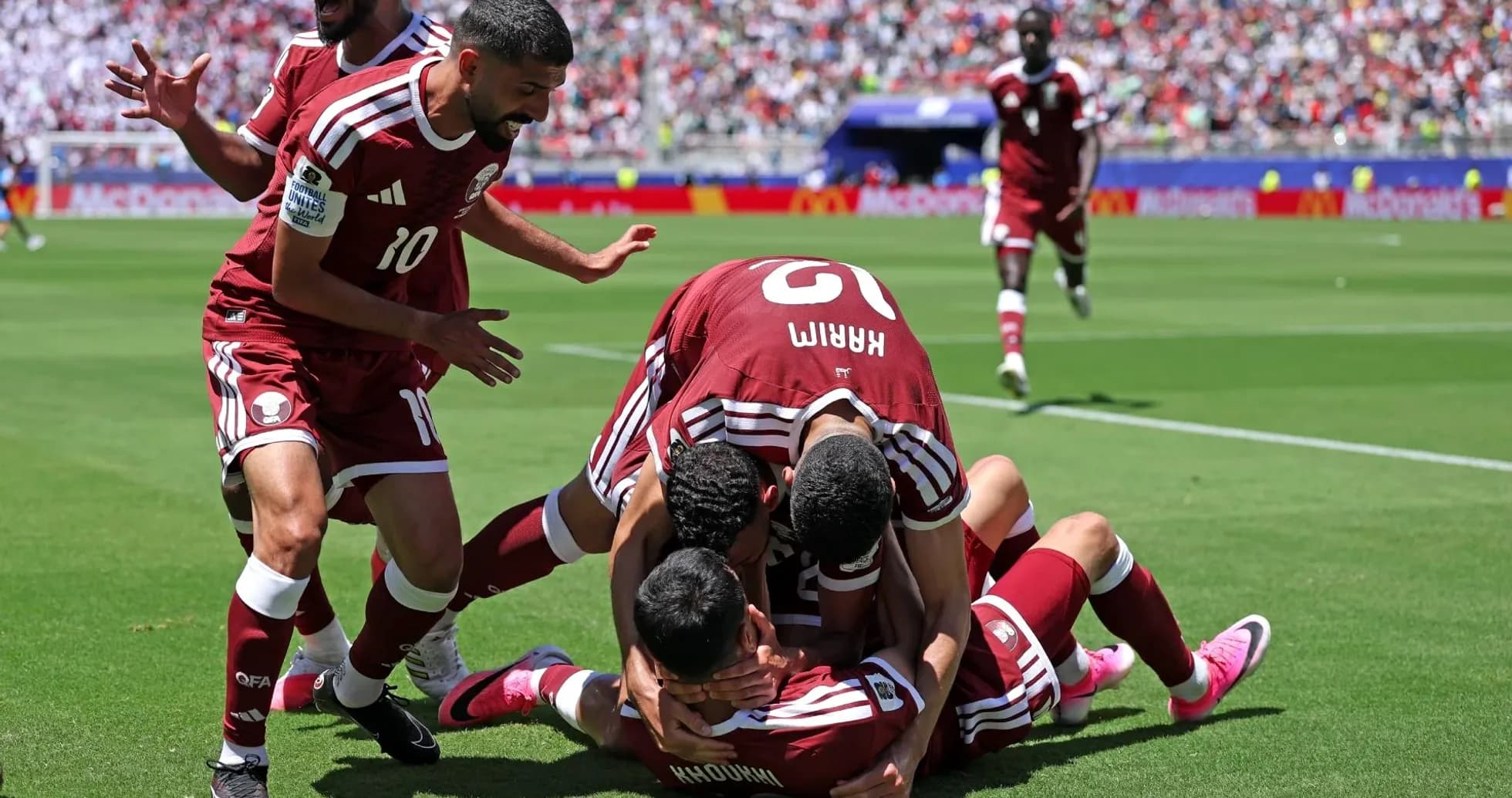
The scoreboard narrative was clear: Switzerland struck first, Qatar rallied. Breel Embolo, already on the top scorers list with 1 goal, converted Switzerland’s only penalty of the campaign so far – they have taken 1 penalty in total, scored 1 and missed 0, a flawless 100.00% return. Qatar’s reply came from an unlikely source: Boualem Khoukhi, a defender who now leads their scoring chart with 1 goal from 1 shot on target, turning a set-piece moment into a statement of defiance.
Tactical Voids and Discipline – Edges and Fault Lines
There were no listed injuries or suspensions shaping the squads, so the voids in this match were tactical rather than physical. For Qatar, the main tension lay between ambition and structure. With M. Abunada in goal behind a back four of Pedro Miguel, B. Khoukhi, H. Al Amin and A. Al Oui, Lopetegui asked his side to build from deep, but the statistics show the price of that bravery: 0 clean sheets in total and 1 goal conceded at home.
Discipline is already a storyline in Qatar’s campaign. Their yellow card profile is sharply concentrated: 2 yellow cards in the 16–30 minute window, accounting for 100.00% of their bookings this tournament. That early spikiness was personified by Jassem Gaber and Mahmud Abunada, both on the disciplinary charts. Gaber’s 1 yellow card in 60 minutes and 2 fouls committed show a midfielder walking the line between aggression and recklessness. Abunada, meanwhile, not only received 1 yellow card but also committed the foul that led to Switzerland’s penalty, his penalty record reading: 1 committed, 0 saved.
Switzerland’s disciplinary curve is calmer but still telling. Their only yellow card so far came between 31–45 minutes (1 card, 100.00% of their bookings), with Denis Zakaria the man in the book. As a defender nominally stationed at right-back in the 4-3-3, Zakaria’s 3 tackles and 2 interceptions underline how often he was dragged into direct duels with Qatar’s wide forwards, especially A. Afif and Edmilson Junior.
Key Matchups – Hunter vs Shield, Engine Room Battles
Hunter vs Shield
Embolo versus Qatar’s defensive axis was the defining duel. Embolo’s stat line – 1 goal, 2 shots (1 on target), 5 key passes – paints him as more than a finisher; he was Switzerland’s reference point and creator. Against him stood Khoukhi, whose game was a microcosm of Qatar’s night. He scored 1 goal, produced 1 shot on target, and defensively contributed 1 tackle, 1 blocked shot and 2 interceptions. Every time Embolo drifted into the right half-space or dropped between the lines, Khoukhi had to decide whether to step out or hold the line, a decision that shaped Switzerland’s rhythm.
Behind them, Abunada’s 5 saves kept Qatar in the contest despite conceding once. His distribution – 31 passes at 64% accuracy – underlined Qatar’s attempt to use him as the first playmaker, but it also introduced risk, as seen in the penalty incident he committed.
Engine Room – Xhaka and Freuler vs Gaber and Madibo
In midfield, the contrast was stark. Switzerland’s trio of Granit Xhaka, Remo Freuler and M. Aebischer formed a technical carousel. Xhaka, stationed centrally, dictated tempo, while Freuler’s deeper positioning allowed Switzerland to recycle possession and keep Qatar pinned for stretches.
On the other side, Qatar’s midfield of J. Gaber, A. O. Madibo and I. Laye had to cover more ground defensively. Gaber’s 8 duels (3 won) and 2 blocks show his willingness to throw himself into challenges; he blocked 2 shots, a vital contribution for a side that often had to absorb pressure. But his 1 yellow card and 2 fouls committed highlighted how often he arrived half a step late, a warning sign for future group matches.
Out wide, D. Ndoye and R. Vargas tried to stretch Qatar’s back line, dragging full-backs Pedro Miguel and H. Al Amin into uncomfortable territory. For Qatar, Afif and Edmilson Junior provided the counterpunch, seeking the spaces behind Zakaria and Ricardo Rodriguez whenever Switzerland’s full-backs advanced.
Statistical Prognosis – Margins, xG Hints and What Comes Next
The raw campaign numbers are still minimal – 1 match played for each side, 1 goal scored and 1 conceded overall, 0 clean sheets, 0 failed-to-score outings. But they already hint at the balance of risk and control.
Qatar’s home profile of 1.0 goals for and 1.0 goals against suggests a team that will live on fine margins. Their early yellow-card spike between 16–30 minutes indicates emotional starts that could be exploited by more ruthless opponents. Yet the presence of a scoring defender in Khoukhi and a proactive goalkeeper in Abunada gives them weapons in both boxes.
Switzerland’s away metrics mirror Qatar’s: 1.0 away goals scored, 1.0 away goals conceded, no clean sheets, no blanks in attack. Their perfect penalty record (1 taken, 1 scored, 0 missed) speaks to composure under pressure, and the stability of their 4-3-3 – used in 1 match already – suggests Yakin has a clear blueprint.
If we project an xG-style reading from the available data, Switzerland’s territorial control and Embolo’s dual role as scorer and creator imply a slightly higher attacking expectation in future games, especially if Xhaka and Freuler continue to dominate possession. Qatar, by contrast, look like a side whose xG will be driven by set-pieces, transitions and the occasional contribution from defenders like Khoukhi.
Following this result, the group remains wide open. Switzerland leave Santa Clara knowing their structure works but their defensive solidity still needs sharpening. Qatar depart with proof they can stand toe-to-toe with a seasoned European side, but also with a clear message: in a group where every detail matters, early yellow cards and penalty concessions are luxuries they can no longer afford.
Related News
Thomas Tuchel Reflects on England's 10-Man World Cup Triumph and a Surprising Regret
Robert Moreno Takes Over as Interim South Korea Coach After World Cup Setback

Jude Bellingham Returns to Form with Real Madrid After World Cup Success

Chloe Kelly, Beth Mead & 13 Lionesses Who Must Shine in the Upcoming WSL Season for England’s 2027 World Cup Bid
Barcelona Cancels World Cup Tribute Amid Political Tensions
Messi Breaks Record for Most Penalties Taken and Missed in FIFA World Cup History