
Qatar vs Switzerland: Tactical Analysis of a 1-1 Draw
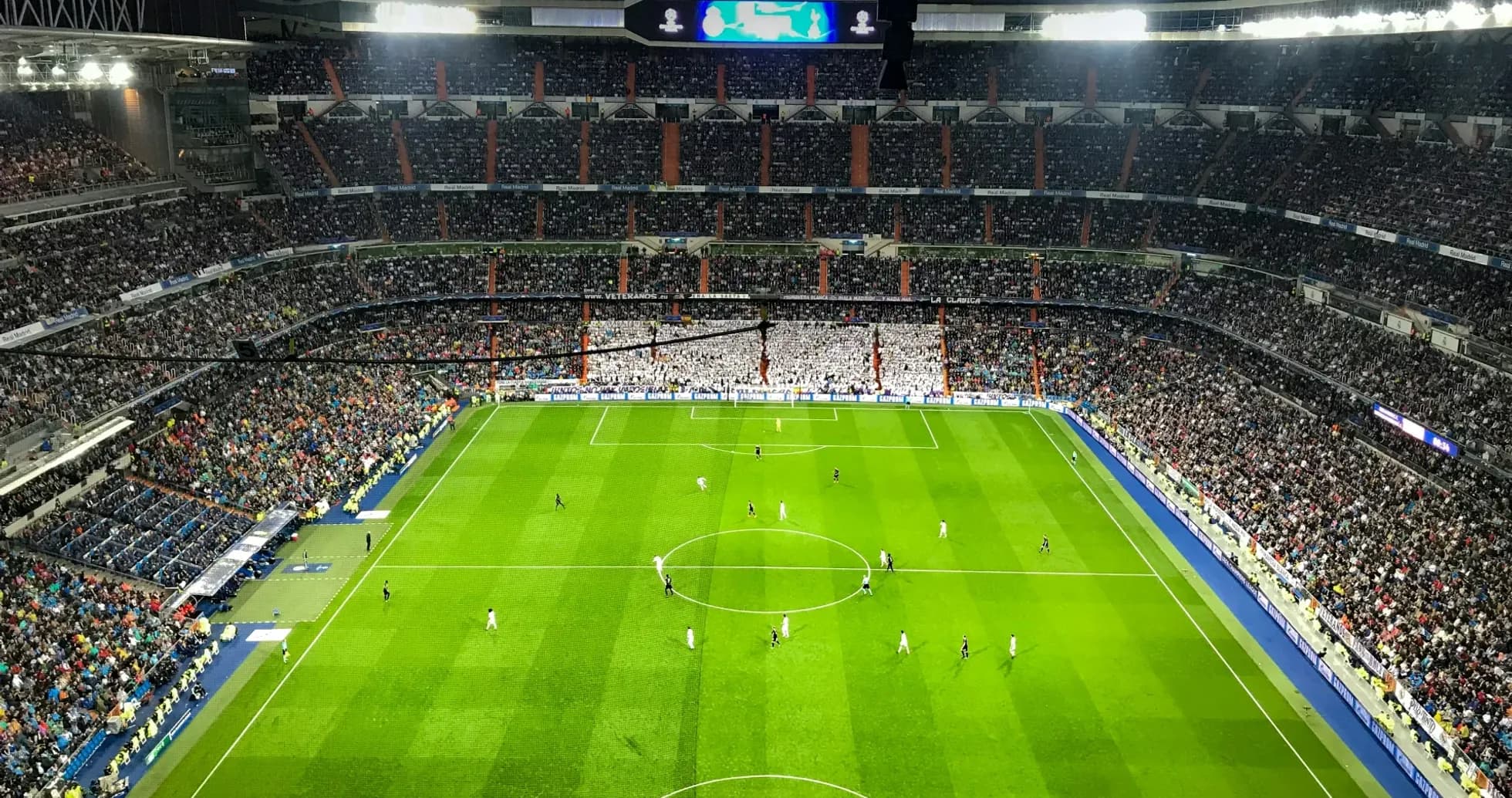
Qatar’s 1-1 draw with Switzerland at Levi's Stadium was a classic case of strategic survival: a low-possession, deep-block 4-3-3 against a high-control, chance-heavy 4-3-3 that generated far more than the scoreline suggested.
Switzerland, with 68% of the ball and 575 passes (522 accurate, 91%), imposed a positional-possession game from the outset. Murat Yakin’s side built with Manuel Akanji and Nico Elvedi as the first playmakers, Granit Xhaka dropping centrally to form a three in the first phase while full-backs Denis Zakaria and Ricardo Rodríguez advanced to pin Qatar’s wingers. The midfield triangle of Xhaka, Remo Freuler and Michel Aebischer gave Switzerland constant central overloads, reflected in their 26 total shots, 18 of them inside the box. The 3.24 xG underscores how consistently they accessed dangerous zones.
Qatar’s response under Julen Lopetegui was clearly pre-planned: a compact 4-3-3 that collapsed into a narrow 4-5-1 without the ball. The front line of Akram Afif, Yusuf Abdurisag and Edmilson Junior started high but regularly dropped to screen passes into Xhaka and Freuler, forcing Switzerland wide. The three central midfielders — Jassem Gaber Abdulsallam, Assim Madibo and Issa Laye — stayed tight to the middle, prioritising vertical compactness over pressure on the ball. That trade-off conceded territory and volume of shots, but limited clean central combinations through the half-spaces.
First Key Tactical Moment
The game’s first key tactical hinge came at 16'. Under heavy pressure, Qatar’s attempt to slow the tempo saw Mahmud Abunad booked for Time wasting, signalling how early they were willing to manage rhythm. Immediately after, Switzerland’s box occupation and circulation forced a penalty situation, confirmed by VAR at 16' for a foul on a Swiss attack involving Remo Freuler’s movement. Breel Embolo converted at 17', rewarding Switzerland’s insistence on attacking through rotations between the front three and the advanced eights.
From there, Switzerland’s structure rarely broke: the front three of Dan Ndoye, Embolo and Rubén Vargas stretched Qatar horizontally, with wide players holding the touchline to create gaps for underlapping runs from Aebischer and Freuler. The 10 corner kicks and 9 blocked shots highlight how often they forced Qatar back into their own area and how many efforts were smothered by the low block rather than missed through poor construction.
Qatar, with just 32% possession and 275 passes (196 accurate, 71%), leaned into a transition-heavy plan. Their 7 total shots, 5 inside the box, were low in volume but relatively high in quality when they did break. Afif’s positioning was key: he drifted into the left half-space to receive first passes out of pressure, while full-back Homam Al-Amin provided width and overlapping runs. The lack of offsides (0) suggests Qatar attacked cautiously, timing runs rather than gambling in behind.
Defensive Discipline
Defensively, the discipline profile tells its own story. Qatar committed 12 Fouls and took two yellows: at 16' Mahmud Abunad (Qatar) — Time wasting, and at 23' Jassem Gaber Abdulsallam (Qatar) — Foul. Switzerland, with 11 Fouls, were more controlled in their rest defence, taking just one booking: 42' Denis Zakaria (Switzerland) — Foul. Zakaria’s card reflected his dual role as both advanced full-back and emergency defender against transitions down Qatar’s left.
Substitutions and Tactical Adjustments
The substitutions around the hour mark reshaped the contest. At 60', Lopetegui injected fresh legs and more direct threat: Ahmed Alaaeldin (IN) came on for Yusuf Abdurisag (OUT), Karim Boudiaf (IN) came on for Jassem Gaber Abdulsallam (OUT), and Ahmed Fathi (IN) came on for Ayoub Al Oui (OUT). Functionally, this stiffened Qatar’s midfield with Boudiaf’s experience and added a more vertical runner in Alaaeldin. The effect was a slightly higher block and more willingness to contest second balls.
Yakin’s response at 65' kept Switzerland on the front foot: Johan Manzambi (IN) came on for Dan Ndoye (OUT), and Fabian Rieder (IN) came on for Michel Aebischer (OUT). Rieder’s introduction maintained the technical level in midfield and supported sustained pressure, but as the game wore on, Switzerland’s attacks became more about volume than clarity, reflected in their 10 shots off goal and the need for Qatar’s last-ditch defending.
By 79', both coaches made further adjustments: Mohamed Naceur Almanai (IN) came on for Assim Madibo (OUT), while Zeki Amdouni (IN) came on for Rubén Vargas (OUT). Qatar’s changes nudged them toward a slightly more adventurous midfield profile, with Almanai offering legs to support counters. Switzerland’s addition of Amdouni was aimed at adding penalty-box presence to convert pressure into a second goal.
The final wave of changes — Hassan Al Haydos (IN) for Edmilson Junior (OUT) at 88', and then Miro Muheim (IN) for Ricardo Rodríguez (OUT) plus Ardon Jashari (IN) for Remo Freuler (OUT) at 89' — set the stage for a chaotic finale. Switzerland’s late defensive reshuffle marginally disrupted their back-line cohesion and pressing triggers on the flanks.
Decisive Tactical Moment
The decisive tactical moment came in added time. With Switzerland still pushing and committing numbers, Qatar finally capitalised on one of their limited attacking platforms. At 90+4', Boualem Khoukhi rose as the unlikely hero, scoring from a move assisted by Homam Al-Amin. The pattern fit Qatar’s broader strategy: a set-piece or late-cross scenario where a centre-back could attack a delivery after the opponent’s structure had stretched. It was the culmination of Qatar’s patience and their willingness to stay in the game despite being territorially dominated.
Goalkeeper Performances
Individually, both goalkeepers were central to the tactical story. Mahmud Abunad (Qatar) made 5 saves and, combined with a goals prevented figure of 0.43, underpinned the low-block approach; he absorbed Switzerland’s shot volume and allowed Qatar to remain within reach despite the xG disparity. Gregor Kobel (Switzerland), with 3 saves and the same 0.43 goals prevented, had a quieter but still decisive evening; his main tasks were sweeping and distribution behind a high line rather than repeated shot-stopping.
Statistically, the verdict is clear: Switzerland’s 3.24 xG versus Qatar’s 0.76, their 26-7 shot advantage and 10-3 edge in corner kicks all point to a match they controlled comprehensively. Their overall form metrics — high possession, high pass accuracy, and sustained box entries — were those of a side with a strong attacking structure and a solid Defensive Index in terms of controlling territory and transitions.
Yet Qatar’s resilience, compactness and game management, even at the cost of early Time wasting and Fouls, allowed them to bend without breaking. The 1-1 scoreline, with Switzerland 0-1 up at half-time and Qatar equalising at 90+4', reflects a tactical contest where control and chance creation on one side met defensive organisation and opportunism on the other — and where the low-block, counter-punch strategy ultimately extracted maximum value from minimal attacking platforms.
Related News
Thomas Tuchel Reflects on England's 10-Man World Cup Triumph and a Surprising Regret
Robert Moreno Takes Over as Interim South Korea Coach After World Cup Setback

Jude Bellingham Returns to Form with Real Madrid After World Cup Success

Chloe Kelly, Beth Mead & 13 Lionesses Who Must Shine in the Upcoming WSL Season for England’s 2027 World Cup Bid
Barcelona Cancels World Cup Tribute Amid Political Tensions
Messi Breaks Record for Most Penalties Taken and Missed in FIFA World Cup History