
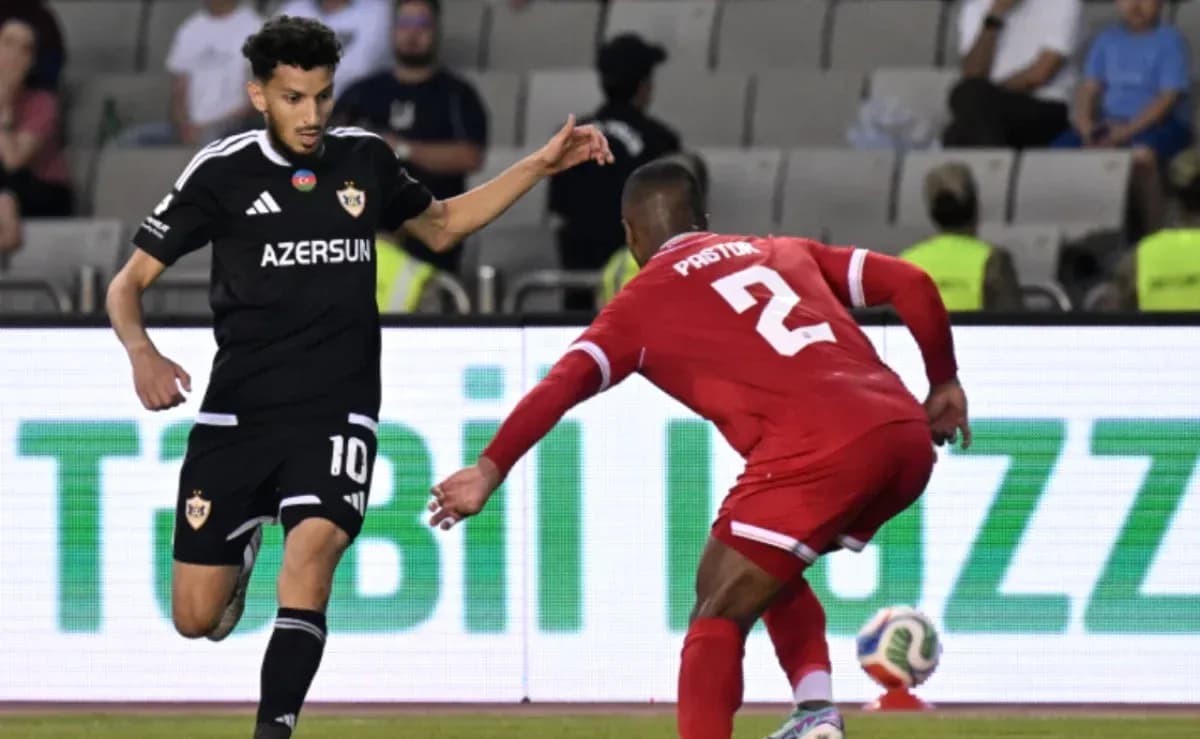
Qarabag vs CSKA Sofia: Tactical Analysis of a Goalless Draw
Qarabag and CSKA Sofia produced a tactically tight 0-0 at Azərsun Arena in the UEFA Europa League 2nd Qualifying Round, a match defined more by structure and risk management than by penalty-box chaos. With CSKA edging possession 52% to 48% and both sides finishing with near-identical shot volumes (12–11 to Qarabag), the contest evolved into a controlled arm-wrestle in which neither coach was willing to overcommit numbers and lose defensive stability.
Team Structures
Qarabag set up in their familiar 4-2-3-1 under Qurban Qurbanov, with M. Kochalski in goal behind a back four of Matheus Silva, B. Huseynov, B. Varkonyi and B. Langa. The double pivot of Pedro Bicalho and M. Jankovic was crucial to their build-up, tasked with connecting a creative line of O. Kashchuk, Kady Borges and A. Zoubir behind lone forward Z. Sawo. The structure was clearly designed to create overloads between the lines and isolate Sawo against CSKA’s centre-backs, but CSKA’s compactness often forced Qarabag to circulate rather than penetrate.
CSKA Sofia, coached by Hristo Yanev, responded with a 4-4-2 that functioned more like a 4-4-1-1 without the ball. F. Lapoukhov started in goal, shielded by a defensive line of Pastor, F. Rodriguez, T. Ivanov and A. Martino. In midfield, M. Ebong and B. Jordao worked as the central pair, with J. Gbamin offering additional protection from a deeper, more conservative role, while S. Sensi tucked in from the flank to help control central spaces. Up front, L. Godoy and I. Pittas formed a mobile front two whose primary job out of possession was to screen passes into Qarabag’s pivot and force play wide.
Statistical Overview
The statistical pattern underlines how well CSKA executed that plan. Qarabag’s 12 shots produced only 5 on target and no blocked efforts, suggesting they were often forced into less dangerous shooting lanes rather than generating clear, crowded-box chances. Their 8 corner kicks to CSKA’s 2 show territorial pressure, but CSKA’s defensive line, led by F. Rodriguez and T. Ivanov, dealt with set plays efficiently and avoided last-ditch blocks. On the other side, CSKA’s 11 shots with 4 on target from just 2 corners indicate a more selective, transition-oriented approach, looking to break into space rather than sustain pressure.
Disciplinary Record
The disciplinary record, with 1 yellow card for Qarabag and 2 for CSKA Sofia, reflects a game of tactical fouling rather than emotional loss of control. Leandro Godoy and Facundo Rodríguez were both booked for CSKA, while Marko Janković received Qarabag’s caution. With no additional info provided for any of the cards, what stands out is not the nature of the offences but their scarcity: across 90 minutes, neither side resorted to persistent, reckless challenges to disrupt rhythm. Instead, the fouls that did draw cards appeared as isolated moments in an otherwise measured contest.
Substitution Patterns
The substitution pattern in the second half reveals both coaches’ tactical adjustments and risk thresholds. At 56', Qurbanov made a double change: M. Jankovic (OUT) for R. Cephas (IN) and B. Langa (OUT) for E. Cafarquliyev (IN). This shifted Qarabag towards a more aggressive posture, with Cephas adding vertical threat and Cafarquliyev providing fresher legs on the flank or at full-back. The intent was clear: increase directness and running power against a CSKA back line that had, until then, coped well with more patient probing.
Yanev’s response came at 73', with a double change of his own: L. Godoy (OUT) for J. Zwarts (IN) and M. Ebong (OUT) for I. Solet (IN). Zwarts offered fresh movement in behind, while Solet added energy and ball-carrying from midfield, hinting at a desire to exploit spaces left as Qarabag pushed for a breakthrough. The yellow card for Facundo Rodríguez at 77' underlined CSKA’s continued commitment to defensive duels in those moments of pressure.
Qarabag’s further changes at 74' — O. Kashchuk (OUT) for J. Mouaddib (IN) and B. Huseynov (OUT) for C. Makreckis (IN) — suggested a late-game reshaping, likely to maintain intensity in the press and add another midfield profile capable of linking play or stepping into higher zones. At 78', A. Zoubir (OUT) for J. Montiel (IN) completed Qarabag’s attacking refresh, bringing on another creative midfielder to try and unlock CSKA’s increasingly low block.
CSKA’s final wave of substitutions in the closing stages was more about game management than chasing a winner. At 84', A. Martino (OUT) made way for T. Ouorou (IN), refreshing the full-back position. In added time at 90+1', Pastor (OUT) for M. Brahimi (IN) and S. Sensi (OUT) for P. Panayotov (IN) reinforced the idea of preserving compactness and legs in midfield and defence, ensuring the structure remained intact through the final minutes.
Defensive Performance
Without explicit goalkeeping statistics, the broader defensive picture still speaks to disciplined structures in front of both keepers. Qarabag allowed 11 shots and only 4 on target; CSKA conceded 12 shots and 5 on target. Both defensive units kept opponent shot quality manageable, limiting the need for spectacular interventions from M. Kochalski (Qarabag) and F. Lapoukhov (CSKA Sofia). The absence of blocked shots on either side further underlines how often shooters were forced to take efforts from spaces where defenders could contain rather than desperately throw bodies in the way.
Match Conclusion
From a statistical verdict, this was a finely balanced tactical contest. CSKA Sofia’s slight edge in possession (52%) and their ability to match Qarabag’s shot volume away from home show a side comfortable controlling tempo in hostile surroundings. Qarabag’s superiority in corners (8–2) reflects territorial gains and periods of sustained pressure, but the inability to convert that set-piece platform into a goal will concern Qurbanov.
With no goals, no red cards, and low card counts overall, the match becomes a case study in two well-drilled teams prioritising structure, spacing, and risk control over chaos. Heading into the return leg, both coaches will feel their game plans largely worked defensively; the key tactical question now is which side dares to unbalance this equilibrium in search of the decisive attacking edge.
Related News
Celje vs Red Bull Salzburg Predicted Lineups and Team News

Anderlecht vs Red Bull Salzburg Predicted Lineups and Team News
NEC Nijmegen vs Benfica Predicted Lineups: Team News for UEFA Europa League
Plzen vs Benfica Predicted Lineups: Team News Ahead of UEFA Europa League
Benfica vs Lech Poznan Predicted Lineups and Team News

Benfica vs OFI: Predicted Lineups and Team News for UEFA Europa League