
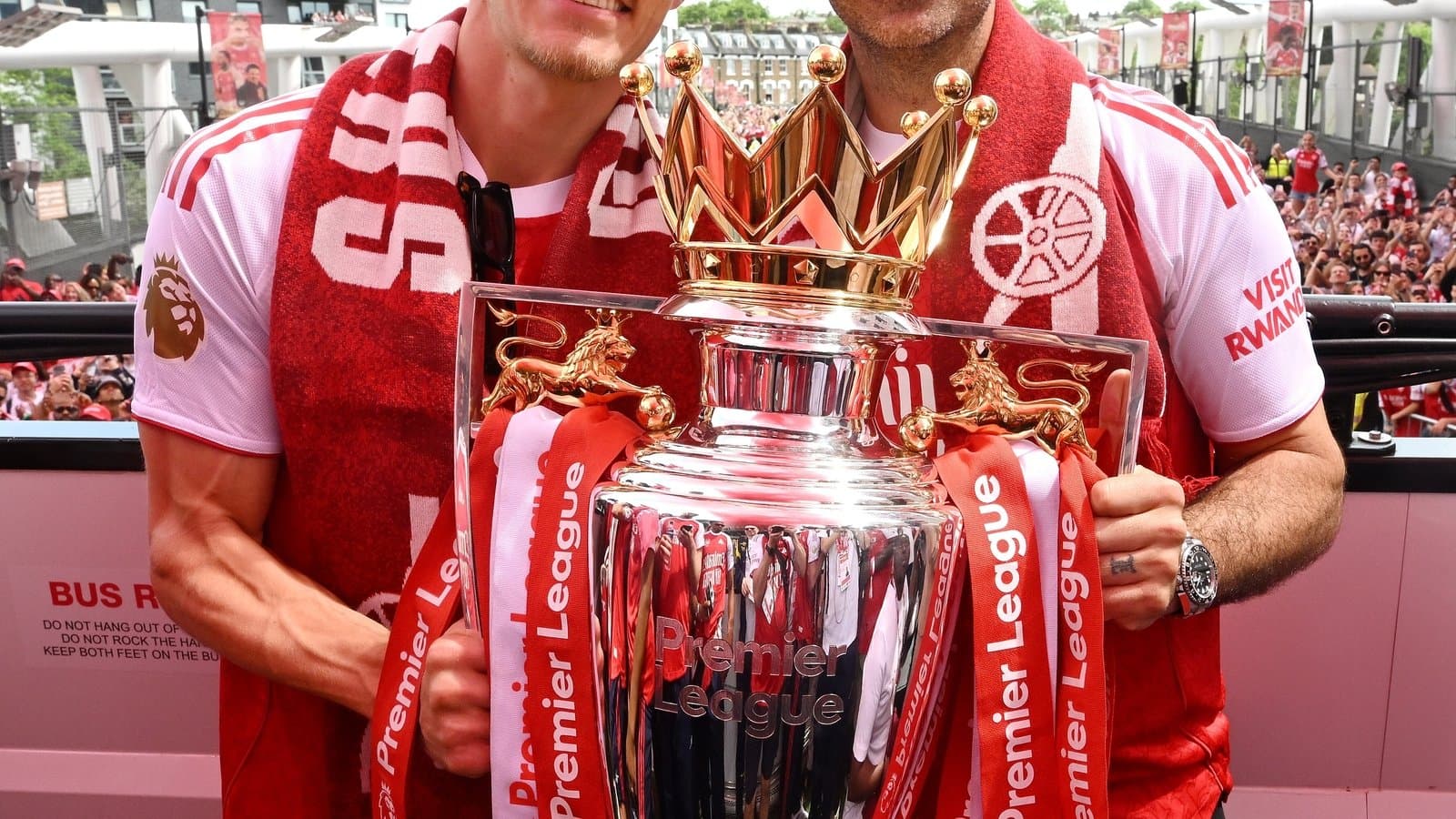
Premier League Trophy: A Symbol of Glory and Engineering
The Premier League trophy finally belongs to them again, 22 years after they last finished on top of English football. Under the Selhurst Park lights last month, Martin Ødegaard raised it high, the gold crown glinting as thousands of phones lit up the night. The images from that evening and the champions parade that followed will live for a generation. The trophy itself will live even longer.
Because this isn’t just a cup. It’s a piece of engineering, history and symbolism, all squeezed into 104cm of metal and stone.
Weight of a title
Every player wanted a turn with it, of course. Every photo, every selfie, every slow walk toward the fans came with the same hidden test: can you actually lift the thing?
The main Premier League trophy weighs 9.5kg – around 1.4 stone – before you even get to the base. Add the engraved plinth that carries the roll call of champions and the weight rockets to 25.4kg, or 4 stone. You don’t just hold this trophy; you shoulder it.
No wonder the captains look exhausted and euphoric all at once when they drive it into the sky. There’s a season’s worth of work in those arms, and the silver doesn’t go easy on them.
Built to dominate the stage
Up close, the trophy is bigger than it looks on television. From the bottom of its engraved base to the tip of the crown, it stands at 104cm – 3ft 5in of polished authority. It spreads 61cm wide, or roughly 2ft, broad enough to dominate any podium or dressing room table.
And there isn’t just one. The Premier League keeps two identical trophies. Both carry the names of the champions around the base, both gleam under the lights, both tell the same story of a nine‑month grind. One stays with the club during the season; the other serves the league’s own needs.
When the ribbons change colour in May, both pieces of silverware are ready.
What the trophy is really made of
Look down to the base and you’re staring at the history of the competition. Every winner from 1993 right through to their latest triumph in 2025/26 is etched there, a permanent record of dominance, drama and the odd miracle.
That base is carved from malachite, a semi‑precious stone sourced from Africa. Its deep green band circling the bottom isn’t just decorative. It represents the pitch itself, the field of play where titles are won and lost.
Above it rises the work of Asprey London, the Crown Jewellers. They cast the main body in solid sterling silver, giving the trophy its unmistakable sheen. The crowns that sit on top are made from 24‑carat silver gilt, adding a regal finish to the most coveted prize in English domestic football.
The design follows a clear theme: “The Three Lions of English Football”. Two golden lions stand on either side of the trophy. The third appears only when it matters most – when the captain grips the handles and lifts the silver overhead. In that moment, he becomes the final lion in the crest.
How long the champions keep it
For now, one of those trophies lives in their cabinet, a constant reminder of a season that finally ended with a title. It will stay with the club throughout the campaign, a silent witness to every team talk, every training session, every reminder of what it took to get there.
But the loan doesn’t last forever. The Premier League demands its prize back at least three weeks before the final round of fixtures each season. The engraving needs updating, the silver needs preparing, and somewhere, another captain is dreaming of becoming that third lion.
The question now is simple: when they hand it back, will they be preparing to win it again?
Related News
Raphinha’s Hat-Trick Powers Barcelona to 7-2 Victory Over Racing Santander
Carabao Cup Fourth Round Draw: Liverpool Set to Clash with Chelsea, Arsenal to Face Fleetwood Town
Key Football Matches to Watch in Azerbaijan This Autumn
Raphinha's Hat-Trick Drives Barcelona to 7-2 Triumph Over Racing Santander
Hansi Flick Leads Barcelona to Record-Breaking Seven Wins in a Row
Gavi Reflects on Injury Return as Barcelona Dominate Racing Santander 7-2