
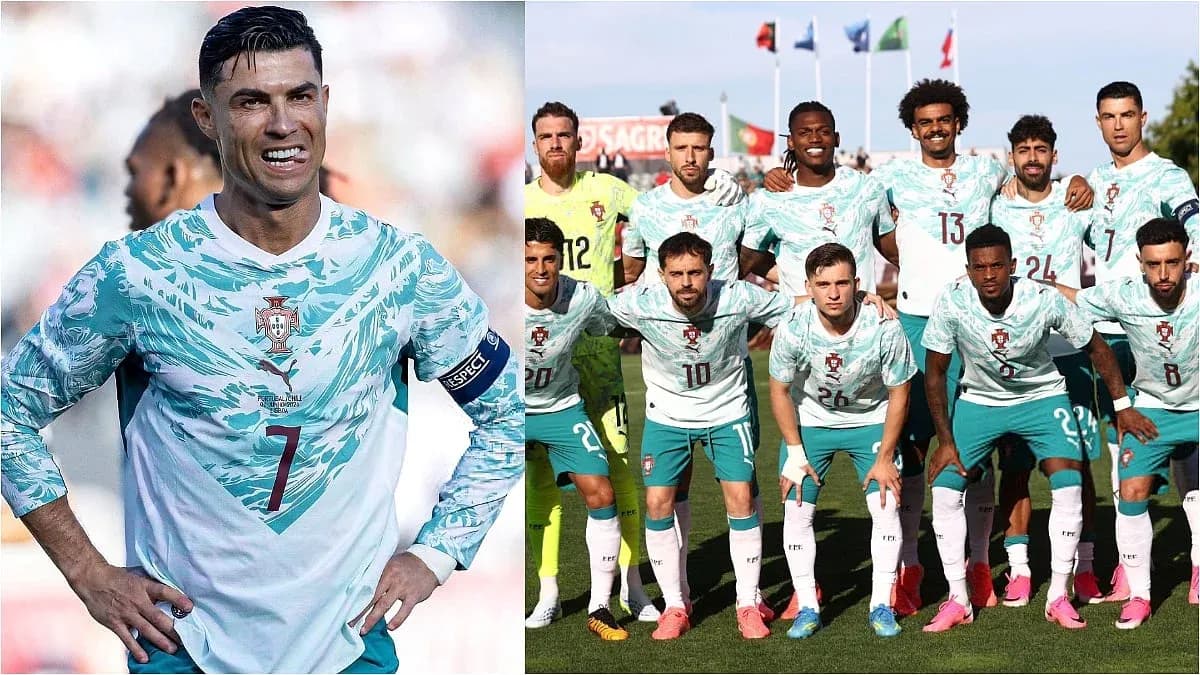
Portugal vs Croatia: World Cup 1/16 Final Preview
Portugal face Croatia at BMO Field in Toronto in a high‑stakes World Cup 1/16 final. Both sides advanced as group runners‑up — Portugal from Group K with 5 points and a +5 goal difference, Croatia from Group L with 6 points and a neutral goal difference — so this knockout tie is season‑defining: one of two consistent group performers will see their World Cup campaign end here.
Head-to-Head Tactical Summary
The recent head-to-head record is dense and competitive, with five meetings between 2020 and 2024 across the UEFA Nations League and friendlies.
On 18 November 2024 in Split (Stadion Poljud), Croatia and Portugal drew 1–1 in the UEFA Nations League (League A - 6). Croatia trailed 0–1 at half-time before levelling after the break.
On 5 September 2024 in Lisbon (Estádio da Luz), Portugal beat Croatia 2–1 in Nations League League A - 1. Portugal led 2–1 at half-time and managed the second half to protect that advantage.
On 8 June 2024 in Jamor, Oeiras (Estádio Nacional), a friendly saw Croatia win 2–1 away. Croatia led 1–0 at half-time and held off a Portuguese response.
On 17 November 2020 back in Split (Stadion Poljud), Portugal came from behind to win 3–2 in Nations League League A - 6. Croatia were 1–0 up at half-time, but Portugal overturned the deficit in a high‑variance second half.
On 5 September 2020 in Porto (Estádio Do Dragão), Portugal produced the most one‑sided scoreline of the series, a 4–1 home victory in Nations League League A - 1 after leading 1–0 at half-time.
Tactically, Portugal have generally imposed more attacking volume in competitive games, reflected in wins of 4–1, 3–2 and 2–1, while Croatia have shown they can disrupt Portugal’s rhythm and counter effectively, taking the 2–1 friendly and earning the 1–1 draw away. Momentum within matches has often swung after the interval, underlining how in‑game adjustments and bench depth tend to be decisive between these two.
Global Season Picture
- League Phase Performance: In the group stage, Portugal finished 2nd in Group K with 5 points from 3 matches (1 win, 2 draws, 0 losses), scoring 6 goals and conceding 1 (goal difference +5). Croatia finished 2nd in Group L with 6 points from 3 matches (2 wins, 0 draws, 1 loss), scoring 5 and conceding 5 (goal difference 0). Portugal’s profile is of a controlled, efficient side with a strong defense (1 goal against in 3 games), while Croatia’s is more volatile, with equal goals for and against (5–5) suggesting more open contests.
- Season Metrics: In the league phase, Portugal have 6 goals from 3 fixtures, averaging 2.0 goals per match, with only 1 conceded (0.3 per match). They have kept 2 clean sheets and failed to score once, typically using a 4‑2‑3‑1 structure in all 3 games. Disciplinary output is measured but present, with 4 yellow cards distributed across early and late phases of matches. Croatia, also in the league phase, have scored 5 times in 3 fixtures (1.7 per match) and conceded 5 (1.7 per match). They have 1 clean sheet and have scored in every game, alternating mainly between 4‑2‑3‑1 (twice) and 3‑4‑2‑1 (once). Their yellow cards cluster in the 61–75 and 91–105 minute ranges, pointing to late‑game physical intensity. Both teams’ statistics reflect the same 3 matches as in the group stage, so these numbers are fully aligned with group‑stage performance rather than a broader multi‑competition sample.
- Form Trajectory: Portugal’s group‑stage form string “DWD” indicates an unbeaten run: opening with a draw, responding with a win, then closing with another draw. This suggests stability and a high floor, but also that they occasionally struggle to turn control into victories. Croatia’s “WWL” shows they opened strongly with back‑to‑back wins before a loss, a pattern of higher ceiling but more fluctuation. Coming into the knockout, Portugal carry defensive consistency and Croatia bring proven ability to win but with defensive exposure.
Tactical Efficiency
Across all phases of the competition, Portugal’s efficiency profile is that of a balanced, structurally sound side. With 6 goals scored and only 1 conceded in 3 matches, they combine a clinical attack (2.0 goals per game) with a very tight defense (0.3 goals against per game). The recurring 4‑2‑3‑1 and two clean sheets underline tactical clarity and strong spacing between lines. Their card pattern — four yellows spread relatively evenly across the match — suggests controlled aggression rather than reckless pressing.
Croatia, across all phases of the competition, present a more high‑variance efficiency pattern. They also score at a healthy rate (1.7 goals per game) but concede at the same rate (1.7 per game), indicating that their attacking commitment leaves space to be exploited. The alternation between 4‑2‑3‑1 and 3‑4‑2‑1 reflects tactical flexibility but also a search for balance that is not yet fully solved defensively. Their late‑game yellow cards point to intensity in closing phases, which can be valuable in knockout football but also carries disciplinary risk.
In a notional Attack/Defense Index comparison, Portugal would rate higher defensively due to the single goal conceded and two clean sheets, while maintaining a strong attacking score through their 6 goals and a biggest win of 5–0. Croatia’s attack index would be competitive — they have scored in every match and can hurt teams both at home and away — but their defense index would lag, with 5 goals conceded including a heaviest defeat of 4–2 away. The head-to-head history supports this: Portugal have repeatedly found multi‑goal outputs against Croatia in competitive fixtures, while Croatia have needed to be extremely efficient in transition to compensate for defensive leaks.
The Verdict: Seasonal Impact
This World Cup 1/16 final is a hinge point for both projects.
For Portugal, elimination here would be a severe underperformance relative to a dominant group‑stage defensive record (6–1 on goals) and an unbeaten run (“DWD”). Progression would validate their controlled, system‑driven approach and set them up as credible contenders for at least the quarter-finals, with their defensive metrics suggesting they can manage two‑legged or one‑off knockout tension better than most.
For Croatia, advancing would confirm that their more volatile profile (5–5 goals, “WWL” form) is sustainable in knockout football, reinforcing the narrative of a team that can elevate its level in decisive ties even when the underlying defensive numbers are imperfect. A defeat, especially if it comes via another multi‑goal concession to Portugal, would underline the need to tighten their structure and could trigger a tactical reset for future tournaments.
Strategically, the match shapes the upper half of the bracket: a Portuguese win would push a low‑conceding, possession‑oriented side deeper into the tournament, complicating the path for any attack‑first opponent they meet later. A Croatian win would inject a more transition‑heavy, risk‑tolerant team into the later rounds, likely producing more open, high‑variance contests. In either case, this tie is less about marginal placement and more about defining who remains in the World Cup title conversation and whose 2026 campaign becomes a story of missed structural adjustments.
Related News

Thomas Tuchel Reflects on England's 10-Man World Cup Triumph and a Surprising Regret

Robert Moreno Takes Over as Interim South Korea Coach After World Cup Setback

Jude Bellingham Returns to Form with Real Madrid After World Cup Success

Chloe Kelly, Beth Mead & 13 Lionesses Who Must Shine in the Upcoming WSL Season for England’s 2027 World Cup Bid

Barcelona Cancels World Cup Tribute Amid Political Tensions
Messi Breaks Record for Most Penalties Taken and Missed in FIFA World Cup History