
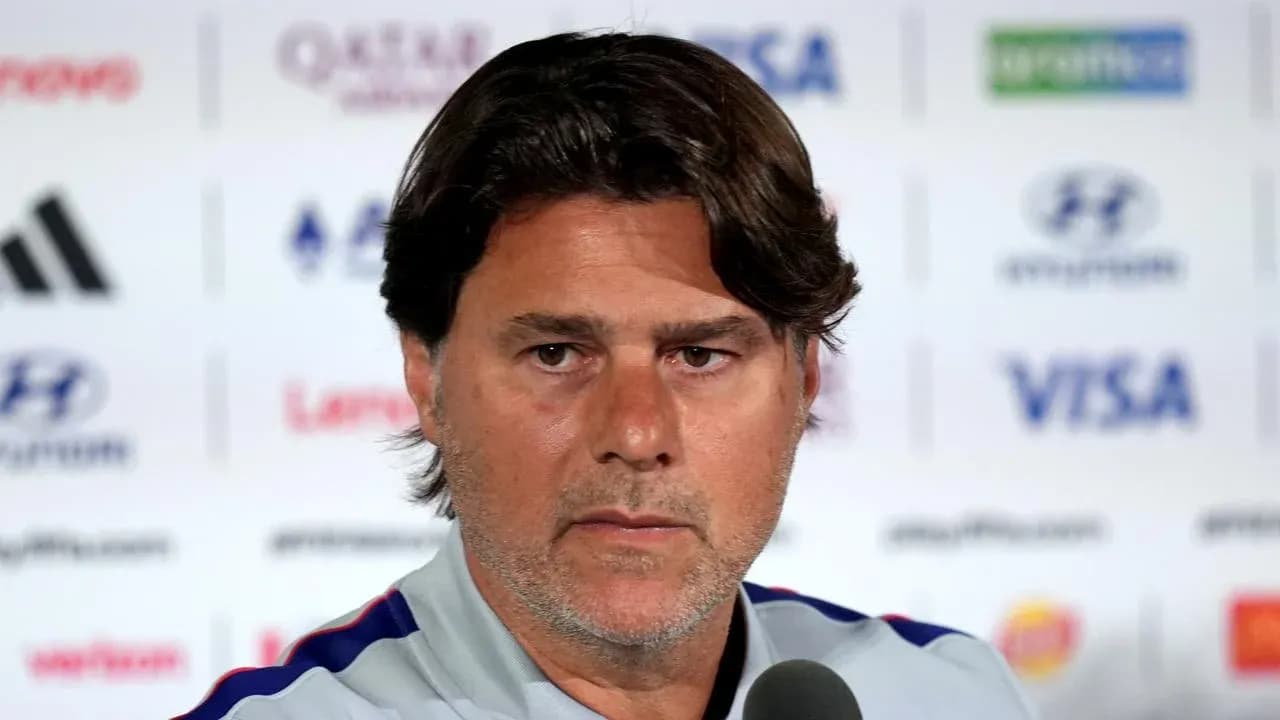
Pochettino Defends USMNT's Group Win Despite Loss to Turkey
Mauricio Pochettino walked into the press room with a group winner’s swagger and the sting of a 3-2 defeat still fresh. The questions that followed only sharpened his mood.
Not one reporter, he felt, had paused to acknowledge the basic fact of the night: the United States had topped the group.
“The mood is like we [are going] home tonight and Turkey is staying,” he snapped. “I need to [remind] you and everyone that we won the group. Sorry guys, we won.”
It was classic Pochettino – bristling, defiant, and utterly unwilling to let the narrative drift away from what he considered the bigger picture. The loss to Turkiye, with a heavily rotated XI, had barely settled. The room wanted to talk about momentum, warning signs, vulnerability heading into the World Cup knockout rounds.
He wanted to talk about perspective.
Group winners, but no victory lap
Before the match, Pochettino had insisted he would send his side out to chase another win. On the teamsheet, though, the story read differently. Nine changes from the line-up that had beaten Australia. Reserves everywhere. This was a calculated gamble, not a desperate push for perfection.
If the USMNT had found a way to win, it would have been a landmark: the first time in program history they’d taken nine points from nine in a World Cup group stage. That carrot dangled, but Pochettino was never seduced by it.
“Making history is winning the World Cup,” he said pointedly. “It’s not winning three matches only within the World Cup. I don’t really understand. It’s a little bit petty if you will — you’re thinking a little too small. You’re telling me you could make history — what does it mean to win three matches if you lose the next one?”
His irritation cut through the room. For him, the real history lies four weeks away, not in the trivia of a perfect group record.
Rotation, risk and a reminder from Germany
Pochettino framed his decision within the wider chaos of a World Cup group stage. A few hours before the US kicked off, Germany had rolled out many of their regulars and still been turned over by a desperate Ecuador.
He made the comparison deliberately. Big teams, he argued, all walk this tightrope: rest players, protect legs, manage injuries, and accept that rhythm might suffer.
The United States paid that price on the scoreboard, but Pochettino refused to treat the night as a collapse. He saw something else: a squad handling the situation, absorbing the hit, and still emerging as group winners with key pieces intact.
One of those pieces is Christian Pulisic. The AC Milan forward, the face of this US side, had missed the win over Australia with a calf issue that forced him off at half-time in the victory over Paraguay. Getting him back on the pitch was arguably more important than any marginal gain from a third straight win.
In Pochettino’s mind, that’s the kind of decision that decides tournaments, not headlines in June.
Arnold’s Iraq face brutal reality
On the other side of the World Cup draw, another familiar figure faced the cameras with a very different tone.
Graham Arnold, who once carried Australian hopes with the Socceroos, saw his Iraq side thrashed 5-0 by Senegal, a defeat that ended their campaign and raised immediate questions over his future.
A “stupid red card” in the 13th minute for Rebin Sulaka, Arnold said, changed the course of the game, even with Senegal already 1-0 up. Down a man against that level of opposition, Iraq never recovered.
“The early red card was mentally tough on the players. Against a team like Senegal, mistakes are always punished,” he said.
Arnold’s assessment of the tournament was brutally honest. Eleven goals conceded, nine of them, he stressed, from individual errors. That statistic cut deeper than the scoreline.
“I told the players after the match that we conceded 11 goals at this World Cup, and nine came from our own individual mistakes. We have to learn from that.
“In the second half, we ran out of energy. I also made changes to give more players the chance to experience representing Iraq at the World Cup, and I take full responsibility for that.”
Group I, with France and Norway alongside Senegal, always looked unforgiving. Iraq were the last team to qualify, dragged through an intercontinental playoff by Arnold to reach a first World Cup in 40 years. That alone, he argued, should not be forgotten.
“Everyone in Iraq should be proud of the fact that we made it here and we performed very well in two out of the three games,” he said in Toronto.
His contract expires at the end of the tournament. A reunion with Australia at next year’s Asian Cup in Saudi Arabia hangs in the air, unresolved.
“I’ve just asked them to leave it until after World Cup, then we can have a chat then,” Arnold said. For now, his future is as open as his team’s defending has been exposed.
Fire in Panama’s training, and a final shot at England
While some nations are packing their bags, Panama are already eliminated but still simmering.
Coach Thomas Christiansen watched Cecilio Waterman and Jose Luis Rodriguez clash in training on Friday ahead of their final Group L game against England in New Jersey. Instead of alarm, he saw something he liked.
“What happened today in training, this is a normal situation,” he said. “I would’ve liked to see these situations more often, that means the team is alive. They are willing to do a good effort... to be in the first XI for the game.
“If this happens another time, it’s a good sign that they are alive.”
Panama’s World Cup story is one of hard lessons. Five games at the tournament in their history, five defeats. The last time they faced England, in 2018, they were torn apart 6-1.
This time, Christiansen wants something different – not just a respectable scoreline, but a statement that Panama have evolved since that humiliation.
“Now we have the last game against England, a good way to finish a World Cup if it goes our way,” said the Dane, who has been in charge since 2020 but is out of contract after the competition.
“I think we have made changes from the last time they faced Panama eight years ago, but we need to show it tomorrow.
“It will be a tough one but I’m thinking that the team will be able to compete and do a good game.”
One point. One performance. One final chance to show they belong.
France win big, Deschamps grieves in private
France, meanwhile, cruised to a 4-1 win over Norway without their head coach on the touchline.
Didier Deschamps missed the match after returning home for his mother’s funeral, a deeply personal moment that his players wanted to mark on the pitch. They planned to wear black armbands in his honour, but the French Football Federation confirmed their request had been denied by FIFA.
The confusion did not end there. Reports suggested a minute’s silence would be held for Deschamps’s mother before kick-off. The FFF later clarified that the silence was instead dedicated to the victims of the Venezuelan earthquake.
FIFA have yet to respond publicly, leaving a strange disconnect between a team’s private grief and the governing body’s protocols.
On the field, France rolled on. Off it, their most decorated modern coach mourned in silence, barred from even a simple black band of tribute.
And so the World Cup moves forward, as it always does: one coach raging at questions after winning a group, another wondering if he’ll keep his job, a smaller nation fighting for pride, and a giant forced to celebrate without the man who built its modern identity.
Related News
Raphinha’s Hat-Trick Powers Barcelona to 7-2 Victory Over Racing Santander
Carabao Cup Fourth Round Draw: Liverpool Set to Clash with Chelsea, Arsenal to Face Fleetwood Town
Key Football Matches to Watch in Azerbaijan This Autumn
Raphinha's Hat-Trick Drives Barcelona to 7-2 Triumph Over Racing Santander
Hansi Flick Leads Barcelona to Record-Breaking Seven Wins in a Row
Gavi Reflects on Injury Return as Barcelona Dominate Racing Santander 7-2