
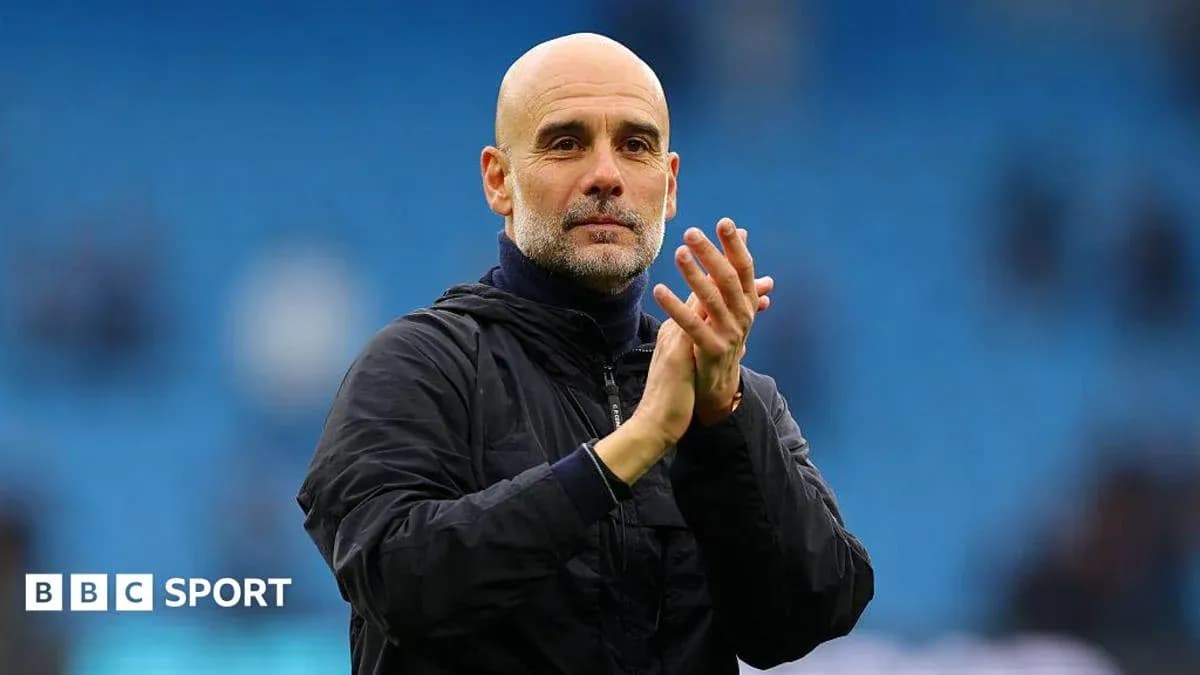
Pep Guardiola in Talks for Italy Head Coach Position
Pep Guardiola has held talks about becoming Italy’s next head coach, Italian Football Federation (FIGC) president Giovanni Malagò has confirmed, in a move that would mark one of the most dramatic appointments in the Azzurri’s history.
Guardiola walked away from Manchester City this summer after a decade of relentless success in England: six Premier League titles, three FA Cups, five League Cups and the club’s first Champions League crown. He left saying he was “so tired”. Barely a few months on, Italy want him back on the touchline.
FIGC ready to bend the rules
Italy have been without a head coach since Gennaro Gattuso resigned in April, days after the four-time world champions failed to qualify for a third consecutive World Cup. The vacancy has become the most scrutinised job in European football, and the FIGC is clearly prepared to think big.
Sky Italia first revealed on Monday that the federation had made contact with the 55-year-old. Malagò then went a step further in an interview with Italian digital outlet Cronache di spogliatoio, confirming that discussions with the Spaniard have taken place and that the federation is willing to stretch its finances.
“[Financial] Exceptions have been made, exceptions that for example may concern the name that is so overbearing in these hours: Pep Guardiola,” Malagò said. “Exceptions for obvious reasons that I am not here to explain, but it is not certain that this thing will go through.”
The message was clear: Italy know they cannot land Guardiola on standard terms. They are prepared to try anyway. BBC Sport has contacted the FIGC for comment.
A rare foreign bet for the Azzurri
If Guardiola takes the job, he would become only the third non-Italian to coach the men’s national team in more than a century. Hungarian Lajos Czeizler formed part of a technical committee in the 1950s, while legendary Argentine coach Helenio Herrera shared the role with Ferruccio Valcareggi in the following decade.
The Azzurri have otherwise remained fiercely attached to Italian coaches. This would be a break not just in style, but in identity.
Guardiola has never managed in Italy, but he is no stranger to the country. He speaks fluent Italian and spent two seasons in Serie A between 2001 and 2003, with two spells at Brescia and one at Roma. Those years gave him a feel for the tactical obsession and cultural intensity that surround calcio at every level.
Mancini, Pirlo and a wider shortlist
The FIGC is not short of high-profile alternatives. Another former Manchester City manager, Roberto Mancini, is under consideration. Mancini delivered Italy’s last great triumph, guiding them to Euro 2020 glory, and would represent a return to a familiar face at a time of crisis.
Andrea Pirlo is also in the frame. The former Azzurri midfielder, now in charge of Dubai United, offers a different profile: a younger coach, steeped in Italian football’s traditions, still shaping his managerial identity.
Asked whether Guardiola, Mancini and Pirlo were the only candidates, Malagò was emphatic: “Absolutely not. We think about a certain profile and certainly these names fall into that category.” The search is clearly wider, but the calibre of those three underlines the scale of Italy’s ambition.
From exhaustion to another Everest?
Guardiola’s decade at City followed trophy-laden spells at Barcelona and Bayern Munich. Across those three clubs he has reshaped modern football, his ideas copied and adapted across Europe. When he walked away from the Etihad in May, he spoke openly about fatigue and the weight of a 10-year cycle in Manchester.
“I am so tired. Seriously, I am so tired,” he said then. “The memories I have of Barcelona and Bayern Munich are unbeatable but the luggage of memories I have from here from 10 years is more than any other.”
Those words suggested a man ready to step away, at least briefly. Yet the Italy job is not a normal proposition. It offers a different rhythm to club football, fewer games but immense pressure, and the chance to rebuild a fallen giant on the international stage.
For a coach who has conquered Spain, Germany and England, the lure of writing a new chapter with one of football’s most storied national teams is obvious. The FIGC has opened the door and signalled it will bend its own financial framework to entice him.
Now the question is simple: after walking away exhausted from Manchester, does Guardiola want to dive straight into the most politically charged, emotionally demanding job of his career?
Related News
Ilia Topuria Accuses Justin Gaethje After UFC Defeat
Tyson Fury vs Anthony Joshua Fight Date and Venue Confirmed
Switzerland Calls Up In-Form Sion Striker Winsley Boteli for Nations League
Bournemouth Secures Historic 2-1 Win Over Real Sociedad in Spain
Portugal Announces Squad for 2026 UEFA Nations League; Cristiano Ronaldo Expected to Play
Raphinha Channels Ronaldo Nazario as Barcelona's Leading Striker After Position Change