
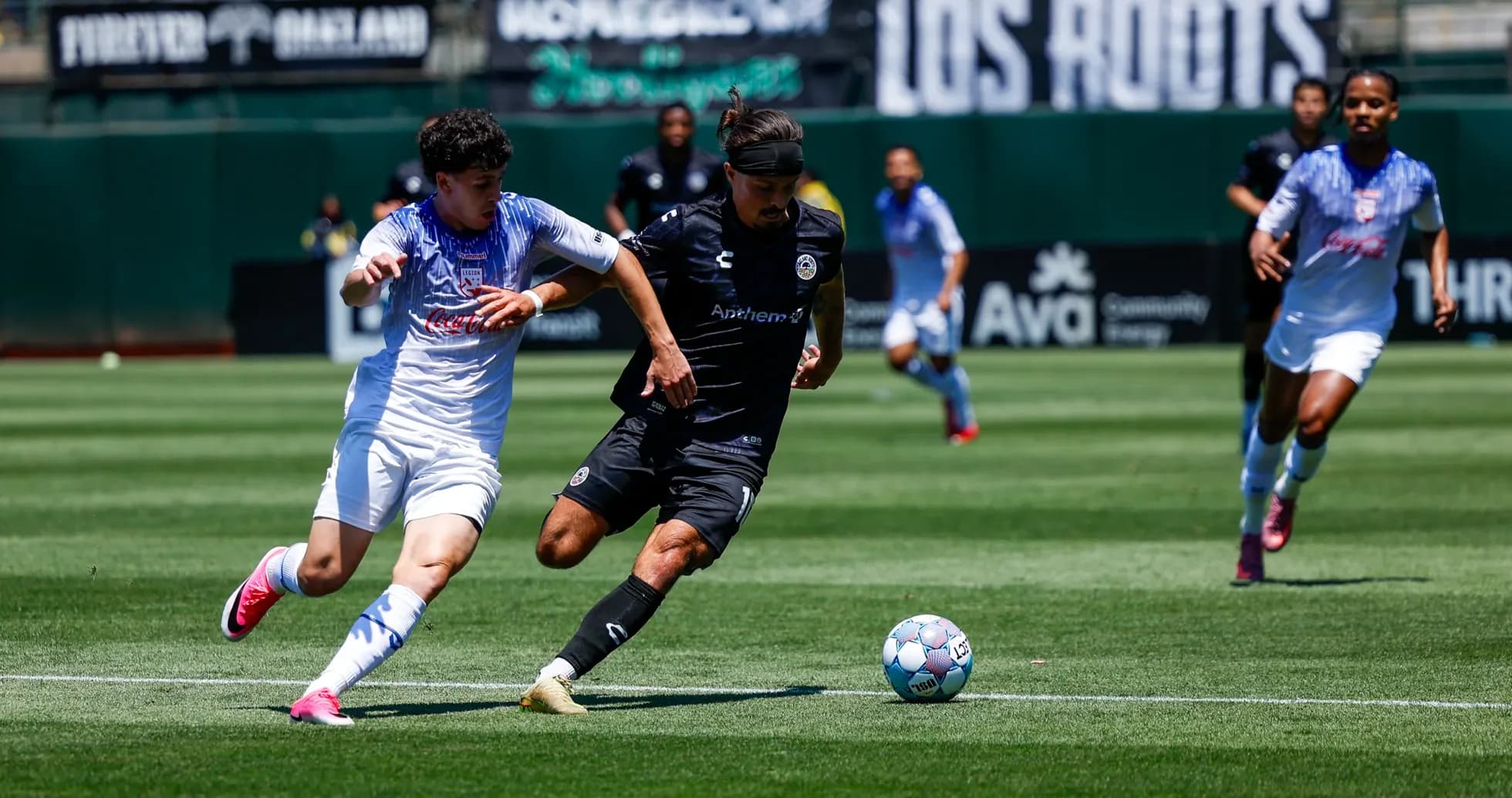
Oakland Roots vs Birmingham Legion: A Tactical Stalemate in USL Championship
Laney College Football Stadium under the Oakland lights hosted a meeting of contrasting USL Championship identities, and the 1–1 draw between Oakland Roots and Birmingham Legion felt exactly like that: a clash between a home side trying to consolidate a promotion push and an away team stubbornly refusing to be broken.
Heading into this game, Oakland sat 4th in USL 1 with 18 points from 13 matches, their overall goal difference a tight +2, built on 19 goals for and 17 against. At home they had been solid rather than spectacular: 8 matches, 3 wins, 3 draws, 2 defeats, with 10 goals scored and 8 conceded. Birmingham arrived 10th with 12 points from 12 matches, their overall goal difference -2 (13 scored, 15 conceded), but with an away profile that hinted at danger: on their travels they had scored 8 and conceded 9 in 5 games, with a bolder attacking average of 1.6 goals away compared to 0.7 at home.
The tactical story began with the lineups. Ryan Martin’s Oakland XI was built around a spine of R. Spiegel in goal, a defensive unit featuring K. Tingey, M. Edwards and J. Bravo, and a midfield corridor anchored by B. Byaruhanga and T. McCabe. Ahead of them, the creative burden fell on F. Valot and J. de Vicente, with W. Prentice and P. Wilson tasked with stretching Birmingham’s back line.
For Birmingham, Jay Heaps sent out a side that looked designed to counter and compress. J. Koleilat started in goal behind a back line marshalled by P. Kavita and B. Washington, with A. Daley and N. Brown offering width and recovery speed. The midfield triangle of S. McIllhatton, S. Antwi and S. Tregarthen was heavy on work-rate and second-ball aggression, while S. Saucedo, P. Vassell and R. Williams provided the transition threat.
The absence list offered no clues, but the disciplinary profiles of both teams framed the emotional tone. Oakland’s yellow cards this season had been spread across the second half, with a notable spike: 27.27% of their yellows arriving between 61–75 minutes and 22.73% from 76–90. They also had a red-card flashpoint between 46–60 minutes (50.00% of their reds) and another in the 91–105 band (the other 50.00%). Birmingham, by contrast, were late-game agitators: 30.30% of their yellows had come from 76–90 minutes, and their only red card this campaign had also arrived in that same 76–90 window (100.00% of their reds). This was always likely to be a match that grew more fractious as legs tired and spaces opened.
From a squad-construction perspective, Oakland’s strength lay in their flexibility across the middle and final thirds. Byaruhanga and McCabe offered a double pivot capable of screening and recycling, allowing Valot and de Vicente to drift into half-spaces. Wilson, wearing 9, was the natural reference point up front, supported by the direct running of Prentice. On the bench, D. Trejo and B. Jacquesson gave Martin the option to inject pace and fresh movement in the channels, while F. Bettache could tilt the midfield towards more possession and line-breaking passes. N. Hackshaw and T. Gibson provided defensive and structural cover, with K. McIntosh in reserve as the goalkeeping alternative.
Birmingham’s bench told a slightly different story. With R. Damus and G. Diarbian among the substitutes, Heaps had pure counter-attacking speed in reserve, ideal for exploiting any late-game over-commitment from a Roots side that, overall, averaged 1.5 goals for and 1.3 against per match. K. Hughes and K. Cole added steel and ball-winning potential if the match turned into a midfield scrap, while S. Shashoua offered a more technical, creative profile between the lines. S. Ngoma was another energetic wide option, and T. McMullen provided cover in goal.
The “Hunter vs Shield” matchup was less about a single striker and more about unit performance. On their travels, Birmingham’s attack had been relatively efficient, with 8 goals in 5 away games and that 1.6 away goals-for average. They were confronting an Oakland home defence that, while decent, had conceded 8 in 8 at home with an average of 1.0 goals against. Oakland’s back line, fronted by Spiegel, Tingey and Edwards, had to manage those vertical runs from Williams and the late box arrivals from Vassell and Saucedo.
In the opposite direction, Oakland’s home attack averaged 1.3 goals per game (10 in 8), set against a Birmingham away defence that had leaked 9 in 5, an away average of 1.8 goals conceded. That imbalance hinted at space for Valot and de Vicente to create overloads, especially if McCabe and Byaruhanga could pin Birmingham’s midfield deeper. The 1–1 final score ultimately reflected that statistical tension: Oakland had enough to break through once, but not enough to fully punish Birmingham’s defensive frailties on their travels.
The “Engine Room” duel was defined by contrasting midfields. Oakland’s central trio of Byaruhanga, McCabe and Lepley looked built to control rhythm, with Valot dropping in to link phases. Birmingham’s McIllhatton, Antwi and Tregarthen were more about disruption and quick release, looking to feed Saucedo and Williams early. Given Birmingham’s season-long pattern of collecting 18.18% of their yellows between 31–45 minutes and 12.12% between 46–60, there was always a risk their aggression could spill over in that central zone, especially once Oakland pushed more numbers forward.
Following this result, both teams remained true to their seasonal DNA. Oakland extended their tendency to draw (they already had 6 overall draws from 13 matches), while Birmingham added yet another stalemate to a campaign built on narrow margins (6 draws from 12 heading into this game). With both sides perfect from the spot this season in total—each having scored 1 penalty from 1 taken and missed none—there was no twist from twelve yards to break the deadlock.
From a statistical prognosis perspective, the draw felt in line with the underlying numbers. Oakland’s overall scoring and conceding averages (1.5 for, 1.3 against) suggest a team that lives in one-goal margins. Birmingham’s overall profile (1.1 for, 1.3 against) points to similarly tight contests. Neither side has the defensive solidity to routinely shut games down, nor the attacking firepower to blow them open.
For Oakland, the squad depth in attacking roles—Trejo, Jacquesson, Bettache—remains their key lever to turn these balanced encounters into wins, especially at Laney College Football Stadium where their home averages suggest room for incremental gains. For Birmingham, the away numbers show promise: if Heaps can better shield a back line that concedes 1.8 goals per away match while preserving the 1.6 goals-for threat, this kind of disciplined, hard-earned point could become the foundation for a climb from mid-table obscurity towards the playoff conversation.
Related News

San Antonio Triumphs Over Colorado Springs in USL Championship Clash

Charleston Battery's Dominance Over Loudoun United: A Tactical Analysis
Orange County SC Triumphs 4-2 Over Miami FC in USL Showdown

Colorado Springs vs San Antonio Match Preview

Colorado Springs vs San Antonio: USL Championship Clash Preview

Miami FC vs Orange County SC Match Preview