
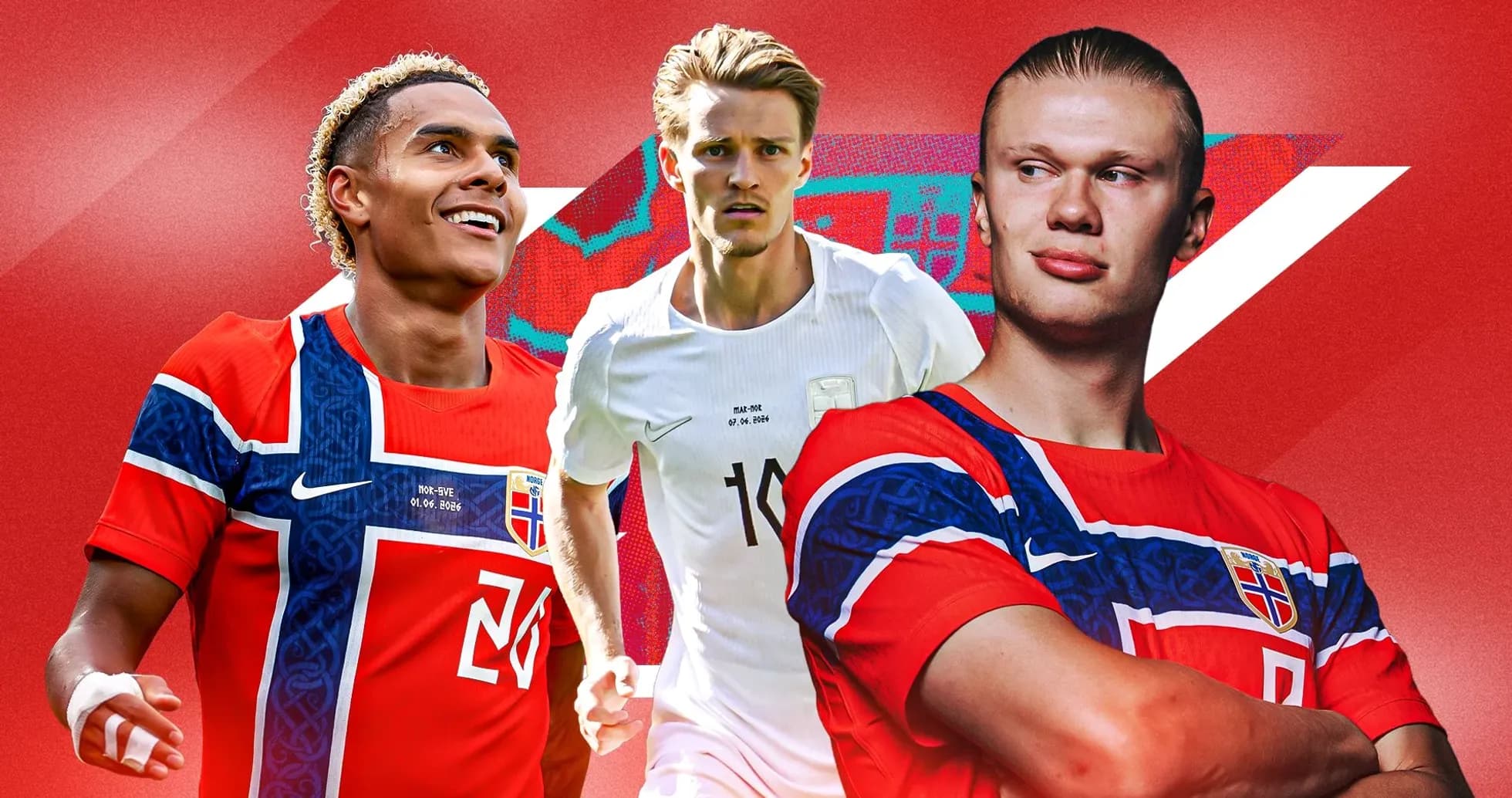
Norway's World Cup Strategy: More Than Just Haaland
Erling Haaland will dominate the headlines in North America. He always does. But if you look a little wider – literally – you start to see why Norway arrive at this World Cup with more than just a one-man plan.
Stale Solbakken has built a side that attacks from angles, not just through the obvious centre-forward. His wingers are young, fearless and direct, and his right-back might be the most dangerous crosser in the tournament. Haaland is the finisher. The rest of this group is designed to feed him from every conceivable position.
Nusa, Schjelderup and a left flank with teeth
On the left, Antonio Nusa looks set to start. The RB Leipzig livewire is only 21, but he already plays like a man who knows he can embarrass full-backs. He drifts past markers, rides challenges, and rarely needs a second invitation to run at his opponent.
Qualifying underlined his importance. Six goal contributions in six games, including a goal and an assist in a 3-0 dismantling of Italy, then another telling performance in a 4-1 win in the return fixture. When Norway broke big teams open, Nusa was usually somewhere near the damage.
Waiting behind him is Andreas Schjelderup, hardly a “backup” in any traditional sense. The 22-year-old arrives off a superb second half of the season under Jose Mourinho at Benfica, where he stacked up 10 goals and assists in just 14 league matches. He also scored twice against Real Madrid in the Champions League in January – the sort of stage where pretenders tend to shrink. Schjelderup isn’t a guaranteed starter yet, but inside Norwegian football there’s little doubt: this is a future star.
Power on the right – and a twist in the system
The right flank is where Solbakken starts to bend convention. Atletico Madrid’s Alexander Sorloth, all 6'5" of him, is nominally the right-sided forward. In reality, he spends much of Norway’s attacking play drifting inside to join Haaland in the box.
It worked in qualifying. Eight goal contributions in eight games tell their own story. Sorloth’s presence gives Norway a second penalty-box monster, one who can finish, win duels and occupy centre-backs who would otherwise crowd Haaland.
If Solbakken wants a more traditional wide attacker, Fulham’s Oscar Bobb offers that option, even if his start at Craven Cottage has been slower than hoped. There is also Jens Petter Hauge, recalled to the fold after some eye-catching displays for Bodo/Glimt, form that helped fuel famous Champions League wins over Man City and Inter. Hauge played no part in qualifying but forced his way into the squad the hard way: by producing in big European nights.
Odegaard at the heart of it all
Move inside and the picture becomes even clearer: this is not a team that lives off Haaland alone.
Martin Odegaard is the conductor. The Arsenal captain divides opinion at club level, where some criticise his inconsistency, but in a Norway shirt he tends to impose himself. Even in an injury-hit qualifying campaign, missing three of eight matches, he still delivered seven assists. Three of those came in one game against Israel. No player in Europe managed more across qualifying.
Odegaard will again be asked to knit everything together – sliding passes into Haaland’s path, linking with Nusa and Sorloth, and dictating the tempo when Norway need to breathe. When he plays on the half-turn and sees the game a second quicker than everyone else, this team looks dangerous from anywhere inside the final third.
Behind and around him, there is steel and balance. Fulham’s Sander Berge anchors the midfield, a defensive screen with Premier League miles in his legs. Alongside him, Benfica’s Fredrik Aursnes offers the engine and intelligence of a modern No.8.
Aursnes is one of the more intriguing stories in this squad. Two years ago, he walked away from international football, saying he wanted “more time and freedom to prioritise other things in my life besides football”. In February, he changed his mind. Now, without playing a minute in qualifying, he arrives at the World Cup as a likely starter. At 30, and with Champions League experience, he gives Solbakken exactly what he craves: a mature midfielder who knows how to manage games.
Depth is not an issue here either. Bodo/Glimt captain Patrick Berg brings composure and passing range, while Italy-based pair Kristian Thorstvedt and Morten Thorsby add legs, size and tactical versatility. It’s a midfield group built for the grind of tournament football.
Life after Haaland? Norway have a plan
Haaland will start every game if his body allows it. Solbakken knows it, the players know it, the world knows it. But if the worst happens, Norway are not suddenly toothless.
Sorloth is the obvious next man up through the middle. His record for the national team is solid, and he comes into the tournament after a 20-goal season with Atletico Madrid, achieved despite not always being first choice. Solbakken summed him up neatly in a recent interview with FIFA: a physical forward, loyal, capable across the frontline, a threat for goals and assists, and relentless in his work for the team – even when stationed in a role he might not prefer.
Then there is Crystal Palace’s Jorgen Strand Larsen. The 26-year-old has impressed since arriving in the Premier League in 2024 and offers yet another tall, mobile target in the area. He warmed up for the World Cup with a brace in a friendly against Sweden and also scored against Italy in qualifying. Even if Haaland plays every minute, Strand Larsen is likely to see action, especially with Sorloth often starting from the right.
The Ryerson wrinkle: a right-back as a primary weapon
Norway’s most unusual attacking ploy starts with a full-back. Julian Ryerson, the Borussia Dortmund right-back, is arguably their most potent wide threat.
Here’s how it works. When Norway have the ball, Sorloth drifts off the flank and into a central forward’s position. That movement clears the corridor for Ryerson to tear up the right wing. Once he gets into crossing positions, he is lethal.
The numbers from 2025-26 are staggering: 18 Bundesliga assists. Many of those came from exactly the kind of situations Norway will look to recreate – Ryerson overlapping at pace, head up, targets flooding the box. With Haaland and Sorloth both inside, plus late runs from midfield, he rarely lacks options.
He is just as dangerous from dead balls. Corners, free-kicks, whipped deliveries to the near post or hung up to the back stick – a significant chunk of those assists arrived from set pieces. Opponents who focus solely on Haaland will miss the real trap: a full-back with elite delivery and multiple giants waiting to attack it.
A nation finally back on the big stage
Strip it all back and the story is simple. Norway are returning to the World Cup for the first time in 28 years, drawn into a brutal “Group of Death” alongside France, Senegal and Iraq, and carrying the expectations of a country that has waited far too long.
Solbakken feels that weight. He spoke of what qualification meant after Norway finally made it, recalling the 50,000 fans who turned out on a freezing Monday night in minus four degrees to welcome the team home. That kind of reception doesn’t happen in a country that has fallen out of love with its national side. It happens in a place that has been starved of moments like this.
He refuses to dress Norway up as contenders. In his own words, they are not dark horses to win the whole thing. What they can be, on their day, is a problem for anyone. A team capable of upsetting stronger opponents, squeezing through a tight group, and showing a different face to the old stereotype of Norwegian football.
Solbakken wants his side to express themselves, to attack, to prove that they are an offensive team built around gifted individuals who run for each other. He keeps his dream scenario to himself, but the plan is clear enough: organise well, lean on match-winners, and trust that when everything clicks, this group can beat anyone.
In a World Cup defined by fine margins, that belief – backed by Haaland’s goals, Odegaard’s vision and Ryerson’s right flank raids – might be just enough to turn a long-awaited return into something far more memorable.
Related News

Raphinha’s Hat-Trick Powers Barcelona to 7-2 Victory Over Racing Santander
Carabao Cup Fourth Round Draw: Liverpool Set to Clash with Chelsea, Arsenal to Face Fleetwood Town
Key Football Matches to Watch in Azerbaijan This Autumn
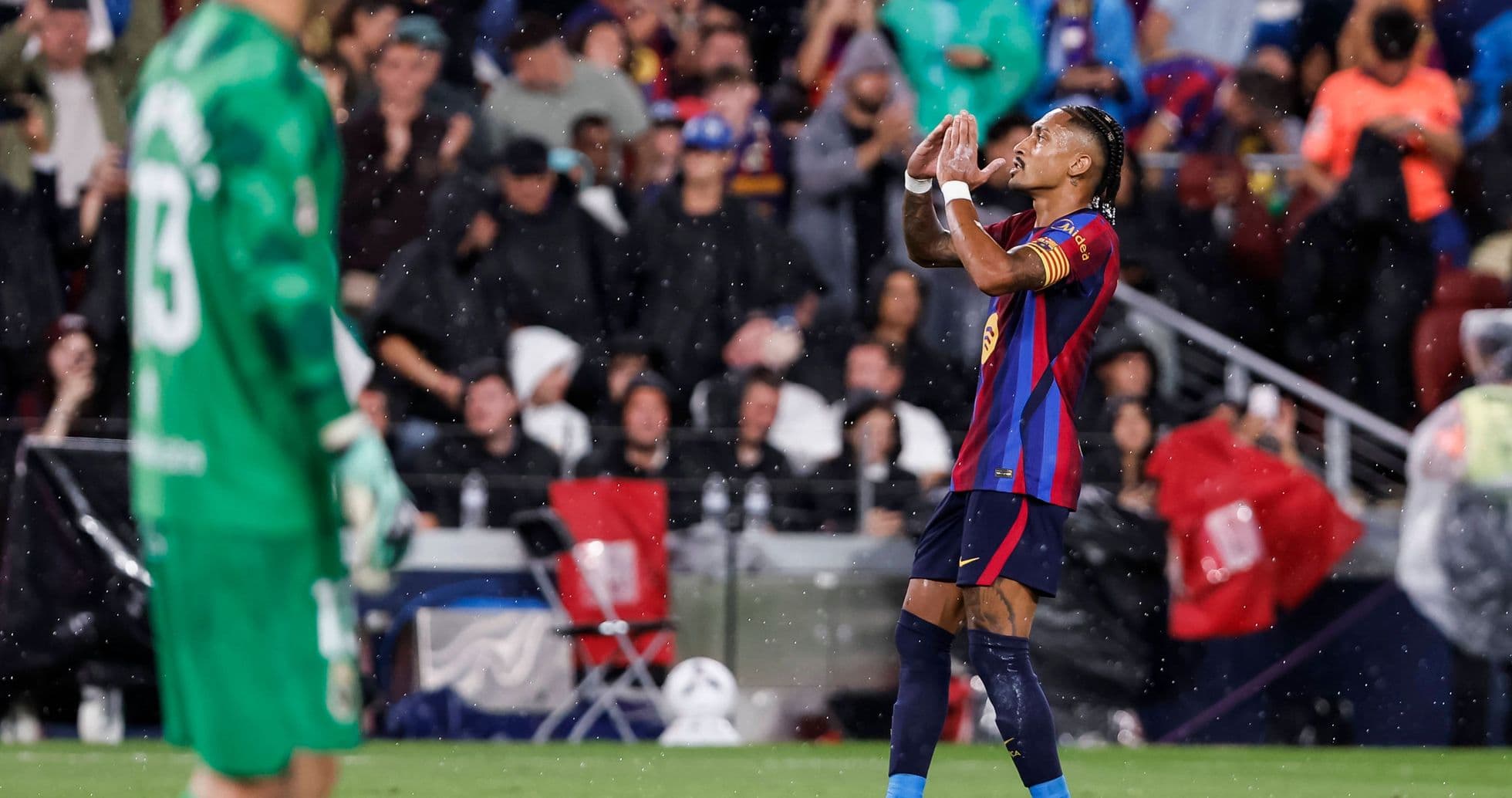
Raphinha's Hat-Trick Drives Barcelona to 7-2 Triumph Over Racing Santander
Hansi Flick Leads Barcelona to Record-Breaking Seven Wins in a Row
Gavi Reflects on Injury Return as Barcelona Dominate Racing Santander 7-2