
Norway's Tactical Mastery Tops Brazil in Round of 16
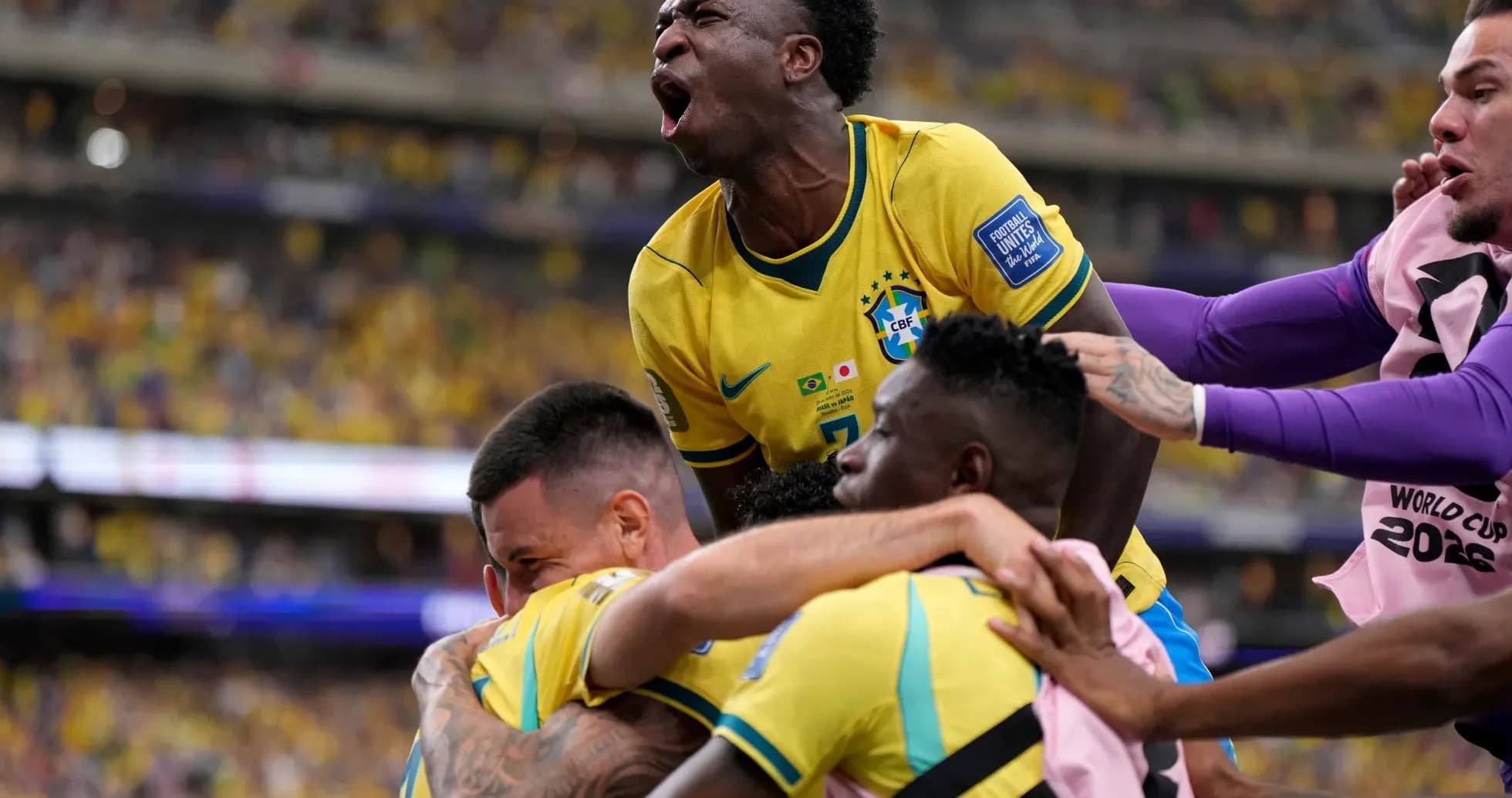
Brazil’s Round of 16 defeat to Norway at MetLife Stadium unfolded as a classic clash of styles: Brazil’s vertical, transition-heavy approach against Norway’s controlled, possession-dominant structure. The 2-1 scoreline to Norway reflected not volume of chances, but superior game management in key phases and ruthless finishing from Erling Haaland.
Final Score: Norway 2 - 1 Brazil
Norway’s 66% possession and 680 total passes (617 accurate, 91%) show a deliberate plan to control rhythm and stretch Brazil horizontally. Stale Solbakken set his side up with a stable back four and a three-man midfield built around Martin Ødegaard as the primary director. With Sander Berge and Patrick Berg providing security and circulation, Norway repeatedly created long, patient passing sequences, drawing Brazil’s block deeper and then looking to feed Haaland and Antonio Nusa between or beyond the lines.
Brazil, by contrast, played a far more direct game. With only 34% of the ball and 329 passes (279 accurate, 85%), Carlo Ancelotti’s team leaned on rapid vertical attacks, especially through Vinícius Júnior and Gabriel Martinelli, and on set moments like penalties. The shot profile underlines that Brazil’s approach did create danger: 14 total shots to Norway’s 9, with 10 of those Brazilian attempts coming inside the box and 4 on target. The expected goals split – 2.73 for Brazil against just 0.84 for Norway – is a stark indicator that Brazil’s chance quality was significantly higher, even if the finishing and late-game control were not.
First Half
The early pattern was revealing. Norway circulated from the back, using Kristoffer Ajer and Torbjørn Heggem to step into midfield and find Ødegaard between Brazilian lines. Brazil accepted long spells without the ball, aiming to spring quickly when they recovered it. That plan nearly paid off decisively when VAR confirmed a penalty for a foul on Matheus Cunha at 12'. Bruno Guimarães then stepped up at 14' but produced a “Missed Penalty” event, a key inflection point that kept the match level and preserved Norway’s strategic comfort.
Out of possession, Brazil’s midfield triangle of Casemiro, Bruno Guimarães and Rayan tried to compress the central lane, but Norway’s high technical level in circulation meant Brazil were more often reacting than dictating. Still, Brazil’s transitions were sharp enough to generate repeated entries into the box, reflected in their 10 shots inside the area and 5 corner kicks, matching Norway’s 5 corners despite far less possession.
Second Half
The second half became a coaching and structural battle. Norway’s double substitution at 46' was decisive: Andreas Schjelderup (IN) came on for Antonio Nusa (OUT), and Oscar Bobb (IN) came on for Alexander Sørloth (OUT). Schjelderup immediately became the key link to Haaland, repeatedly finding pockets between Brazil’s midfield and defence. His impact is evident in both of Haaland’s goals: at 80', Haaland finished a “Normal Goal” assisted by Schjelderup, a move that typified Norway’s patience followed by a vertical punch. Later, at 90', the same connection struck again: another “Normal Goal” for Haaland, again assisted by Schjelderup, effectively killing the contest.
Ancelotti’s response was to inject more attacking talent. At 58', Endrick (IN) came on for Matheus Cunha (OUT), adding a more aggressive penalty-box presence. At 68', Danilo Santos (IN) replaced Rayan (OUT), and Neymar (IN) replaced Gabriel Martinelli (OUT), tilting Brazil’s structure toward a more fluid, risk-heavy attacking shape with Neymar operating between the lines and Vinícius Júnior stretching the left. At 79', Éderson (IN) came on for Bruno Guimarães (OUT), pushing yet another progressive midfielder onto the pitch.
These changes did increase Brazil’s attacking volume and central creativity. Neymar, in particular, became the focal point of Brazil’s late surge, repeatedly drawing contact and combining around the box. The reward arrived deep into stoppage time: at 90+9', Neymar converted a “Penalty” to make it 2-1, capping a night where Brazil had twice gone to the spot but scored only once. However, Norway’s second goal at 90' – again Haaland from Schjelderup – had already restored their cushion, underlining Norway’s superior timing and exploitation of Brazilian defensive imbalances as they chased the game.
Defensive Overview
Defensively, Norway’s back line was compact and well-protected. They allowed Brazil 14 shots but limited truly clean looks in open play, with just 1 blocked shot against them suggesting that many Brazilian efforts did reach threatening zones but often under pressure or from suboptimal angles. Norway’s discipline without the ball was also notable: only 6 fouls and no cards, allowing them to maintain defensive structure and avoid destabilising set-piece scenarios.
Brazil, by contrast, committed 7 fouls and saw the only card of the match: at 90+6', Neymar (Brazil) received a Yellow Card — Foul, emblematic of Brazil’s increasingly desperate attempts to recover possession high up the pitch as time drained away. That single card, in a match of such stakes, reflects a contest more about positional control and tactical patience than raw physical duels.
Goalkeeping Performance
In goal, Alisson (Brazil) made 3 saves and, according to the data, delivered 0.76 goals prevented, indicating he limited the damage from Norway’s relatively low shot volume and low xG total. On the other side, Ørjan Nyland (Norway) recorded 4 saves and also 0.76 goals prevented, a critical contribution in a match where Brazil’s xG (2.73) far exceeded their single goal. Nyland’s work, especially around the penalties and close-range efforts, was central to sustaining Norway’s game plan.
Statistically, the verdict is clear: Brazil created more and better chances but failed to convert their territorial and penalty advantages into a winning margin. Norway, with superior possession, passing accuracy, and a razor-sharp Haaland–Schjelderup axis, maximised a lean shot profile to produce two high-impact goals. In a World Cup Round of 16 tie defined by margins, Norway’s control of tempo and Brazil’s inefficiency from the spot turned a Brazilian xG advantage into a Norwegian 2-1 progression.
Related News
Thomas Tuchel Reflects on England's 10-Man World Cup Triumph and a Surprising Regret
Robert Moreno Takes Over as Interim South Korea Coach After World Cup Setback

Jude Bellingham Returns to Form with Real Madrid After World Cup Success

Chloe Kelly, Beth Mead & 13 Lionesses Who Must Shine in the Upcoming WSL Season for England’s 2027 World Cup Bid
Barcelona Cancels World Cup Tribute Amid Political Tensions
Messi Breaks Record for Most Penalties Taken and Missed in FIFA World Cup History