
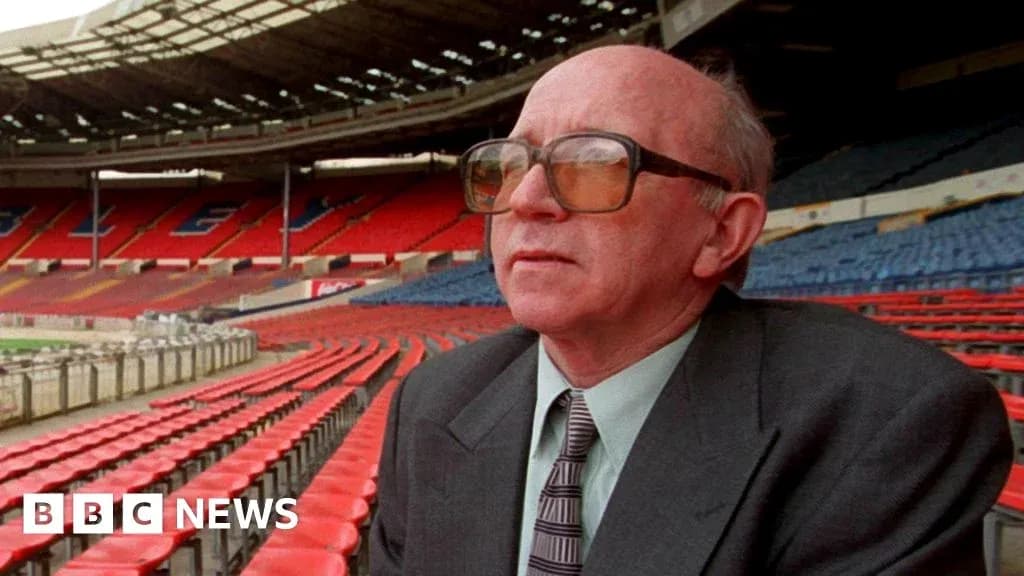
Nobby Stiles: Football's Brain Injury Crisis and Inquest
Nobby Stiles, the toothless terrier of England’s 1966 World Cup triumph, has become the latest symbol in football’s deepening brain injury crisis after a coroner ruled his death must now be examined at a full inquest.
The 78-year-old former Manchester United and England midfielder died in 2020. A court has now heard he was suffering from chronic traumatic encephalopathy (CTE), a degenerative brain condition repeatedly linked to head trauma and, in football’s case, to years of heading heavy balls.
World Cup hero at the heart of a modern battle
Stiles, born in Manchester in 1942, embodied a different era of the game. A ferocious, tough-tackling defensive midfielder, he was capped 28 times by England and made nearly 400 appearances for Man Utd. His jig on the Wembley turf with the World Cup in one hand and his false teeth in the other became part of English football folklore.
Decades on, the cost of that era is being counted.
Chris Morris, area coroner for Greater Manchester South, told Stockport coroner’s court that a full inquest was required after a brain specialist reviewed Stiles’s medical records. The expert concluded that Stiles died with high-stage CTE, alongside “stage three limbic predominant age related TDP-43” and small vessel cerebrovascular disease.
Those findings changed everything.
“On the basis of that cause of death, particularly the inclusion of a traumatic injury included in the cause of death, I'm satisfied an inquest is required into the sad death of Mr Stiles,” Mr Morris said.
The hearing will take place on Wednesday at the same court.
A death not reported, a family that refused to let it lie
In a striking admission, the coroner told the court that Stiles’s death had not been reported to his office at the time.
“For reasons not entirely clear to me,” he said, no referral was made in 2020. The investigation only began after Stiles’s family came forward with information, pushing for answers they felt the game still owed him.
That persistence fits the wider fight they have taken on since his death. The Stiles family has been at the forefront of calls for football’s authorities to properly confront the long-term consequences of repeated head impacts on former professionals.
Families taking football to court
John Stiles, Nobby’s son, heads Football Families for Justice (FFJ), a group demanding stronger support and protection for ex-players living with neurodegenerative conditions linked to their playing days.
He is one of dozens of former players and relatives now suing the Football Association, the Football Association of Wales and the English Football League. Their legal claim is stark: that the governing bodies were “negligent and in breach of their duty of care” by failing to protect players from the known risks of repeated head trauma.
Lawyers representing the families argue that football’s leaders knew, or should have known, for decades that constant heading in training and matches carried a serious risk of brain injury. They say the dangers were there in the medical literature, there in the patterns emerging among former players, and yet the game did not act.
Football’s authorities reject that charge.
In March, lawyers for The Football Association told the High Court that “it has not been established by science” that heading a ball or “occasional” concussion can cause permanent brain damage. That line goes to the heart of the looming legal battle: what did the game know, when did it know it, and what did it do about it?
A growing pattern that can’t be ignored
Stiles’s case does not stand alone. Earlier this year, an inquest into the death of Gordon McQueen, the former Scotland, Man Utd and Leeds United defender, delivered a blunt conclusion. McQueen, who died aged 70, was found to have suffered a brain injury to which heading the ball was “likely” to have contributed.
One defender. One midfielder. Different generations, similar stories.
As Stiles’s inquest finally goes ahead, it will not just revisit the life of a World Cup winner. It will feed into a much bigger reckoning for a sport now forced to ask whether some of its most iconic images – the thud of a centre-half’s clearing header, the striker’s diving finish, the midfielder’s towering leap – came with a price nobody wanted to calculate.
That question now moves from the pitch to the courtroom, with the game’s past colliding head-on with its duty to the people who built it.
Related News
Ilia Topuria Accuses Justin Gaethje After UFC Defeat

Tyson Fury vs Anthony Joshua Fight Date and Venue Confirmed
Switzerland Calls Up In-Form Sion Striker Winsley Boteli for Nations League
Bournemouth Secures Historic 2-1 Win Over Real Sociedad in Spain
Portugal Announces Squad for 2026 UEFA Nations League; Cristiano Ronaldo Expected to Play
Raphinha Channels Ronaldo Nazario as Barcelona's Leading Striker After Position Change