
Neymar's Emotional Farewell: Brazil's World Cup Exit and Retirement
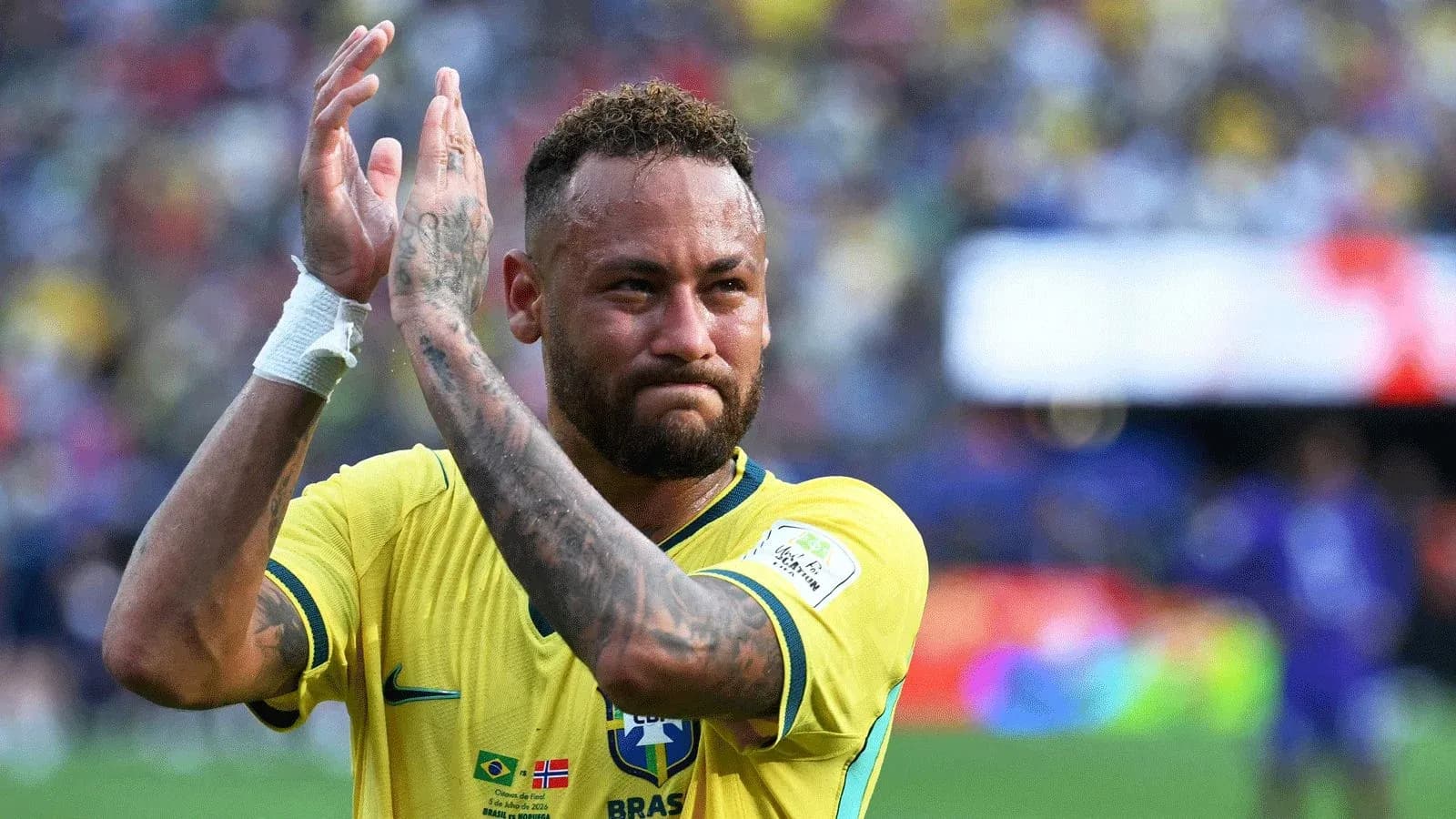
Neymar walked slowly across the MetLife Stadium pitch, eyes glazed, shoulders heavy, the noise around him already turning into memory. Brazil had just been dumped out of the World Cup in the round of 16 by Norway, beaten 2-1, and with it an era ended.
He confirmed it himself.
“I tried, I tried. Now it’s over. I started here; I finished here,” he told reporters in a muted mixed zone, voice low, gaze fixed somewhere on the floor. At 34, Neymar announced his international retirement, closing a 16-year chapter in the famous yellow shirt on the night Brazil suffered their earliest World Cup exit since 1990.
A final goal, and a final goodbye
Even in defeat, he found the net. Deep into stoppage time, with Brazil clinging to the faintest hope, Casemiro won a penalty. Neymar placed the ball, took his familiar pause, and buried it. Goal number 80. No Brazilian has ever scored more.
It was the last act of his international career.
That penalty did not change the result. Erling Haaland had already done the damage, his brace propelling Norway into the quarter-finals and sending the Selecao home. As the final whistle went, Neymar sank to the turf, inconsolable, teammates and opponents moving around him like shadows.
The numbers, though, refuse to be drowned out by the disappointment.
130 caps. 80 goals. 59 assists.
A Confederations Cup in 2013. Olympic gold in 2016.
Pele’s record surpassed, his name etched permanently into Brazilian football history.
Yet the one prize that defined his generation’s burden never arrived. Four World Cup cycles, four attempts, and no sixth star.
A nation’s weight, a European wall
This defeat to Norway did more than end a career. It underlined a brutal pattern. Brazil have now lost seven successive World Cup knockout ties to European opposition. Every time the stakes have risen, a European side has stepped in front of their dreams.
Neymar became the face of that struggle. From the moment he burst onto the scene, the country looked at him and saw the next great number 10, the heir to a lineage that runs through Pele, Zico, Romario, Rivaldo, Ronaldinho. He carried that lineage and the expectation that came with it.
He delivered moments. He delivered numbers. He delivered trophies of a certain kind.
He did not deliver the World Cup.
The image of him, broken on the MetLife grass, will sit alongside Belo Horizonte in 2014, the back injury against Colombia, the tears in Russia, the frustration in Qatar. A career of soaring highs and jagged, painful edges on the international stage.
A father’s plea
While Neymar spoke of endings, another voice pushed back against the idea of a full stop.
Neymar Senior, never far from the narrative of his son’s career, went public with an emotional appeal. On social media, he urged his son not to walk away from the sport entirely, to keep playing at club level, to remember what football means to their family.
“I want to make a request as a father. Ney, keep playing football, please,” he wrote.
It was not just a message of support. It was a plea against a complete withdrawal from the elite stage at a time when doubts have gathered. Persistent injuries, long layoffs, and the very real possibility that he might have missed Carlo Ancelotti’s final 26-man squad for this World Cup had already fuelled questions about how much top-level football he has left in him.
The father’s words made one thing clear: for those closest to him, the idea of Neymar disappearing from the club game is unthinkable. The international chapter may be closed, but they want the story to continue.
Ancelotti’s rebuild and the vacant throne
For Brazil, the fallout is immediate and unforgiving. Ancelotti, tied to the national team until 2030, now has to reshape a side stripped of its most influential creative force.
The number 10 shirt is suddenly vacant. Not just in a numerical sense, but in terms of aura, responsibility, expectation. Someone will inherit it. No one will escape the comparison.
The early exit in the United States speeds up a process that was coming anyway. This is no gentle transition; it’s a jolt. The CBF must rethink, retool, and find a new leader to chase that elusive sixth star. The romantic idea of Neymar crowning his career with a World Cup has gone. The project now belongs to a new generation.
Ancelotti’s task is enormous: rebuild a team that has forgotten how to beat Europe when it matters, restore belief in a shirt that used to intimidate, and do it without the one player who, for more than a decade, symbolised Brazilian flair and fear.
The legacy and the unknown
Strip away the emotion of MetLife and the numbers remain ruthless in their clarity. Neymar leaves as Brazil’s all-time leading goalscorer. He leaves as one of the most gifted players the country has ever produced, a forward who could bend matches to his will, who turned tight games with a flick, a feint, or a dead-ball strike.
His final kick for Brazil was a goal. That feels fitting.
What comes next does not. The future is murkier. Does he listen to his father and push his body through one more cycle at the top? Does he reinvent himself at club level, a little slower perhaps, but still decisive, still capable of lighting up nights under floodlights? Or does this World Cup exit mark the beginning of a slow fade from the centre of the football world?
For Brazil, the Neymar era is over. For Neymar, the question now is simple and brutal:
Is there one last act left, or was MetLife Stadium the closing scene?
Related News
Ilia Topuria Accuses Justin Gaethje After UFC Defeat

Tyson Fury vs Anthony Joshua Fight Date and Venue Confirmed
Switzerland Calls Up In-Form Sion Striker Winsley Boteli for Nations League
Bournemouth Secures Historic 2-1 Win Over Real Sociedad in Spain
Portugal Announces Squad for 2026 UEFA Nations League; Cristiano Ronaldo Expected to Play
Raphinha Channels Ronaldo Nazario as Barcelona's Leading Striker After Position Change