
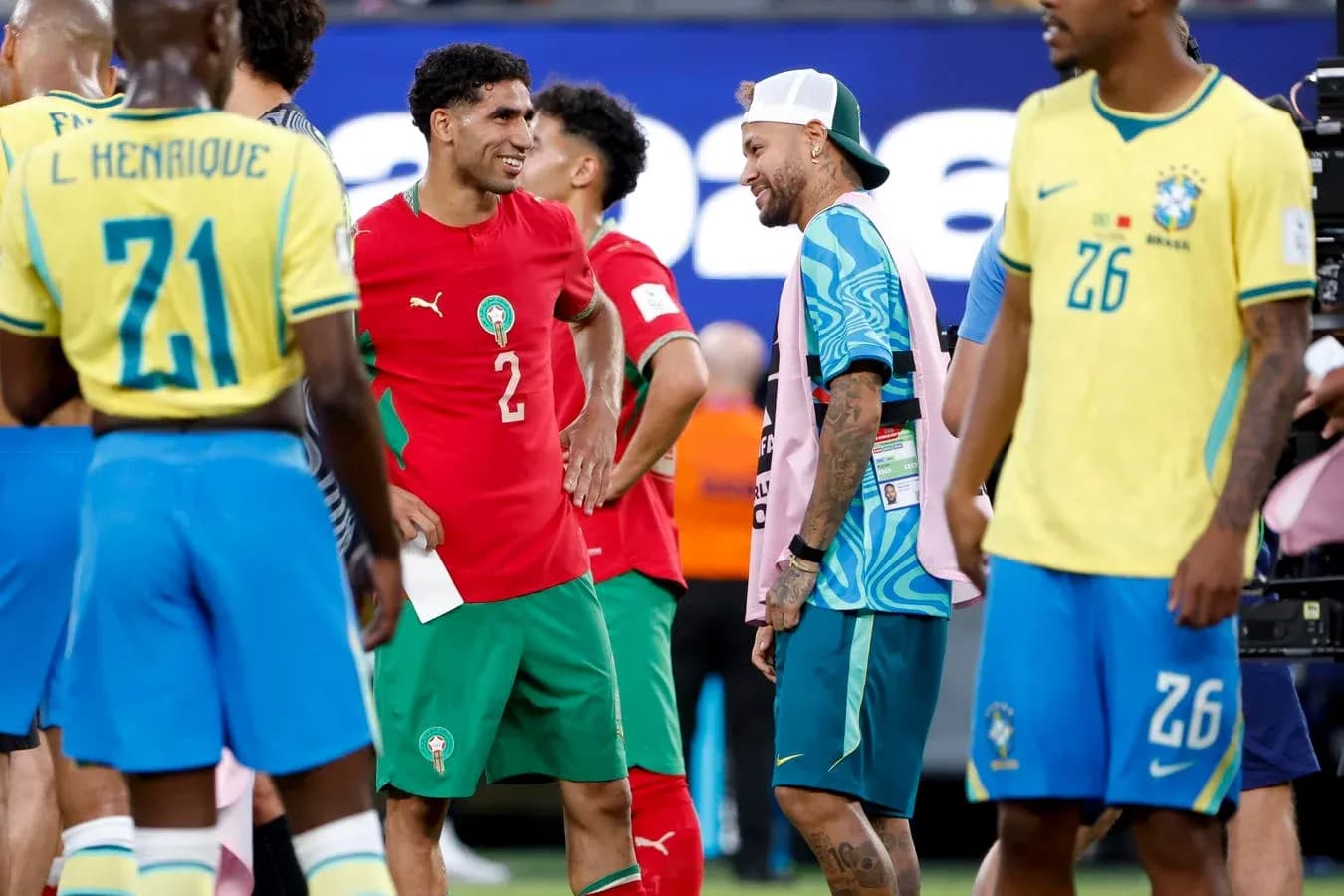
Neymar and Pulisic Injury Concerns Cloud World Cup Campaigns
Brazil and the United States are staring at the same problem from opposite sides of the bracket: superstar attackers with faulty calves at the worst possible time.
Neymar, 34 and still the face of Brazilian football, has already been scratched from Brazil’s next Group C match against Haiti. Christian Pulisic, 27, is fighting the clock to be fit for the USMNT’s Group D clash with Australia. Both are carrying calf injuries that threaten to reshape their countries’ World Cup plans.
Brazil Weighs Risk With Neymar
Neymar’s latest setback dates back a month. He injured his right calf on May 17 while playing for Santos and has yet to play a minute at this World Cup. This week brought a flicker of hope: individual work on the sideline on Tuesday, then a brief spell training with teammates on Wednesday. It wasn’t enough.
The medical call has already been made: no Haiti.
Inside the Brazil camp, the debate is clear. Protect him now, or risk losing him when it really counts. There is a real possibility Brazil will keep Neymar out for the entire group stage, gambling that a fully recovered talisman in the knockout rounds is worth the wait—if they get there.
That “if” is larger than Brazil would like. A 1-1 draw with Morocco on Saturday has left Group C wide open and turned the remaining fixtures into pressure tests. Haiti on Friday. Scotland on June 24. Brazil, five-time world champions, are not in crisis, but they are not cruising either.
Neymar’s absence only sharpens the concern. He has not played for the Seleção since October 17, 2023, when he tore the anterior cruciate ligament and meniscus in his left knee during a South American qualifier against Uruguay. That long layoff, followed by a moderate calf strain, has broken his rhythm at a time when Brazil need his edge in the final third.
The diagnosis matters. Neymar reportedly has a second-degree calf strain—a moderate injury that affects a significant portion of the muscle but stops short of a complete tear. Recovery typically runs three to six weeks, depending on how the muscle responds. For a player whose game leans heavily on explosive changes of direction and sudden bursts, rushing back is a dangerous temptation.
Pulisic Hurt In Hot Start
On the other side of the Atlantic, Pulisic’s situation is more recent but just as unsettling for U.S. fans.
He initially injured his left calf in training last week, then aggravated it in the United States’ World Cup opener—a 4-1 statement win over Paraguay. The scoreline flattered the U.S., but the sight of their star attacker leaving the match at halftime did not.
Since then, the tone around Pulisic has been one of uncertainty. He is officially questionable for Friday’s Group D meeting with Australia, and the U.S. staff are walking the same tightrope Brazil are on: short-term gain versus long-term availability.
The U.S. have options in attack, but Pulisic remains the player who bends games in their favor, the one defenders track before the ball even arrives. Take him out of the lineup, and the entire attacking structure shifts.
What A Calf Strain Really Means
Strip away the World Cup drama and both Neymar and Pulisic are likely dealing with the same underlying problem: calf strains, commonly known as pulled calf muscles.
A strain occurs when the muscle or the tendons that attach it to bone are overstretched or torn. In football, where players repeatedly explode from standing starts into sprints, that risk is constant. One mistimed push-off, one surge when the muscle isn’t quite ready, and the fibers go.
The severity comes in three broad grades:
- First-degree (mild) – Less than five percent of the muscle mass is affected. Players can often return in one to three weeks, especially with elite treatment and the pressure of a major tournament.
- Second-degree (moderate) – A larger portion of the muscle is damaged, but there is no complete rupture. This is the category Neymar reportedly falls into. Full recovery can take roughly three to six weeks.
- Third-degree (severe) – A complete tear of the muscle or the muscle-tendon unit. This is the nightmare scenario, usually measured in months, not weeks.
Neither Neymar nor Pulisic is believed to have suffered that worst-case third-degree injury. Surgery is rarely on the table for strains unless the damage is total. Instead, treatment follows a familiar path: rest, ice, compression, elevation. Stop the activity. Cool the area in short, regular bursts. Wrap the calf to limit swelling. Keep the leg raised to help fluid drain away.
At World Cup level, that basic framework is wrapped in round-the-clock care, targeted rehab, and constant monitoring. But the principle is the same: let the muscle heal, then build it back up without pushing it over the edge again.
Two Teams, One Question
So both Brazil and the United States wait.
They wait for scans, for pain levels to drop, for the moment when medical advice and competitive instinct finally align. They wait to see if their stars can sprint, plant, and twist without grabbing for the back of a leg.
For Brazil, the calculation is brutal. Do they risk Neymar in the group stage to secure safe passage, or trust the squad to get the job done and save him for the knockouts? For the U.S., the dilemma is similar. Is Pulisic worth a gamble against Australia, or is it wiser to protect him for the matches that will define their tournament?
World Cups often turn on details you never see in the highlight reels—a tight muscle, a cautious step, a decision to sit one more game.
Right now, two calves may end up deciding how far these two nations can really go.
Related News
Raphinha’s Hat-Trick Powers Barcelona to 7-2 Victory Over Racing Santander
Carabao Cup Fourth Round Draw: Liverpool Set to Clash with Chelsea, Arsenal to Face Fleetwood Town
Key Football Matches to Watch in Azerbaijan This Autumn
Raphinha's Hat-Trick Drives Barcelona to 7-2 Triumph Over Racing Santander
Hansi Flick Leads Barcelona to Record-Breaking Seven Wins in a Row
Gavi Reflects on Injury Return as Barcelona Dominate Racing Santander 7-2