
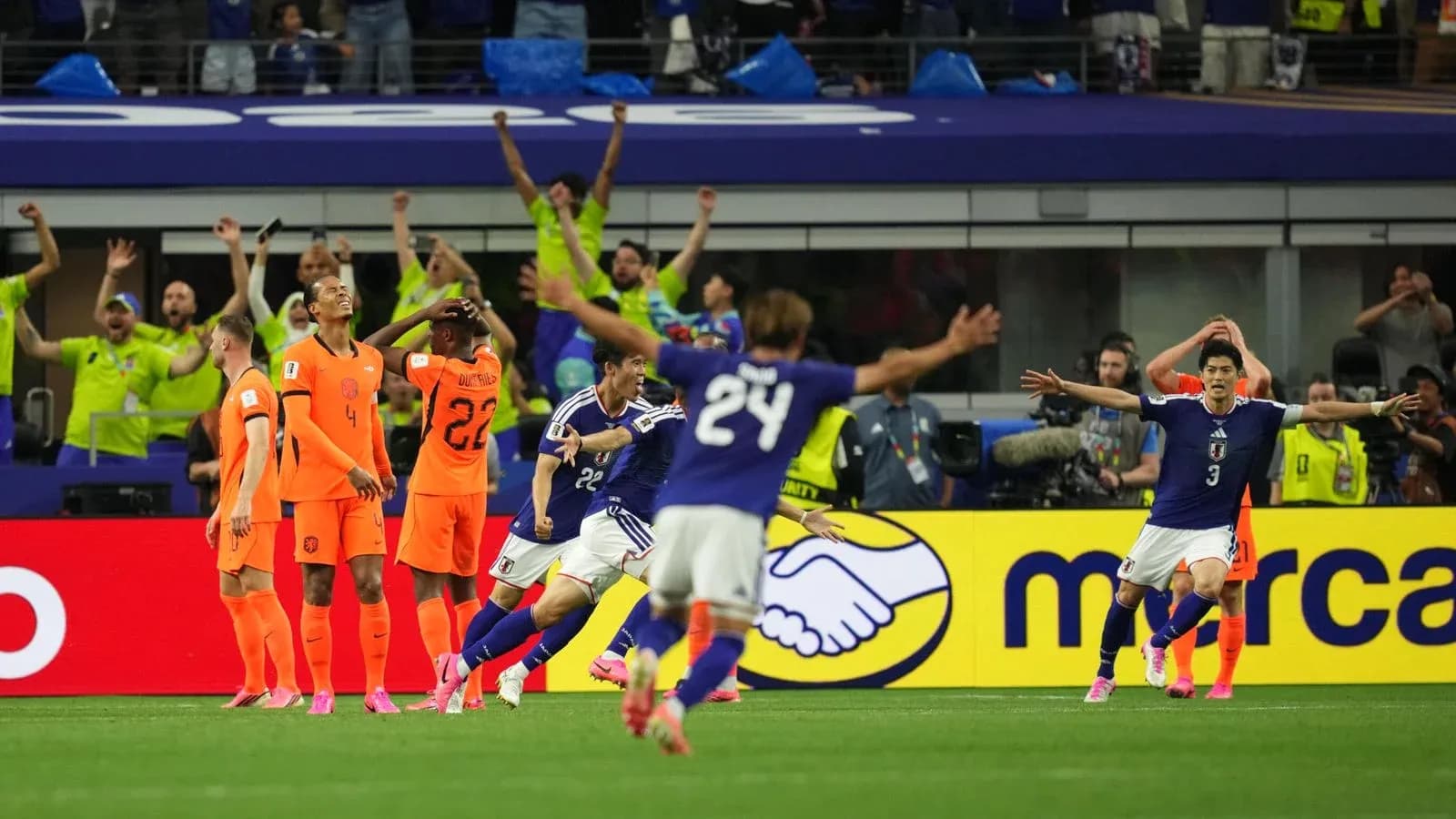
Netherlands and Japan Share Tactical Insights in 2-2 World Cup Draw
AT&T Stadium in Arlington hosted a meeting of contrasts that ended level on the scoreboard but left a wealth of tactical clues. Netherlands and Japan shared a 2-2 draw in their opening World Cup 2026 group-stage fixture, a result that shapes both the narrative of Group F and the evolving identities of these sides heading deeper into the tournament.
I. The Big Picture – Two Identities, One Shared Scoreline
Following this result, Netherlands sit on 1 point with a goal difference of 0, having scored 2 and conceded 2 in total this campaign. All of their football so far has come “at home” in this fixture context: 1 home game, 2.0 home goals for on average and 2.0 home goals against on average. It is a statistical snapshot that mirrors the eye test – plenty of attacking thrust, but a defensive line that can still be prised open.
Japan’s record is an almost perfect mirror image from the “away” perspective. On their travels they have played 1 match, drawn it, scored 2 and conceded 2. Their away averages stand at 2.0 goals for and 2.0 goals against. Both teams emerge from Arlington with identical overall returns: 1 draw, 0 wins, 0 defeats, 2 goals for, 2 goals against, and a goal difference of 0.
Tactically, the match felt like a clash between structural orthodoxy and fluid disruption. Ronald Koeman’s Netherlands lined up in a familiar 4-3-3, while Hajime Moriyasu’s Japan opted for a 3-4-2-1 that morphed constantly between a back three and a situational back five.
II. Tactical Voids and Discipline – Where the Edges Frayed
The squads were close to full strength; the absence list reads “No data”, which in this context translates into coaches having their primary options available. That made the choices all the more revealing.
Koeman trusted a back four of D. Dumfries, J. P. van Hecke, V. van Dijk and M. van de Ven in front of B. Verbruggen. The midfield triangle of R. Gravenberch, F. de Jong and T. Reijnders was designed to dominate the ball and dictate tempo, while the front three of C. Summerville, D. Malen and C. Gakpo offered width, depth and creativity.
Moriyasu’s 3-4-2-1 placed Z. Suzuki behind a defensive trio of T. Watanabe, S. Taniguchi and H. Ito. The wing and central band of four – R. Doan, K. Sano, D. Kamada and K. Nakamura – was built for hybrid roles: protect the flanks without the ball, overload the half-spaces with it. Ahead of them, T. Kubo and D. Maeda floated behind A. Ueda, whose job was to pin the Dutch centre-backs and threaten depth.
Disciplinary patterns may quietly define the next games. Heading into this fixture, Netherlands had already shown a tendency to pick up yellow cards late: 33.33% of their cautions came between 61-75 minutes, 33.33% between 76-90, and 33.33% between 91-105. It paints a picture of a side that becomes increasingly stretched and emotional as matches drift into the decisive phases. That theme continued here with attackers like C. Summerville and M. Depay both already on the tournament’s yellow-card radar.
Japan, by contrast, had no recorded yellow or red cards in any time window so far in this World Cup snapshot. It underscores a disciplined, system-first approach – a team that trusts its structure more than individual interventions.
III. Key Matchups – Hunter vs Shield, Engine Room vs Enforcer
The “Hunter vs Shield” duel in this game revolved around C. Summerville and the Japanese back line. Summerville has emerged from this opener as one of the World Cup’s early attacking reference points: 1 goal in total, from 1 shot on target, an 8.3 rating and a constant threat between the lines. His 29 total passes at 86% accuracy and 1 successful dribble from 1 attempt show a winger who is not just direct but also secure in possession. Against Japan’s back three, he repeatedly targeted the channels around T. Watanabe and H. Ito, forcing them to step wider than they wanted.
Japan’s collective “shield” was less about individual duels and more about the synchronised shifting of their 3-4-2-1. When they dropped into a five, R. Doan and K. Nakamura had to sprint back to form a second defensive line, leaving T. Kubo and D. Maeda as transitional outlets. It was in those moments that Netherlands’ own defensive structure was tested. With no clean sheets “at home” so far and 2 home goals conceded, the Dutch back four still look one misstep away from being exposed when their full-backs are advanced.
In the “Engine Room” battle, R. Gravenberch and F. de Jong faced D. Kamada and K. Sano. Gravenberch’s numbers from this match are already shaping his tournament profile: 2 assists in total, 25 passes at 88% accuracy, 2 key passes and 2 successful dribbles from 3 attempts. He functioned as the vertical accelerator, the player who could break Japan’s lines with one stride or one pass.
F. de Jong, operating deeper, orchestrated circulation and controlled rhythm, allowing T. Reijnders to shuttle and link with the front line. On the other side, D. Kamada tried to mirror that connective role, but Japan’s best creative sparks came higher up from T. Kubo. Kubo, with 1 assist, 16 passes at 75% accuracy and a key pass to his name, drifted into pockets behind the Dutch midfield, especially when Dumfries pushed high and left space inside.
Substitutions added another layer to these matchups. From the Dutch bench, M. Depay and W. Weghorst represent radically different late-game tools: Depay as a drifting creator who can drop into midfield, Weghorst as a penalty-box reference. Depay’s 7 passes at 100% accuracy and 1 key pass in limited minutes underline his ability to inject precision, even as his 1 yellow card and 1 foul committed highlight the risk of emotional edges in tight finishes.
Japan’s response weapon was K. Ogawa. Coming in as a substitute, he needed only 15 minutes to register 1 assist, 1 shot and 1 key pass. His movement across the front line provided a different kind of reference point to A. Ueda – less about holding up, more about attacking gaps between full-back and centre-back.
IV. Statistical Prognosis – Where This Draw Points Next
From a macro view, both teams exit Arlington with matching statistical profiles: in total this campaign, 1 match, 1 draw, 2 goals scored, 2 conceded, no penalties taken and no clean sheets. The absence of any penalties – with both sides at 0 total attempts, 0 scored and 0 missed – means we have no data yet on their nerve from the spot.
Defensively, the numbers warn of vulnerability. Netherlands are conceding 2.0 home goals on average; Japan are conceding 2.0 away goals on average. Neither side has shown the capacity to lock a game down yet. For future opponents, the message is clear: there will be chances.
Yet the attacking upside is equally clear. Summerville’s cutting edge, Gakpo’s movement and Malen’s vertical runs give Koeman a front three capable of scoring against any block, especially with Gravenberch threading passes from midfield. For Japan, the interplay of Kubo, Maeda and Ueda, supplemented by late-game injections like Ogawa, ensures they will always carry a counter-punch.
Following this result, the tactical verdict is that both teams are offensively ahead of their defensive solidity. Expected Goals data is not provided in this snapshot, but the raw shot and chance creation numbers for the key attackers suggest that their xG profiles would be healthy at the front and concerning at the back.
If Netherlands can tighten their late-game discipline – those 33.33% yellow-card spikes from 61 minutes onward are a warning sign – and if Japan can maintain their structural discipline while adding a touch more individual aggression in duels, both have the tools to navigate Group F. This 2-2 in Arlington felt less like two points dropped and more like a high-level tactical prologue to a group that is far from settled.
Related News

Thomas Tuchel Reflects on England's 10-Man World Cup Triumph and a Surprising Regret

Robert Moreno Takes Over as Interim South Korea Coach After World Cup Setback

Jude Bellingham Returns to Form with Real Madrid After World Cup Success

Chloe Kelly, Beth Mead & 13 Lionesses Who Must Shine in the Upcoming WSL Season for England’s 2027 World Cup Bid

Barcelona Cancels World Cup Tribute Amid Political Tensions
Messi Breaks Record for Most Penalties Taken and Missed in FIFA World Cup History