
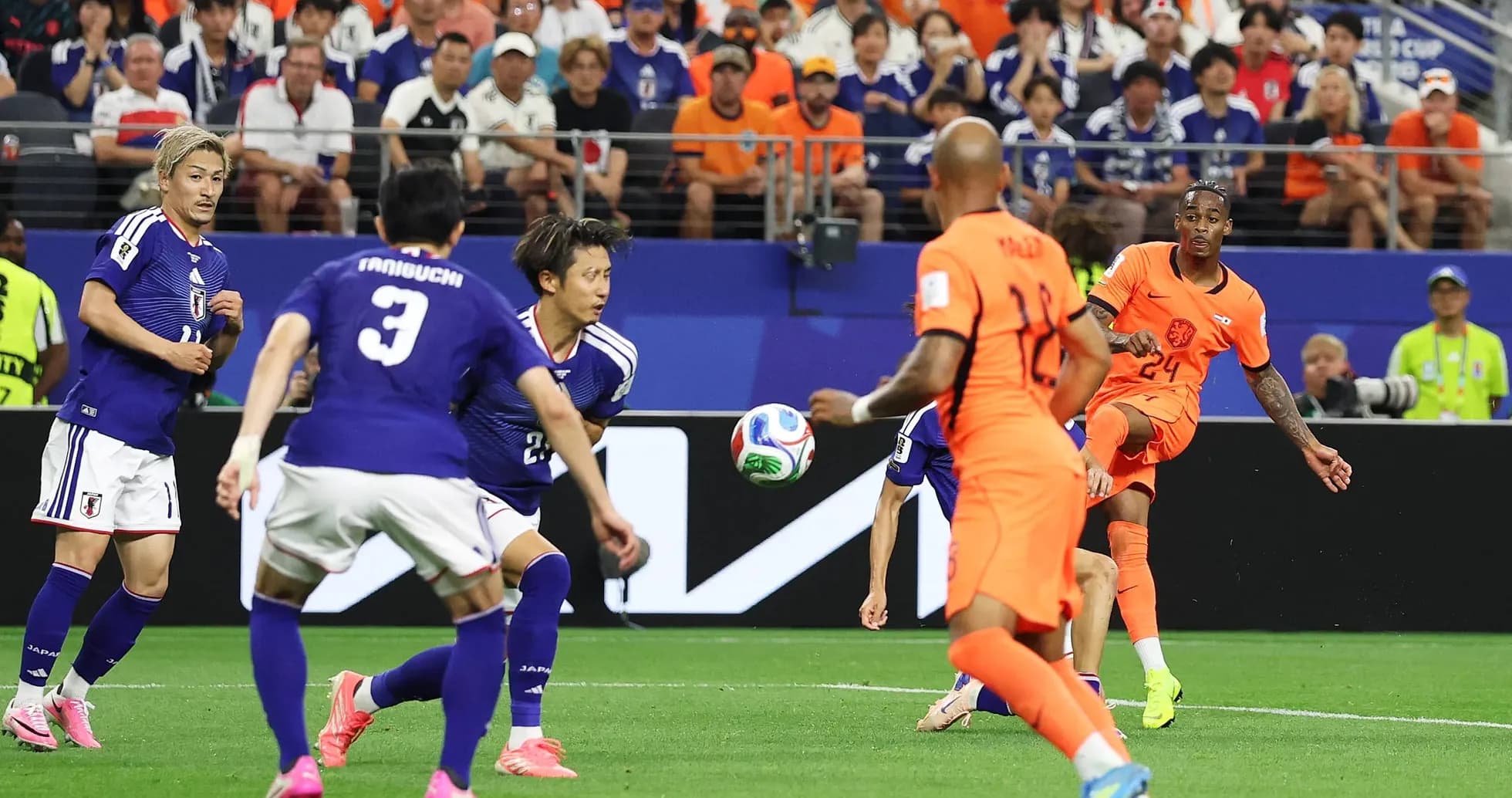
Netherlands and Japan Draw 2-2 in Group F Showdown
Netherlands 2-2 Japan at AT&T Stadium leaves Group F finely balanced, with both sides moving to 2 points from two matches and maintaining their Round of 32 positions. Netherlands stay second in the group on 2 points with a goal difference of 0 (4 scored, 4 conceded), while Japan remain top on 2 points with the same goal difference (4 scored, 4 conceded), the draw reflecting a contest where Dutch control of territory was repeatedly challenged by Japan’s late-game resilience.
Match Report
The game opened in cagey fashion, with neither side able to convert first-half probing into a breakthrough, and the interval arrived goalless despite Netherlands’ superior possession and territorial control.
51' Netherlands goal — V. van Dijk (assisted by R. Gravenberch). From a Dutch set of sustained pressure after the restart, Gravenberch delivered and Van Dijk attacked the ball decisively to give Netherlands a 1-0 lead.
57' Japan goal — K. Nakamura (assisted by T. Kubo). Japan responded quickly, Kubo finding space between the lines before slipping a pass to Nakamura, who finished to level the match at 1-1.
61' C. Summerville (Netherlands) — yellow card (Tripping). The Dutch winger went into the book for a late challenge as Japan tried to break in transition.
64' Netherlands goal — C. Summerville (assisted by R. Gravenberch). Summerville atoned almost immediately, timing his run into the box to meet another incisive pass from Gravenberch and restoring the Dutch advantage at 2-1.
66' J. Ito replaced D. Maeda (Japan). Moriyasu made his first attacking adjustment, introducing Ito to add more direct running on the right.
70' M. Depay replaced D. Malen (Netherlands). Ronald Koeman sought fresh energy up front, bringing on Depay as a central focal point.
70' T. Koopmeiners replaced C. Summerville (Netherlands). With Summerville on a booking and having run hard, Koopmeiners entered to reinforce midfield control.
70' Q. Timber replaced T. Reijnders (Netherlands). Timber’s introduction further refreshed the Dutch midfield, aiming to maintain their passing rhythm.
75' T. Tomiyasu replaced T. Watanabe (Japan). Japan adjusted the back line, adding Tomiyasu’s composure and distribution from defence.
75' K. Ogawa replaced T. Kubo (Japan). Kubo made way for Ogawa, giving Japan a more orthodox penalty-box presence.
75' Y. Sugawara replaced R. Doan (Japan). Sugawara came on to offer fresh legs and crossing threat from the flank.
81' N. Ake replaced R. Gravenberch (Netherlands). With Gravenberch having created both Dutch goals, Koeman opted for more defensive security, introducing Aké to protect the lead.
83' M. Depay (Netherlands) — yellow card (Roughing). Depay was booked for a physical challenge as Netherlands tried to disrupt Japan’s growing momentum.
84' K. Shiogai replaced A. Ueda (Japan). Japan made another attacking tweak, with Shiogai coming on to inject energy in the final third.
85' B. Brobbey replaced C. Gakpo (Netherlands). Brobbey’s introduction added a more direct outlet up front as Netherlands looked to manage the closing stages.
88' Japan goal — D. Kamada (assisted by K. Ogawa). Japan’s pressure finally told; Ogawa combined cleverly around the edge of the box before laying the ball into Kamada’s path, and the midfielder’s composed finish brought Japan level at 2-2.
90+1' M. van de Ven (Netherlands) — yellow card (Holding). Van de Ven was booked for a holding foul as Japan pushed forward in search of a late winner.
Fixture Statistics & Tactical Audit
- xG: Netherlands 0.79 vs Japan 0.54
- Possession: Netherlands 60% vs Japan 40%
- Shots on Target: Netherlands 6 vs Japan 3
- Goalkeeper Saves: Netherlands 1 vs Japan 4
- Blocked Shots: Netherlands 1 vs Japan 1
On the balance of chances, the 2-2 scoreline slightly exceeded what the underlying numbers suggested. Netherlands were the more dominant side in control and territory (60% possession, 525 passes at 88% accuracy) but did not translate that into high-quality opportunities, with an xG of just 0.79 from 10 shots, all taken inside the box. Japan, despite less of the ball, were efficient in their shot selection (0.54 xG from 10 attempts) and maximised their few clear openings. The save data underlines that the Dutch defence largely restricted Japan to low-probability efforts (only 3 shots on target faced), while Japan’s goalkeeper and back line had to cope with more direct pressure (4 saves from 6 shots on target). Tactically, Koeman’s side controlled phases with their midfield rotations but became more conservative after going 2-1 up, inviting Japan’s late pressure. Moriyasu’s triple change on 75 minutes, adding Tomiyasu, Ogawa and Sugawara, shifted the momentum and was crucial in creating the platform for Kamada’s late equaliser.
Standings Update & Seasonal Impact
For Netherlands, the draw adds a second point of the group stage, moving them to 2 points with 4 goals scored and 4 conceded, keeping their goal difference at 0. They remain second in Group F in the Round of 32 qualification zone, but with back-to-back draws their margin for error in the final group match is reduced, as they still need a first win to secure progression without relying on other results.
Japan also move to 2 points, with identical figures of 4 goals scored and 4 conceded for a goal difference of 0, preserving their position at the top of Group F within the Round of 32 places. Having twice come from behind in this match, they carry psychological momentum into the final group fixture, but like Netherlands they remain vulnerable to a final-day swing given the congested points situation.
Lineups & Personnel
Netherlands Starting XI
- GK: Bart Verbruggen
- DF: Denzel Dumfries, Jan Paul van Hecke, Virgil van Dijk, Micky van de Ven
- MF: Ryan Gravenberch, Frenkie de Jong, Tijjani Reijnders
- FW: Crysencio Summerville, Donyell Malen, Cody Gakpo
Japan Starting XI
- GK: Zion Suzuki
- DF: Tsuyoshi Watanabe, Shogo Taniguchi, Hiroki Itō
- MF: Ritsu Doan, Kaishu Sano, Daichi Kamada, Keito Nakamura
- FW: Takefusa Kubo, Daizen Maeda, Ayase Ueda
Post-Match Verdict
Netherlands delivered a controlled but ultimately incomplete performance: they were dominant in possession and passing (60% of the ball, 525 passes at 88% accuracy) yet lacked the cutting edge to turn that control into a decisive margin (xG 0.79 from 6 shots on target). Their two goals came from well-timed runs and quality from Gravenberch, but the shift to a more defensive posture after going 2-1 ahead, underlined by the introduction of Aké for Gravenberch, ceded initiative and allowed Japan back into the game.
Japan’s display was resilient and opportunistic. Despite fewer shots on target (3) and less territory (40% possession), they matched Netherlands on the scoreboard and produced enough attacking thrust late on to justify their point, as shown by their close xG of 0.54. Moriyasu’s in-game management, particularly the 75th-minute triple substitution that brought on Tomiyasu, Ogawa and Sugawara, injected balance and attacking presence, culminating in Kamada’s 88th-minute equaliser. In statistical terms, a draw was broadly fair, but the manner of the goals and the timing of Japan’s comeback will leave Netherlands reflecting on game management, while Japan can point to tactical adaptability and bench impact as key assets heading into the decisive group fixtures.
Related News

Thomas Tuchel Reflects on England's 10-Man World Cup Triumph and a Surprising Regret

Robert Moreno Takes Over as Interim South Korea Coach After World Cup Setback

Jude Bellingham Returns to Form with Real Madrid After World Cup Success

Chloe Kelly, Beth Mead & 13 Lionesses Who Must Shine in the Upcoming WSL Season for England’s 2027 World Cup Bid
Barcelona Cancels World Cup Tribute Amid Political Tensions
Messi Breaks Record for Most Penalties Taken and Missed in FIFA World Cup History