
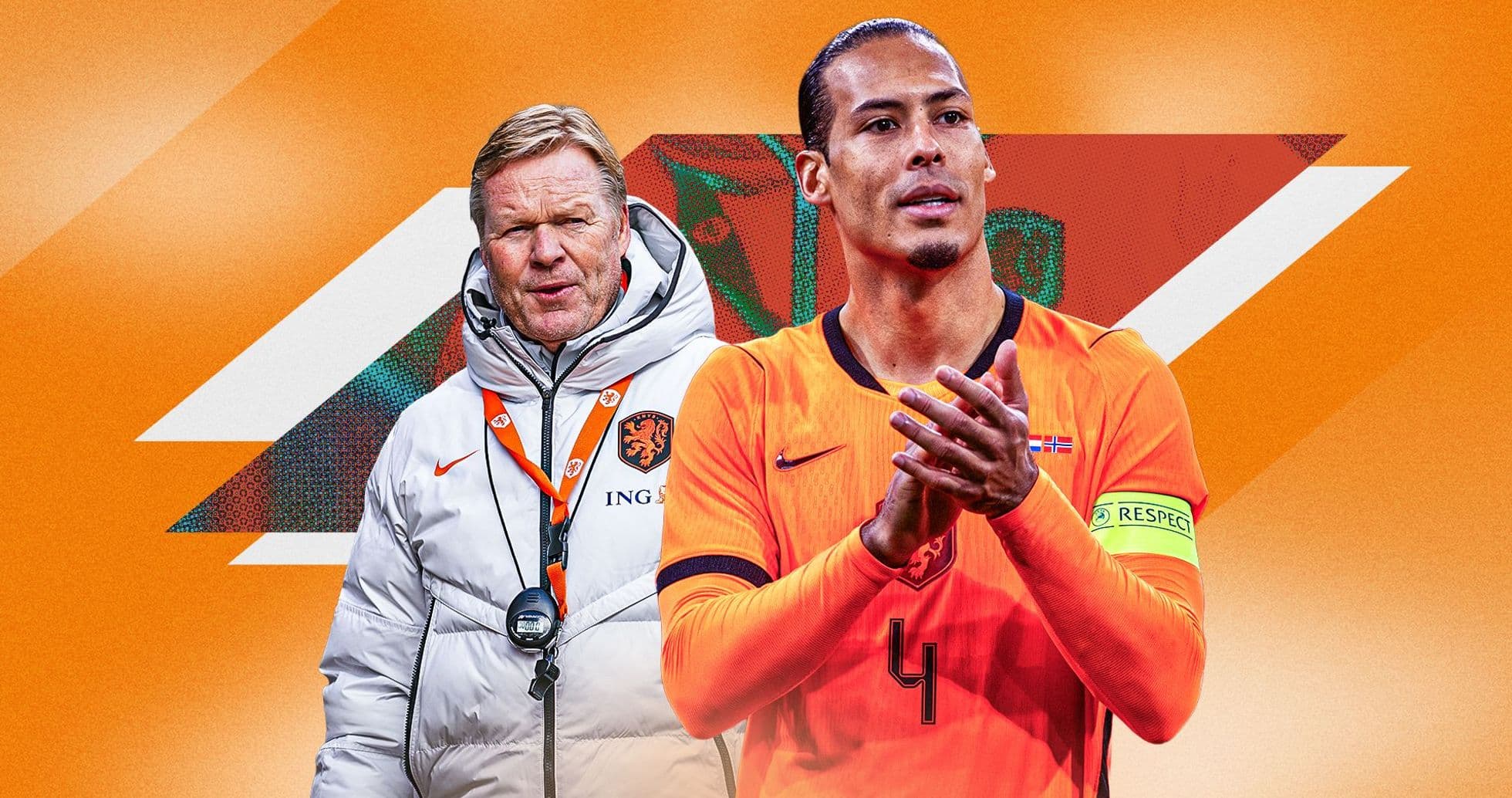
Netherlands: The Dark Horse of the Tournament
The Netherlands arrive as they often do: talked about, respected, but not quite trusted. Not this time. Not as one of the absolute favourites. Instead, they slip into the tournament as the most dangerous kind of outsider – a dark horse with scars, pedigree, and just enough chaos to trouble anyone in the knockout rounds.
A Brutal Group, A Backline of Steel
Japan, Sweden, Tunisia. On paper, it is one of the tournament’s most awkward groups, a blend of technical precision, organisation and raw intensity. Yet the Oranje still walk in as favourites to finish top. They have to. Look at the spine.
Virgil van Dijk anchors the defence, the calm at the eye of the storm. In front of him, Frenkie de Jong dictates tempo, knitting together phases, turning pressure into possession with those familiar glides through midfield. Higher up, Memphis Depay and Cody Gakpo carry the attacking threat, the players expected to turn half-chances into headlines.
The names are big. The expectations, inevitably, follow.
Injuries, Omissions and Awkward Questions
But this is not a full-strength Netherlands. Far from it.
Xavi Simons, Jurrien Timber and Matthijs de Ligt have all been ruled out before a ball is kicked. Those are not just squad players; they are structural pieces, the kind of talents that shape how a coach draws his tactics board.
Then came the surprises. Jeremie Frimpong, one of Europe’s most explosive wing-backs, left at home. Talented midfielder Kees Smit, too, omitted from the final squad. Each decision sparked debate, each absence another question for Ronald Koeman to answer if things go wrong.
The preparation did little to calm anyone. A shock defeat to Algeria in the first pre-tournament friendly rattled confidence, and the narrow win over Uzbekistan that followed did not exactly restore it. The results did not derail the campaign, but they did strip away any illusion that this side can simply turn up and glide through the early stages.
Koeman’s Second Act
Koeman knows this stage well. He first took the Netherlands job in 2018 on a four-year deal, stepping in after Dick Advocaat. He stabilised a drifting national team, guided them to the 2019 UEFA Nations League final, and booked a place at Euro 2020. Then Barcelona called, and he walked away.
Two-and-a-half years later, he was back. In 2023, he returned to the Oranje bench to replace Louis van Gaal and promptly led the team to two more semi-finals – one in the 2023 Nations League, another at Euro 2024. On paper, that is a strong record. Deep runs, big nights, relevance restored.
Yet at home, the debate never really stops. Koeman has been applauded for trusting emerging talent and refreshing the squad. At the same time, he has been accused of steering too far away from the Dutch ideal – that attacking, expressive, almost doctrinal style passed down from Rinus Michels and Johan Cruyff. The Netherlands still win, still compete, but some feel they no longer quite look like the Netherlands while doing it.
That tension shadows every selection, every tactical tweak, every flat performance.
Memphis, Still the Reference Point
Through all of it, one figure still dominates the Oranje attack: Memphis Depay.
He no longer plays his club football in Europe. He is likely approaching his final major tournament with the national team. None of that changes his status. He is the all-time leading scorer in Dutch national team history, with 55 international goals, outstripping Robin van Persie, Dennis Bergkamp, Arjen Robben and Ruud van Nistelrooy. Those are not just names; they are eras. Memphis has moved past them all on the scoresheet.
In a generation where the Netherlands lack a traditional, world-class centre-forward, Koeman leans again on Memphis. The Corinthians forward drove the team through qualification and maintains a strike rate of almost a goal every two games for his country. That is elite output, even if the numbers at major tournaments tell a cooler story: only six of those goals have come on the biggest stages.
So the question hangs over him. Can the man who scores freely in qualifying finally turn that rhythm into decisive knockout moments?
The Rise of ‘Brobbeast’
Alongside Memphis, a different kind of striker is pushing his way into the spotlight.
Brian Brobbey, a product of Ajax’s famed academy, knows what it means to be written off early. His move to RB Leipzig never quite clicked, his time in Germany quickly stamped with the unforgiving label of “flop”. It felt premature, harsh even, but football rarely waits for context.
He has answered in the best possible way. Now 24, Brobbey has rebuilt his career in England with Sunderland, where his performances have been anything but forgettable. Seven goals in 31 Premier League appearances do not scream superstardom on their own, yet the numbers only tell part of the story. He became a central figure in Sunderland’s remarkable charge to Europa League qualification, a driving force in a side punching well above its weight.
The nickname says plenty: ‘Brobbeast’. He is powerful, yes, but that undersells him. Brobbey blends strength with real pace, can lead the line alone, occupy centre-backs, and still find the composure to finish. A few years ago, people lazily tagged him as “the new Romelu Lukaku”. That comparison has faded. He now stands as a reference point in his own right, a player younger forwards study rather than a copy of someone else.
For Koeman and the Netherlands, that evolution could be crucial. In a squad searching for a cutting edge at the very top of the pitch, Brobbey offers a different route to goal, a different kind of threat, a partner or foil to Memphis rather than just his understudy.
The Oranje might not arrive as favourites. They might not play the kind of football that once defined their mythology. But with Van Dijk at the back, De Jong in command, Memphis chasing a final tournament legacy and Brobbey crashing through the door, they carry enough power to make that dark-horse tag feel dangerous.
The only thing left to discover is whether this version of the Netherlands can turn promise and potential into something that finally lasts beyond the semi-finals.
Related News
Raphinha’s Hat-Trick Powers Barcelona to 7-2 Victory Over Racing Santander
Carabao Cup Fourth Round Draw: Liverpool Set to Clash with Chelsea, Arsenal to Face Fleetwood Town
Key Football Matches to Watch in Azerbaijan This Autumn
Raphinha's Hat-Trick Drives Barcelona to 7-2 Triumph Over Racing Santander
Hansi Flick Leads Barcelona to Record-Breaking Seven Wins in a Row
Gavi Reflects on Injury Return as Barcelona Dominate Racing Santander 7-2