
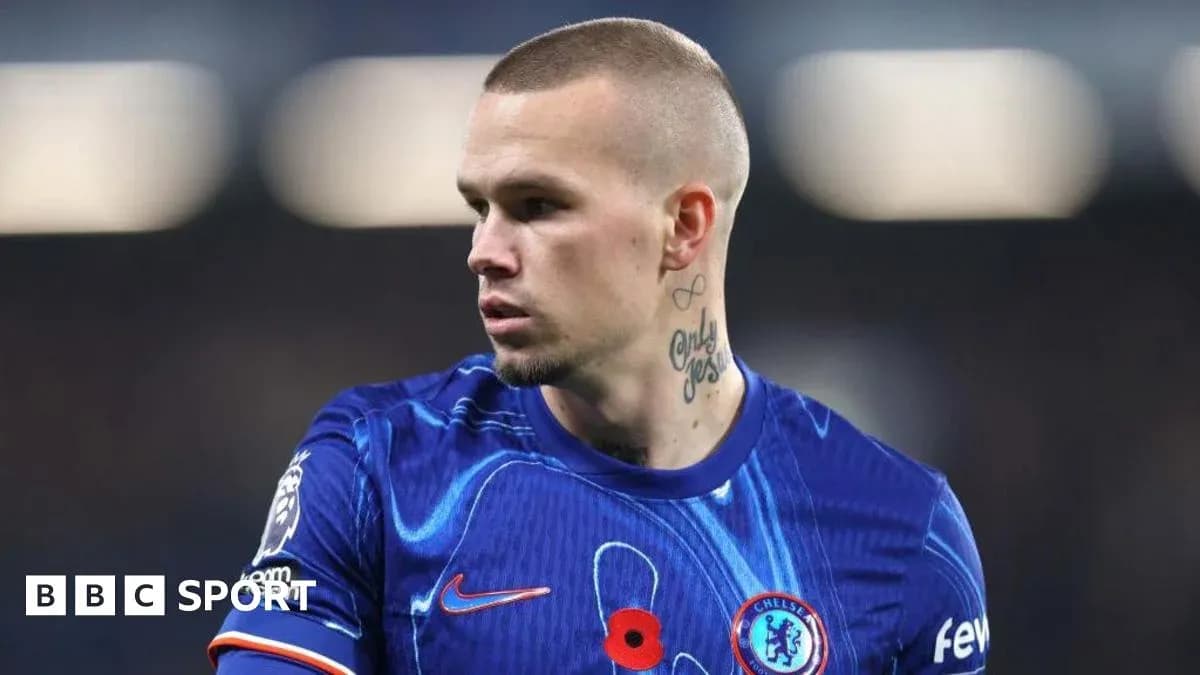
Mykhailo Mudryk's Return to Football After Doping Case
Mykhailo Mudryk’s 20-month exile is over. The Chelsea winger, once the headline act of a £61m transfer saga, can play competitive football again “with immediate effect” after his long-running doping case was finally resolved.
The Football Association confirmed that anti-doping proceedings against the 25-year-old have been brought to a close, with Mudryk accepting he broke anti-doping rules but serving a suspension equal to the time already spent out of the game. The punishment, in effect, is done. He walks back into football a free man.
From four-year ban to a way back
Mudryk has not kicked a competitive ball since November 2024. An out-of-competition test while on international duty with Ukraine in October that year produced an “adverse finding” for meldonium, a prohibited cardiovascular medication known to boost respiratory capacity and stamina.
The FA charged him in June 2025. In January this year, he received the maximum penalty: a four-year suspension. The case only became public in April when Mudryk appealed to the Court of Arbitration for Sport (CAS), turning a private ordeal into a very public fight for his career.
On Friday, the FA finally laid out the details it had kept behind closed doors under its strict confidentiality rules. The test, it said, showed a “low concentration” of meldonium. Crucially, it also noted that the World Anti-Doping Agency (WADA) has since updated its technical document on the substance.
Those changes do not apply retrospectively. Yet the FA acknowledged that if Mudryk’s sample had been tested under today’s guidelines, “the concentration of meldonium in the sample would not have been reported” and no adverse finding would exist at all.
That line changes everything. It does not rewrite the past, but it explains the compromise.
With WADA’s agreement, Mudryk and the FA have resolved the appeal. The original four-year ban is effectively replaced by the time already served. The legal battle ends; his footballing life restarts.
“The most difficult period” – and a quiet grind
Mudryk described the saga as “the most difficult period” of his career and said he was “grateful” to be able to return. He has consistently maintained that he never knowingly or intentionally took a banned substance.
Behind the scenes, his world shrank. Under the terms of his suspension, he could not access Chelsea’s training ground or work with club staff. Cobham was off limits. So were the everyday rhythms that define an elite player’s life.
Contact with the first team was almost non-existent. His only known public moment with them came at the Conference League final celebrations in May 2025, a brief glimpse of a player cut adrift from the dressing room he was supposed to grow up in.
To stay in shape, he built his own training ecosystem. He paid for private coaching. He hired goalkeepers for one-on-one sessions. He used a pitch at non-league Uxbridge FC in London. He organised a training camp in Austria, with footage from those sessions showing him driving through finishing drills and attacking patterns, trying to replicate the intensity he had lost.
Those close to him insist he never let his fitness slide and say he is confident he can rediscover his best form. At the same time, they accept a simple truth: there is no substitute for daily work alongside top-level players. No private session can recreate the speed, pressure and scrutiny of elite football.
Mudryk knows that. He is said to be realistic about the climb ahead, but convinced he can make it.
Chelsea’s stance and the shifting context
Chelsea have stood behind him, even at arm’s length. The club stressed it had “always supported Misha throughout this process while fully respecting the integrity of the anti-doping system and the legal process”.
Now the legal process is over, their language has shifted from caution to opportunity. Chelsea say they are “pleased that the matter has now reached a conclusion which allows him to return to football with immediate effect” and that they look forward to helping Mudryk “return to full fitness, back into the squad and back onto the pitch”. He will join the club’s pre-season tour.
The club also highlighted what it called an “important part of the context” of the case: advances in testing and updated guidelines that mean “no anti-doping rule violation would have resulted” from his sample today. It is not an exoneration, but it is a powerful framing of why this resolution felt inevitable once WADA’s position moved.
Mudryk, for his part, has spoken of “deep gratitude” to everyone at Chelsea and of his excitement for the “next chapter” of his career.
A long contract, a short window to prove himself
Mudryk remains tied to Chelsea until 2031, having signed one of the club’s long, amortised deals when he arrived from Shakhtar Donetsk in 2022. Those contracts were designed to spread transfer costs over many years; they also lock players in for the long haul.
Had the original four-year ban stood, he would not have been eligible to play again until roughly December 2028. Chelsea would have been left carrying a major asset who could not set foot on a pitch for almost the entirety of his prime.
Now the picture is very different, but still complex.
Chelsea are prepared to offer him a pathway back into professional football. What that looks like remains open. Reintegration into the first team is one option. A loan move is another, with sister club Strasbourg an obvious candidate if the club decides he needs a season to rebuild rhythm and confidence away from Stamford Bridge. A permanent transfer cannot be ruled out either if the market presents a solution that suits all sides.
For now, the focus is simpler: get him training, get him competing, find out what remains after 20 months in the wilderness.
A story at Stamford Bridge still unfinished
Mudryk arrived at Chelsea in one of the most closely watched transfer sagas of 2023, a raw, explosive winger billed as a cornerstone of a new era. Since then, his time in west London has been defined more by turbulence than by touchline-scorching performances.
This ruling does not guarantee that his Chelsea career finally catches fire. It does something more basic, but no less significant: it gives him the chance to decide it on the pitch.
His ban could have written the final chapter for him at the top level before his story had really begun. Instead, with the case closed and the rules around meldonium reframed, the door swings open again.
The question now is not whether Mykhailo Mudryk can play. It is what he does with the second chance the game has just handed him.
Related News
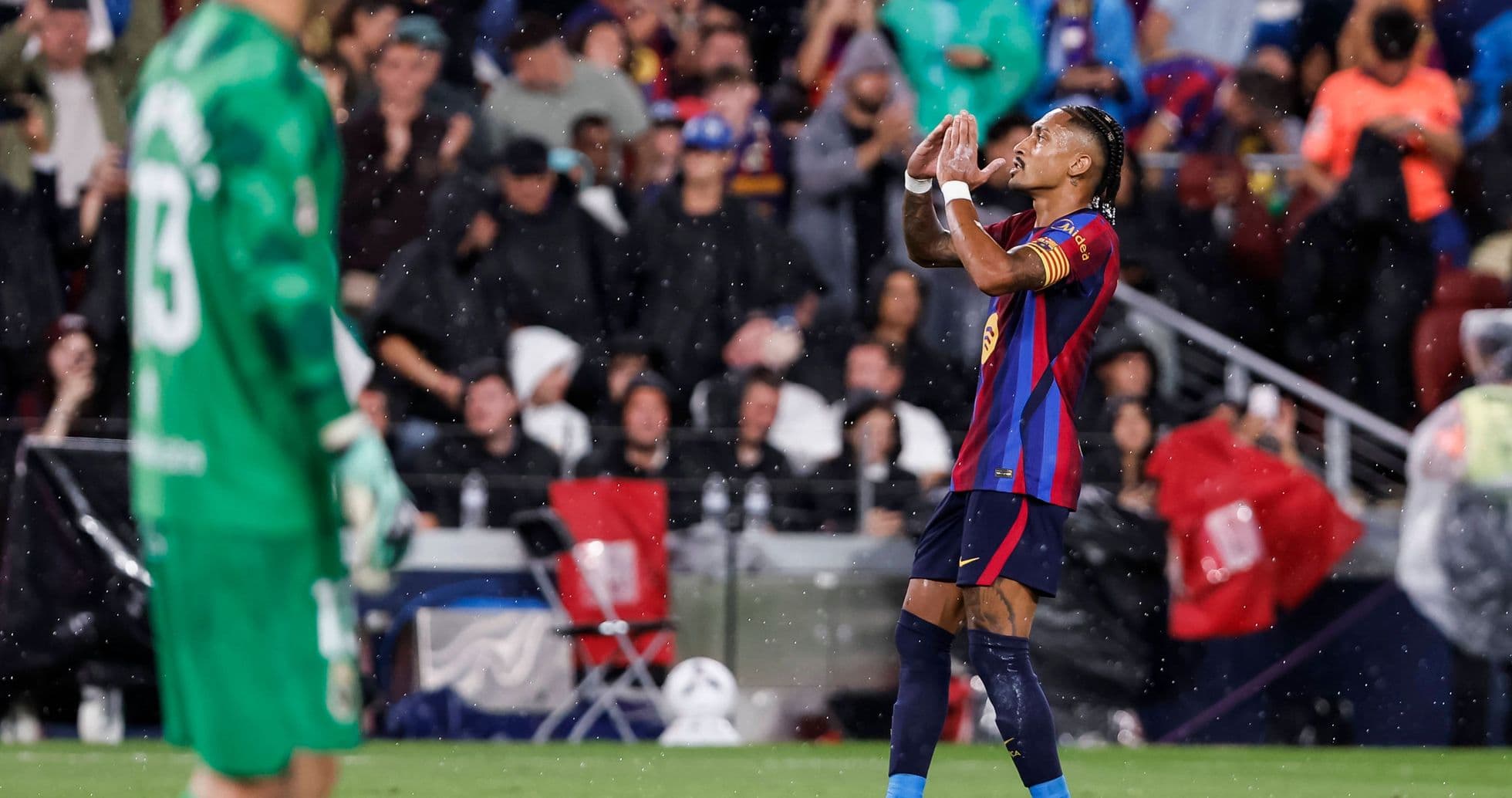
Raphinha’s Hat-Trick Powers Barcelona to 7-2 Victory Over Racing Santander
Carabao Cup Fourth Round Draw: Liverpool Set to Clash with Chelsea, Arsenal to Face Fleetwood Town
Key Football Matches to Watch in Azerbaijan This Autumn
Raphinha's Hat-Trick Drives Barcelona to 7-2 Triumph Over Racing Santander
Hansi Flick Leads Barcelona to Record-Breaking Seven Wins in a Row
Gavi Reflects on Injury Return as Barcelona Dominate Racing Santander 7-2