
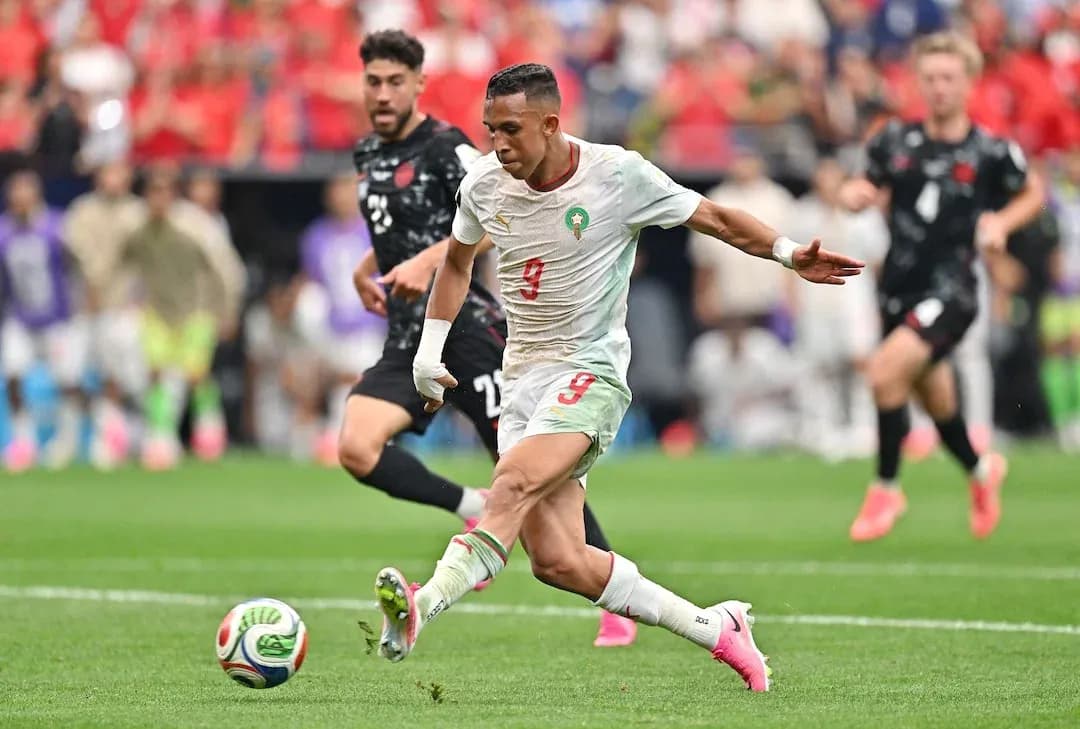
Morocco's Tactical Mastery: A 3-0 Victory Over Canada
Under the Houston glare at NRG Stadium, a Round of 16 that promised balance on paper ended as a statement: Morocco 3–0 Canada, a tactical dismantling that underlined the different stages of evolution these two national teams occupy.
I. The Big Picture – Two Identities, One Ruthless Separation
Heading into this knockout, the season numbers painted Canada as a chaotic, high-variance side. Overall this campaign they had scored 9 goals and conceded 6 across 5 matches, with a total average of 1.8 goals for and 1.2 against. The goal difference of +3 hinted at potential, but also volatility: at home they had already experienced both a 6-0 win and a 0-3 loss.
Morocco arrived as the more stable machine. Overall this World Cup they had 11 goals for and 4 against in 5 matches, an overall average of 2.2 scored and 0.8 conceded, and crucially no defeats. Their form line of DWWWW and a group-stage goal difference of +3 (6 scored, 3 conceded) spoke of a team that knew how to control games, absorb pressure, and strike with efficiency.
On neutral ground in Houston, those patterns crystallised. Canada’s expansive 4-4-2 under Jesse Marsch, with M. Crepeau behind a back four of A. Johnston, M. Bombito, L. De Fougerolles and R. Laryea, was set up to be front-foot and vertical. Morocco’s 4-2-3-1, guided by Mohamed Ouahbi, was all about structure: Bono in goal, a back line anchored by A. Hakimi, I. Diop, R. Halhal and N. Mazraoui, double pivot ballast in A. Bouaddi and N. El Aynaoui, and a fluid band of B. Diaz, A. Ounahi and B. El Khannouss behind the line-leading I. Saibari.
The 3-0 scoreline felt like the logical extension of their season-long profiles: Canada open, occasionally thrilling but fragile; Morocco compact, technically sharp, and merciless once ahead.
II. Tactical Voids – Absences and Discipline
Canada’s only listed absentee, I. Koné with a lower leg fracture, left a clear imprint on the balance of their midfield. Without his ability to break lines from deep, Marsch leaned on S. Eustaquio and N. Sigur in the centre, flanked by T. Buchanan and A. Ahmed. The shape remained aggressive, but the transitions lacked a true tempo-setter, forcing Canada to go more direct into J. David and T. Oluwaseyi.
The disciplinary backdrop coming into this tie was already tilted. Canada’s campaign yellow-card profile was spread across the match, with notable spikes between 31-45 minutes and 46-60 minutes (each 27.27% of their total yellows). That hinted at a team that often lost control around the half-time hinge. Individually, L. De Fougerolles and C. Larin both carried 2 yellows overall, making Canada’s defensive line and first-change striker walking tightropes.
Morocco, by contrast, had a more focused disciplinary pattern: all their yellows this tournament clustered between 16-60 minutes, split evenly at 33.33% in each 16-30, 31-45 and 46-60 windows. It reflected a side that knows when to foul to break rhythm, but rarely loses its head late on. I. Diop, with 2 yellows and 4 successful blocks overall, personified that calibrated aggression.
Neither side had a red-card history in this tournament, but Canada’s reliance on emotionally charged momentum always risked tipping into rashness once the game state turned against them. Morocco, once in front, simply never offered the chaos that might have given Canada a route back.
III. Key Matchups – Hunter vs Shield, Engine Room vs Orchestrator
The headline duel was the “Hunter vs Shield” confrontation between J. David and Morocco’s defensive block. David arrived as Canada’s reference point: 3 goals overall, 12 shots with 8 on target, and a willingness to press from the front. Yet he was facing a unit that, overall this World Cup, had conceded only 4 goals in 5 matches and kept 2 clean sheets on their travels.
With Hakimi and Mazraoui locking down the flanks and Diop marshalling the central lane, Morocco shrank the spaces David thrives in. Diop’s tournament profile – 288 completed passes at 88% accuracy, 4 blocked shots and 5 interceptions overall – translated here into a calm authority that denied David clean touches between the lines. When Canada tried to stretch the pitch with Buchanan and Laryea, Hakimi’s two-way influence and Mazraoui’s positioning turned those wide raids into low-percentage crosses.
On the other side, the “Engine Room” battle was tilted decisively in Morocco’s favour. A. Bouaddi and N. El Aynaoui screened intelligently, allowing Brahim Diaz to dictate higher up. Diaz’s tournament numbers – 4 assists overall, 8 key passes and 90% passing accuracy – framed him as one of the World Cup’s premier creators. In Houston, he repeatedly found pockets behind Canada’s midfield four, dragging Eustaquio and Sigur out of their zones and opening channels for A. Ounahi and B. El Khannouss to arrive late.
Further ahead, I. Saibari justified his status as a top scorer. With 3 goals overall from just 6 shots, plus 36 duels contested and 4 successful dribbles, he offered both penalty-box presence and link play. Against Canada’s back line, where De Fougerolles had already been heavily involved in physical duels (55 total, 30 won overall), Saibari’s movement away from the centre-backs created confusion. He didn’t need volume; he needed moments, and Morocco’s structure delivered them.
IV. Statistical Prognosis – Why 3-0 Felt Inevitable Once Morocco Struck
Even without explicit xG values, the season data signposted the likely narrative once the first Moroccan goal landed. Canada’s overall defensive average of 1.2 goals conceded per match, combined with their tendency to suffer heavy swings at home (from 6-0 to 0-3), suggested that chasing a game would expose them badly. Their overall clean-sheet count of just 2 in 5 fixtures underlined how rare it is for them to keep a high-quality opponent out over 90 minutes.
Morocco, meanwhile, came in with an overall attacking average of 2.2 goals per match and a defensive record of only 0.8 conceded. Their ability to both score multiple times and protect a lead was already proven. Add in a penalty record that is far from perfect – 5 penalties overall, with 3 scored and 2 missed (40.00% missed) – and the striking part is that they didn’t even need spot-kicks here to build a commanding margin.
Once Morocco went ahead, their game state mastery took over. The double pivot compressed central spaces, Hakimi and Mazraoui chose their moments to advance, and Diaz orchestrated transitions with the assurance of a player who knows he is among the tournament’s elite creators. Canada’s response, with the potential introduction of impact players like C. Larin, J. Osorio or N. Saliba from the bench, never found the platform it needed; Morocco’s structure simply smothered the chaos that usually fuels Canadian comebacks.
Following this result, the numbers and the narrative finally aligned. Canada’s bold, open blueprint met a side that punishes every structural flaw. Morocco, already efficient and undefeated, added a signature knockout performance to their campaign – a 3-0 that was not just about goals, but about a squad whose tactical maturity now matches its individual talent.
Related News

Thomas Tuchel Reflects on England's 10-Man World Cup Triumph and a Surprising Regret

Robert Moreno Takes Over as Interim South Korea Coach After World Cup Setback

Jude Bellingham Returns to Form with Real Madrid After World Cup Success

Chloe Kelly, Beth Mead & 13 Lionesses Who Must Shine in the Upcoming WSL Season for England’s 2027 World Cup Bid
Barcelona Cancels World Cup Tribute Amid Political Tensions
Messi Breaks Record for Most Penalties Taken and Missed in FIFA World Cup History