
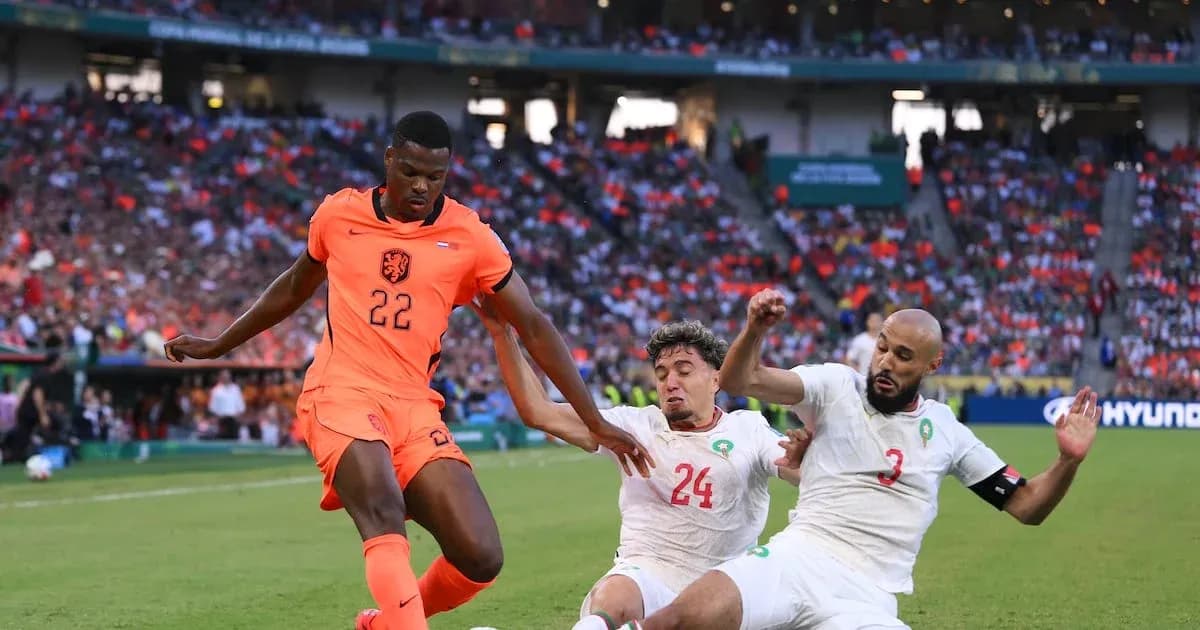
Morocco Triumphs Over Netherlands in Penalty Shootout
Morocco 1–1 Netherlands (Morocco win 3–2 on penalties): Africa’s standard-bearers break Dutch hearts
The moment Ismael Saibari began to sprint, half of Morocco’s bench took off with him. By the time he stopped, they had disappeared beneath a heap of bodies, a tangle of shirts and limbs and disbelief. Morocco had done it again. Another European power bent, another World Cup run still very much alive.
Across the pitch, the Dutch players stood in a thin, stunned line. The shootout had ended 3–2 to Morocco. The World Cup last-32 tie, which the Netherlands had seemed to have in their grasp, had slipped away in the most brutal fashion the sport can offer.
Gakpo’s goal and a grief heavier than any defeat
Earlier in the night, another pile-on had told a very different story.
When Cody Gakpo lashed the ball home in the 72nd minute, the reaction was instant and visceral. Orange shirts flooded towards him from every angle, substitutes and starters alike sprinting off the bench, ignoring the touchline as if it didn’t exist. It was celebration, yes. But it was also protection.
Gakpo had chosen to play after the announcement that he and his partner had lost their unborn son. When the ball hit the net, the roar from Dutch fans felt almost secondary to the sight of Gakpo himself: tearful, pointing to the sky as he walked back towards the centre circle, Denzel Dumfries at his side, an arm around his shoulders.
On another night, that goal would have been the winner. The story would have written itself: redemption, healing, the game as balm. Football rarely obliges. It has its own sense of drama, and it is often merciless.
Morocco refuse to bow
As the clock ticked into added time, the Netherlands looked as if they had weathered the storm. Morocco had dominated the ball, dictated the rhythm, but Gakpo’s strike had appeared to tilt the contest towards Koeman’s conservative plan.
Then came Chemsdine Talbi.
Barely a minute into stoppage time, the substitute checked inside onto his right foot on the left flank and delivered a cross of pure quality. The ball arced towards the back post, inviting, insistent. Issa Diop rose to meet it and crashed his header past Bart Verbruggen. A thrilling, emphatic finish. Morocco’s bench erupted; Dutch shoulders slumped.
It was no smash-and-grab. Morocco had earned it. They had carried the game, held 70% of the ball, and asked the questions. The equaliser simply restored a balance the scoreline had refused to reflect.
Koeman’s gamble: safety first, glory later
Ronald Koeman will not escape the inquest.
The Netherlands had not sparkled in the group stage, but they had scored freely: seven goals against Sweden and Japan, three more against Tunisia in a dead rubber. No side came into the last 32 with a higher tally. Yet when faced with Morocco, Koeman retreated.
Out went the familiar 4-3-3 and Tijjani Reijnders with it. In came a five-man back line, a structure designed to keep things tight, to smother rather than suffocate. The intent was clear: contain first, create later.
The result was a scratchy, hesitant performance. For long spells, the Netherlands barely laid a glove on Morocco. Their first real threat arrived only shortly before half-time, when Micky van de Ven’s fierce drive forced Yassine Bounou to tip over. By then, Verbruggen had already been called into meaningful action, flinging himself to deny Neil El Aynaoui and Achraf Hakimi in quick succession.
Koeman defended his choices afterwards, pointing out that Morocco are a level above the sides the Dutch had dismantled in the group stage. On the scoreboard, he was almost vindicated. On the pitch, the caution cost his team rhythm and belief.
Hydration break, hammer blow
For all Morocco’s control, Koeman still almost walked away with the result he wanted.
Midway through the second half, with Morocco firmly in command and the Dutch pinned back, the game paused for a Fifa hydration break. It felt like a footnote. It changed everything.
On the restart, Wout Weghorst replaced the ineffective Brian Brobbey. Within seconds, the plan worked to perfection. Verbruggen launched long, Weghorst flicked on, and Crysencio Summerville burst through. As he was challenged, he hooked the ball across to Gakpo. One touch, one ruthless finish. In the space of a few seconds, the Netherlands had gone from under siege to ahead.
For a while, it looked like a classic rope-a-dope. In 2010, the Dutch had ridden out pressure and cynicism all the way to a World Cup final. Here, they seemed ready to do it again, leaning on organisation, dark arts and moments of quality.
Morocco refused to play their part in the script.
Blood, boos and an old grievance
This was never just a tactical chess match. From the first whistle it crackled with edge.
Jan Paul van Hecke was battered three times in the opening period alone, his head bloodied on the third collision. Challenges arrived late and often, the line between competitive and cynical blurring with each tangle.
In the stands, the noise carried its own storyline. Local supporters, remembering an old wound, jeered every Dutch touch early on. Exactly 12 years had passed since the Netherlands beat Mexico in the last 16 with a late, contentious penalty won by Arjen Robben. That memory lingered. Moroccan fans happily joined in the booing chorus, adding their own colour and fury.
On the pitch, Morocco were not at their most fluid before the break, but Hakimi began to drag them forward after it. He drove inside on underlapping runs, testing the Dutch back line. On one surge, Van de Ven had to produce a crunching, last-ditch tackle to stop him. The Dutch had no real control until the hydration break allowed Koeman to reset and release his battering ram.
Then Diop tore that plan apart with one leap.
Extra time drifts, penalties decide
After Diop’s equaliser, extra time felt like a comedown. The tension remained, the chances did not.
Verbruggen made the one truly notable save, standing tall and then plunging to deny Soufiane Rahimi. Morocco probed, the Netherlands waited, but neither side could land the decisive blow. The game drifted towards the one place neither coach truly wanted: the penalty spot.
From there, it became a test of nerve and detail.
Both sides missed early. Then came the moment Koeman would later circle as the night’s great “what if”. Verbruggen read Rahimi’s kick, reached it, and seemed to have saved it. The ball, though, spun off his trailing heel and trickled over the line. Agony in slow motion.
Quinten Timber then dragged his effort horribly wide, the ball skewing away from goal as if pulled by the weight of the occasion. Hakimi clipped a post, keeping the Dutch alive for a few more seconds. But Bounou stood firm, Saibari struck, and when the final Moroccan penalty hit the net, the shootout was theirs.
Morocco’s players sprinted, slid, leapt. Bounou and Saibari basked in the roar. The Netherlands, beaten 3–2 on penalties after a 1–1 draw, walked towards their fans with the hollow stare of a team that knew it had let something slip.
Canada now await Morocco in the last 16. On a bleak day for Europe’s heavyweights, Africa’s best have kicked the door open again.
Related News
Raphinha’s Hat-Trick Powers Barcelona to 7-2 Victory Over Racing Santander
Carabao Cup Fourth Round Draw: Liverpool Set to Clash with Chelsea, Arsenal to Face Fleetwood Town
Key Football Matches to Watch in Azerbaijan This Autumn
Raphinha's Hat-Trick Drives Barcelona to 7-2 Triumph Over Racing Santander
Hansi Flick Leads Barcelona to Record-Breaking Seven Wins in a Row
Gavi Reflects on Injury Return as Barcelona Dominate Racing Santander 7-2