
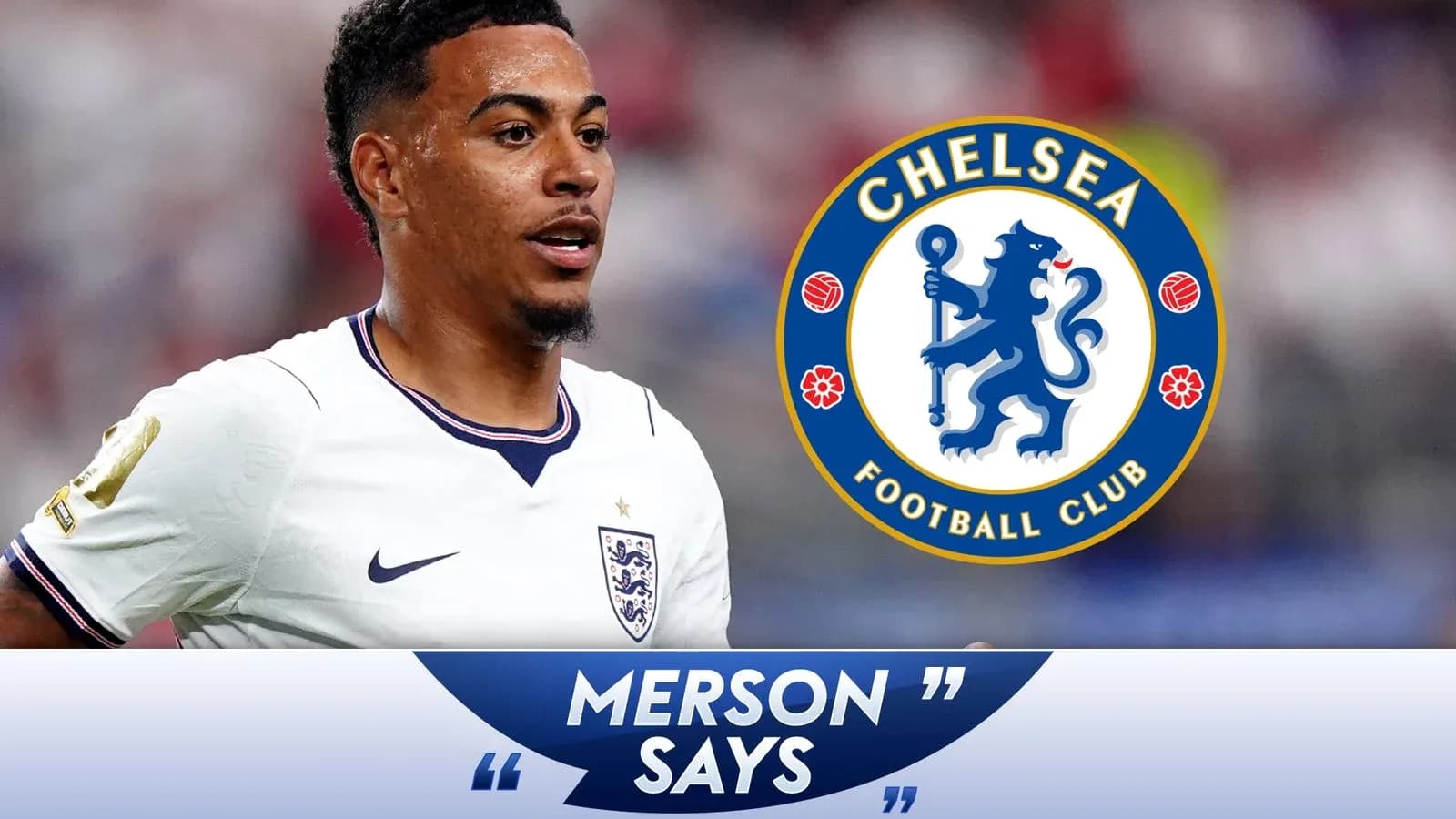
Morgan Rogers to Chelsea: A £117m Gamble That Redefines Football Transfers
Chelsea have never been shy around a transfer fee, but this one lands differently. £117m for Morgan Rogers. A six-year deal, option of a seventh. And with one signature, the 22-year-old is set to become the most expensive footballer in British history.
It’s a headline that rattles through three clubs at once: Chelsea, Arsenal, Aston Villa. And it leaves more questions than answers.
Chelsea pay big – but for what, exactly?
“Crazy money” is how Paul Merson frames it, and you can see why. Chelsea have not just bought a talent; they’ve bought a positional headache.
Rogers is a No 10. Cole Palmer is a No 10. Joao Pedro is a No 10. Chelsea now have three players who all want to operate in the same patch of grass, in the most delicate area of the pitch.
Palmer carried Chelsea last season. He drifted in from the right, yes, but he did his damage when he could step inside and run games as a de facto playmaker. Rogers, like Palmer, thrives when the match opens up, when the ball breaks loose and he can drive at a retreating defence. That’s his world.
He won’t see much of that at Stamford Bridge.
Opponents go there, shut the game down, sit in a low block. Ten behind the ball, no space in behind, no broken play to gallop into. Rogers’ best trait – that surging, chaotic running when the game is stretched – gets suffocated in that environment.
So where does he fit?
If Chelsea rip things up, sell Enzo Fernandez, accept that the £100m experiment didn’t work, and anchor the midfield with Moises Caicedo, then one option appears: Caicedo sitting, Palmer and Rogers ahead of him as dual 10s, with Joao Pedro squeezed into the rotation. But that’s a huge structural shift and an even bigger financial admission.
More likely, someone gets shunted wide. Palmer back out on the right, where his influence shrinks. Or Rogers forced into a wide role that doesn’t suit him. As Merson points out, there are plenty of better natural right wingers than Rogers.
This is not a squad plug. It’s a luxury purchase.
The weight of £117m
Rogers can say the fee doesn’t bother him. They all do. It will.
Every poor touch, every quiet game, every anonymous afternoon against a deep block will be filtered through that number. £117m. The price tag walks onto the pitch with him.
When Declan Rice and Caicedo moved for £100m, plenty of people called those deals excessive. The noise died quickly. Why? Because they performed. They justified it to the point that their fees stopped being the story.
Rogers doesn’t get the same margin for error. He’s not a midfielder who can tick things over, keep it simple and hide in the structure. He’ll be judged on goals and assists, on moments, on match-winning contributions. That’s the hardest role in the game. If he starts like he did at Aston Villa last season – by Merson’s recollection, “atrocious” in the early months before catching fire in the second half of the campaign – he won’t get the same patience.
At Chelsea, for that fee, a slow burn is a non-starter.
Arsenal’s missed playmaker – and their new to-do list
This transfer also tells a story about Arsenal. If Rogers picked Chelsea, logic says he was offered something there he wasn’t getting in north London: the No 10 role.
Arsenal, by contrast, were likely pitching him as a left winger, rotating or competing in that role. One club, Chelsea, are not in Europe but appear to have promised him the position he wants. The other, Arsenal, look primed for another title tilt and a serious Champions League run, yet lost out.
Unless the money and length of the Chelsea contract are astronomical, that positional promise feels decisive.
Now Arsenal have a hole to fill. They need a left winger. Not a squad body, not a project. A top-level, ready-made wide player who can lift them another notch. Desire Doue and Bradley Barcola sit on that shortlist. Both are the type of high-ceiling winger who can change the tempo of a game and stretch defences at the highest level.
Arsenal have backed themselves into this corner. Selling Leandro Trossard for what Merson describes as “the price of a cup of tea” looks baffling in that light.
Trossard played in the big games at the end of last season. He started against the heavyweights for a reason: he’s intelligent, technically sharp, and ruthless in tight spaces. He doesn’t sulk, doesn’t poison the dressing room, doesn’t kick up a fuss when he doesn’t start. He comes on, he contributes, he scores. Those players are gold dust in a title race.
Now he’s gone, Rogers has slipped away, and Arsenal are back in the market again. If they want to stay at the very top, they can’t stop. They have to keep buying, keep upgrading. A left winger is no longer a luxury item. It’s essential.
Villa’s fairytale season, ripped apart
Amid all this, Aston Villa quietly look like the biggest losers.
Champions League football secured. A European trophy in the cabinet. A season that felt like a turning point in the club’s modern history. And then, piece by piece, the core of that success starts to fray.
Rogers goes. Youri Tielemans goes. According to Merson, those are Villa’s two best players “by a country mile” – their most creative sparks.
Tielemans was the metronome, the passer who saw the pitch, who could lift the ball into dangerous areas and move Villa up the field with his range and vision. Rogers took over when games broke down, carried the ball, broke lines, unsettled defenders.
Both gone in one summer.
If you’re Unai Emery and someone asks which players you’d least like to lose, Tielemans and Rogers are deep on that list. Yet they’re the ones out the door. If you’re a Villa fan queuing for a season ticket, those are the names you want on the pitch when you walk through the turnstiles. You don’t just want results; you want entertainment. Those two provided it.
And there might be more.
Ezri Konsa could be next. Arsenal need a centre-back. Chelsea need one as well. Konsa fits the profile for both – comfortable on the ball, athletic, Premier League proven. If he goes, Villa aren’t just losing creativity; they’re losing stability at the back too.
Johan Manzambi has arrived and looks “alright” in Merson’s eyes. But “alright” doesn’t replace Tielemans or Rogers. It doesn’t reassure supporters who have just watched their two most inventive players leave after the club’s best season in years.
The same concern hangs over Arsenal’s signing of Christos Tzolis and Villa’s move for Manzambi: who else wanted them? Were Europe’s giants battling to get those deals done? Were Real Madrid, Barcelona, Manchester City, Manchester United, Liverpool in the queue?
The answer to that question often tells you everything about the level you’re shopping at.
A transfer that tests everyone
Rogers’ move is more than a record fee. It’s a stress test.
It tests Chelsea’s squad planning and tactical clarity. Can they carve out a role that suits him without blunting Palmer? Can they justify yet another nine-figure outlay?
It tests Arsenal’s recruitment sharpness. Can they pivot quickly enough to land a winger who improves them, not just fills a gap?
It tests Villa’s ambition. Are they building towards something, or cashing in just as they’ve climbed back onto the European stage?
Rogers will walk out at Stamford Bridge carrying the heaviest price tag in British football history. How he handles that burden will shape not just his own career, but the trajectories of three clubs who all think they belong at the top.
Related News
Ilia Topuria Accuses Justin Gaethje After UFC Defeat

Tyson Fury vs Anthony Joshua Fight Date and Venue Confirmed
Switzerland Calls Up In-Form Sion Striker Winsley Boteli for Nations League
Bournemouth Secures Historic 2-1 Win Over Real Sociedad in Spain
Portugal Announces Squad for 2026 UEFA Nations League; Cristiano Ronaldo Expected to Play

Raphinha Channels Ronaldo Nazario as Barcelona's Leading Striker After Position Change