
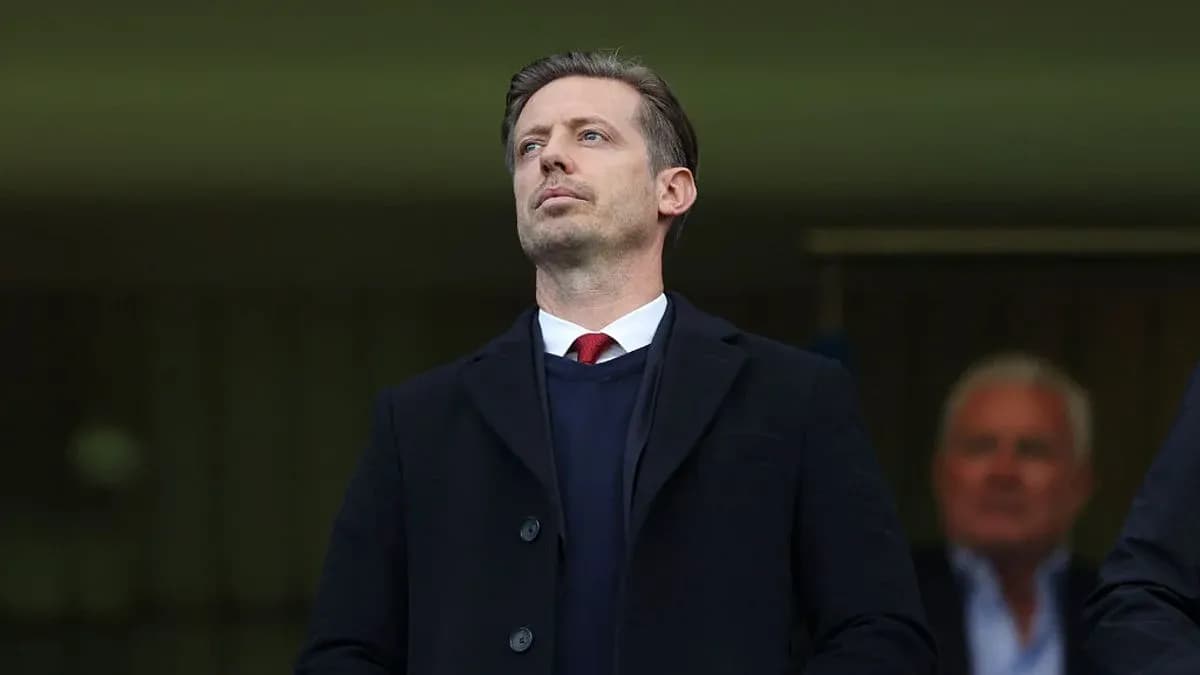
Michael Edwards' Liverpool Return: Frustration and Unfinished Plans
Michael Edwards’ second Liverpool chapter was meant to be bigger, broader and bolder. It has ended instead with frustration, unfinished plans and a familiar face stepping back into the void.
The architect of the Mohamed Salah, Sadio Mané and Andy Robertson deals returned to Fenway Sports Group in 2024 with a different brief and a grander canvas. No longer just Liverpool’s sporting director, Edwards came back as FSG’s CEO of football, tasked with helping to steer the club through the post-Jürgen Klopp transition and, crucially, to build a multi-club empire.
That last part never arrived.
A promise that never materialised
Those close to the situation say Edwards was “frustrated” with FSG after being told, on his return, that the ownership group intended to buy another European club. The multi-club model was not a side note. It was central to his decision to come back.
Two years on, no acquisition. No second club. No network.
The project that had enticed him was effectively parked, and with it went the main attraction of his new role. The Athletic reported that Edwards had been particularly keen for FSG to move quickly on a second club, and that their failure to do so was a key factor behind his decision to walk away a year before his contract expired.
For a man who had already turned down heavyweight offers from Manchester United and Chelsea after leaving Liverpool in 2022, this was supposed to be the next evolution of his career. Instead, it became a short-lived experiment.
From transfer mastermind to frustrated executive
Edwards’ reputation at Anfield had been built on ruthless clarity and sharp recruitment. During Klopp’s peak years, he became the quiet constant behind the scenes, the figure often credited with the deals that transformed Liverpool from challengers into champions.
His return was framed as a coup. FSG had persuaded their most trusted football mind to come back and help them plot life after Klopp. Yet the job description had changed: less day-to-day Liverpool, more strategic FSG; less single-club focus, more portfolio thinking.
He spoke openly about how crucial the multi-club model was in convincing him to accept the CEO of football role. The idea was to give Liverpool and FSG a broader platform: a second European club, shared scouting, player pathways, and a structure to compete with the sprawling networks now common at the top of the game.
That vision never left the planning stage.
In his departure statement, Edwards chose his words carefully. He called it “a privilege” to return and said he leaves believing Liverpool are “in a strong position, with outstanding people, a clear direction and the foundations in place for continued success.” He also acknowledged that FSG’s wider football project “ultimately evolved differently to how we had originally envisaged,” though he expressed pride in the work done to present ownership with “a broad range of thoughtful and well-developed options for the future.”
The message was polite. The reality behind it was clear enough: the project he signed up for changed, and he was not willing to stay on under those terms.
Hughes in, Hughes out
One of Edwards’ first major moves on his return had been to bring in Richard Hughes as Liverpool’s sporting director. The pair had worked together previously and shared a similar outlook on recruitment and squad building.
Hughes arrived from Bournemouth, where Andoni Iraola had not held full control over transfers, and at Liverpool he quickly became the central figure in that area. He was the man trusted to shape the squad in the new era.
Now he is expected to leave too.
Reports suggest Hughes will depart at the end of the summer to join Al-Hilal, cutting short what was supposed to be a key role in the next phase of Liverpool’s rebuild. It adds another layer of instability at a time when the club had hoped for continuity behind the scenes, even as the manager’s office changed hands.
Back to Gordon
With Edwards gone and Hughes likely to follow, FSG have turned once again to a familiar operator. Mike Gordon, the group’s president and long-time powerbroker in Liverpool’s hierarchy, is understood to be resuming day-to-day control at the club.
Gordon has done this before. During previous cycles, he was the steady presence linking Boston and Merseyside, overseeing the football operation while allowing the sporting structure to function around him. His return to a more hands-on role underlines the scale of the reset.
Edwards, in his farewell, made a point of thanking Gordon, John Henry, Tom Werner and “everyone across FSG and Liverpool” for their support and friendship. He reserved a final nod for the supporters, whose passion he said “makes this club so special,” and closed by saying he will “always be grateful to have been part of its story.”
The story now moves on without him. The multi-club dream that lured him back is on ice, the sporting director he installed is heading for Saudi Arabia, and the old guard at FSG is once again at the controls.
For Liverpool, the question is no longer how far a bold new structure can take them. It is whether the club can maintain its edge in a rapidly shifting landscape while the blueprint that tempted its sharpest football mind back to the table sits untouched.
Related News
Ilia Topuria Accuses Justin Gaethje After UFC Defeat
Tyson Fury vs Anthony Joshua Fight Date and Venue Confirmed
Switzerland Calls Up In-Form Sion Striker Winsley Boteli for Nations League
Bournemouth Secures Historic 2-1 Win Over Real Sociedad in Spain
Portugal Announces Squad for 2026 UEFA Nations League; Cristiano Ronaldo Expected to Play
Raphinha Channels Ronaldo Nazario as Barcelona's Leading Striker After Position Change