
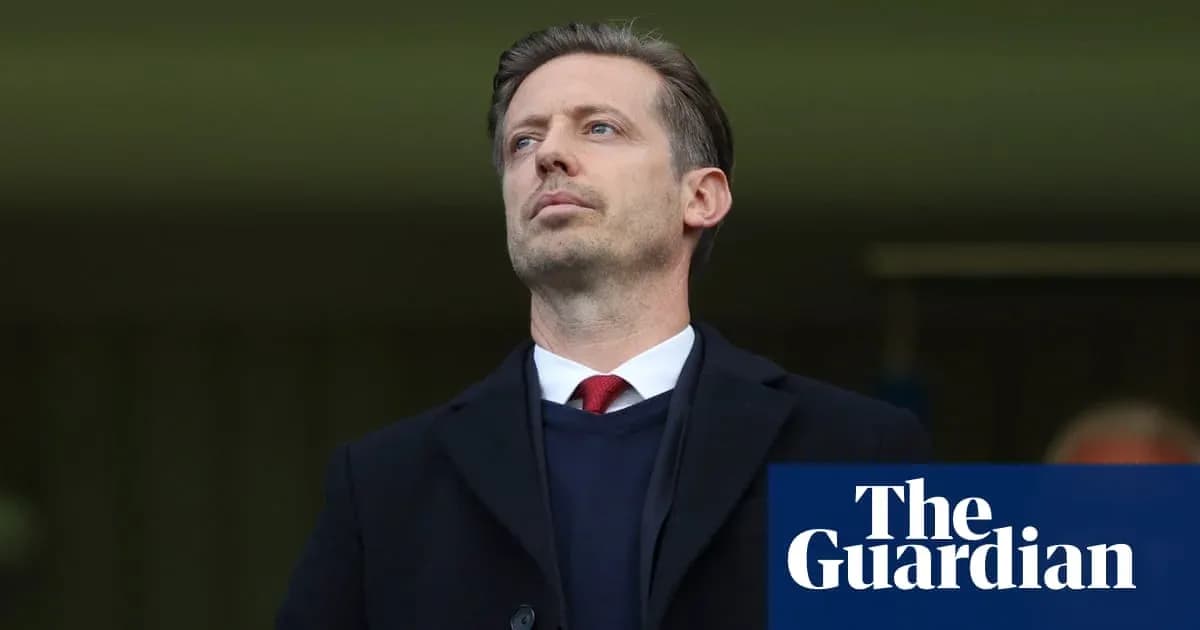
Michael Edwards Leaves Fenway Sports Group: A Shift in Liverpool's Leadership
Michael Edwards has stepped away from Fenway Sports Group for a second – and very likely final – time, walking out as FSG’s chief executive of football and leaving another sizeable gap at the heart of Liverpool’s power structure.
The architect of much of Liverpool’s modern success told FSG back in the autumn of 2025 that he intended to go once he felt the club’s future was properly mapped out. On Friday, the ownership group finally confirmed his departure, having tried to persuade him to stay. They could not. The project he came back for had changed.
A grand plan that never materialised
When Edwards returned in March 2024, it was not simply to steady Liverpool after Jürgen Klopp. FSG handed him a wider canvas than ever before. No longer just Liverpool’s sporting director – the role he helped redefine between 2016 and 2022 – he was installed as FSG’s chief executive of football, charged with reshaping the group’s entire football portfolio.
The brief was clear: guide Liverpool through the end of the Klopp era and build something bigger around it. Multi-club ownership. Strategic partnerships. A second team under the FSG umbrella to leverage data, scouting and development on a broader scale.
Edwards liked that idea. It was a key part of what lured him back.
FSG explored options. Getafe. Bordeaux. Other possibilities. They studied the market, ran the numbers, tested the fit. Nothing landed. No club convinced them enough to pull the trigger, and by last year the plan was quietly shelved. It may re-emerge one day, but for now the multi-club dream is back in the drawer.
Once that happened, the logic of Edwards’ role began to fray. The job had been created for him and for that wider vision. With the project paused, his position no longer carried the same purpose. He leaves with a year still to run on his contract and, because the decision is his, without a payoff. FSG may not even look for a like-for-like replacement.
Edwards walks away on his terms
Edwards chose his moment and his message carefully.
“It has been a privilege to return to Fenway Sports Group and Liverpool Football Club at such an important moment,” he said, insisting he goes convinced the club is “in a strong position, with outstanding people, a clear direction and the foundations in place for continued success.”
He did not hide the fact that the broader FSG project shifted under his feet. The multi-club plan that had tempted him back “evolved differently” from the original vision, as he put it, though he stressed his pride in the work done to present ownership with “a broad range of thoughtful and well-developed options for the future.”
That line matters. Edwards wants it understood that the football department did its part. The decision not to expand rests with FSG.
Transfers steady, hierarchy anything but
On the pitch, Liverpool’s summer is not expected to wobble. The transfer operation sits in the hands of sporting director Richard Hughes, and the club’s plans for this window are already locked in.
Off the pitch, the picture is far less settled.
Hughes, whose contract runs until 2027, has been heavily linked with a lucrative offer from Al-Hilal in the Saudi Pro League. He has already made one seismic call in tandem with Edwards: sacking Arne Slot and bringing in Andoni Iraola as Liverpool’s new head coach. If Hughes follows Edwards out of the door after the window closes, that would leave Liverpool’s rebuilt leadership structure facing another major reconstruction.
For a club that has prided itself on continuity and clear lines of authority during its resurgence, the churn at the top is starting to feel uncomfortable.
Gordon steps back into the spotlight
In Edwards’ absence, FSG president Mike Gordon is expected to move closer to the day-to-day football operation once more. Gordon has long been a central, if often low-profile, figure in Liverpool’s modern era, and he did not hold back in his assessment of Edwards’ impact.
“Throughout both periods he has consistently demonstrated exceptional judgment, integrity and an unwavering commitment to building a strong football organisation for the long term,” Gordon said, highlighting Edwards’ role in steering Liverpool through a “significant period of transition” and towards a historic 20th English league title.
That title, clinched after Klopp’s departure, stands as the most striking proof that Liverpool could survive – and even thrive – beyond their era-defining manager. Edwards’ fingerprints are all over that achievement. Recruitment. Structure. Strategy. The quiet, unseen work that underpins trophies.
Now, the man who helped design that framework has gone again, this time from an even higher vantage point.
FSG insists Liverpool’s foundations are solid. The squad is strong, the head coach installed, the transfer plan in motion. Yet the exits, the shifting roles, the abandoned expansion plans all pose the same question: how many more departures at the top can this model absorb before the stability that defined the Klopp years starts to creak?
Related News
Ilia Topuria Accuses Justin Gaethje After UFC Defeat
Tyson Fury vs Anthony Joshua Fight Date and Venue Confirmed
Switzerland Calls Up In-Form Sion Striker Winsley Boteli for Nations League
Bournemouth Secures Historic 2-1 Win Over Real Sociedad in Spain
Portugal Announces Squad for 2026 UEFA Nations League; Cristiano Ronaldo Expected to Play
Raphinha Channels Ronaldo Nazario as Barcelona's Leading Striker After Position Change