
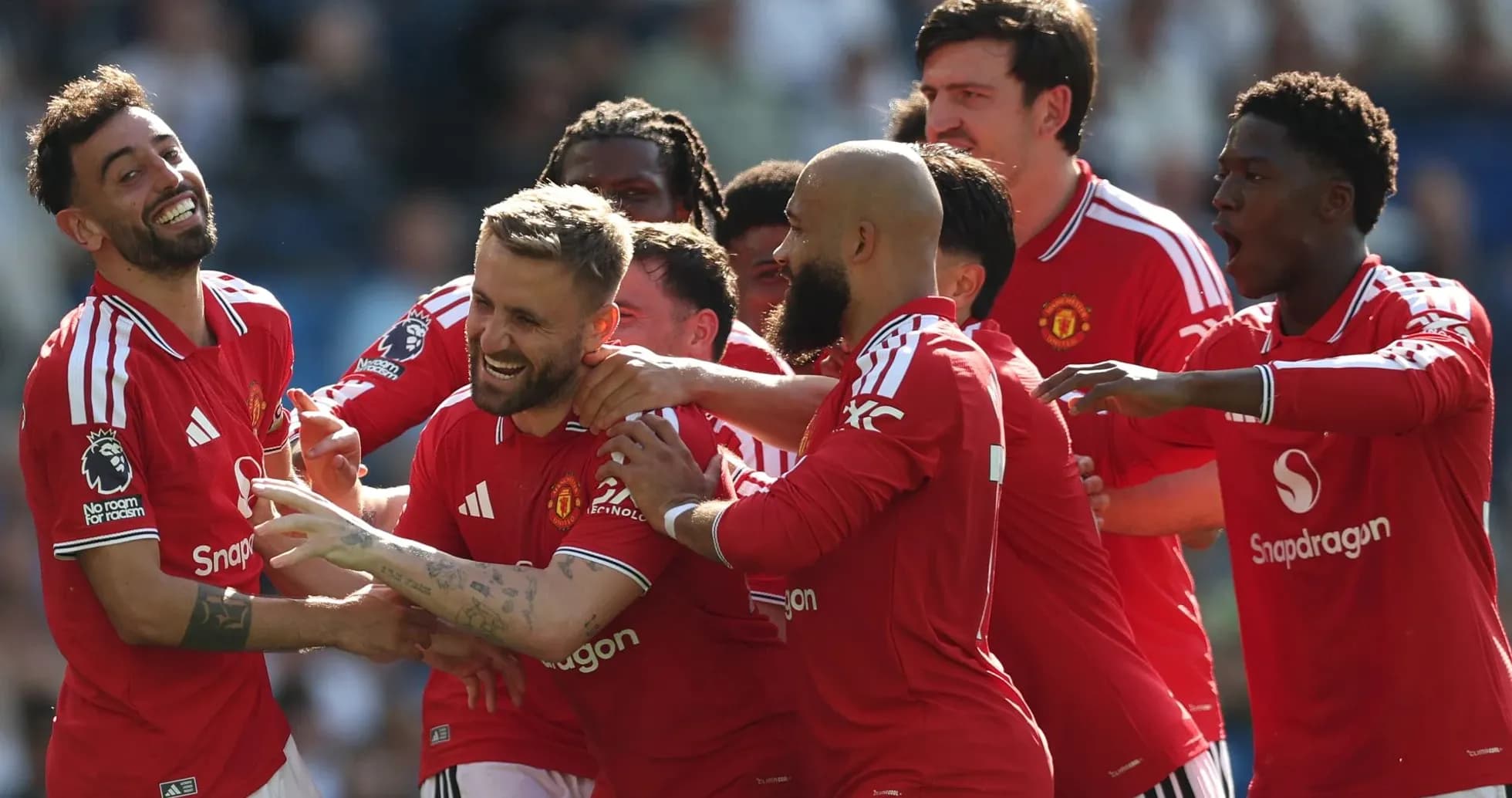
Michael Carrick's Impact on Manchester United's Future
Sir Alex Ferguson walked away 13 years ago with 13 league titles and a European crown, convinced he had left Manchester United with a structure strong enough to outlast him. It was supposed to be a handover, not a cliff edge.
What followed has felt far closer to the latter. David Moyes, Louis van Gaal, Jose Mourinho, Erik ten Hag and Ruben Amorim all arrived with plans and promises, yet none managed to restore United as the dominant force in English football. All the while, across town, Manchester City grew louder, richer, more relentless. The “noisy neighbours” became the benchmark.
This season, at last, something shifted.
Michael Carrick, a metronome in midfield during Ferguson’s final great sides and a five-time title winner as a player, stepped in as interim manager for the 2025-26 campaign and changed the mood almost overnight. Performances tightened, results steadied, belief crept back into Old Trafford. United moved quickly to hand him a two-year contract.
Hope has returned to the red half of Manchester. Not the wild, unfocused kind that greeted previous appointments, but a quieter conviction that, with smart work in the summer window, United might finally be ready to look up the table rather than over their shoulder. Some supporters are already daring to talk about a title tilt in 2026-27.
Gary Pallister is not quite there yet.
The former United centre-back, who won multiple titles under Ferguson, has watched Carrick’s early work closely. Speaking to GOAL, he cut through the romanticism.
“I think a couple of signings can make a huge difference,” he said. “Do I think they're in line for a title challenge? My honest opinion at the moment would be no, I don't think so. I think we've still got a bit of building to do.”
That blunt assessment sits alongside genuine admiration for what Carrick has achieved in a short space of time. United did not suddenly turn into a swashbuckling, irresistible side, and Pallister is clear on that too.
“I don't think the team was brilliant,” he admitted. “I think we had two or three games, the Man City game sticks out at home, where we played really well. A couple of games at the end of the season where we played really well and won comfortably.”
The difference, in Pallister’s eyes, lies in something more fundamental.
“What I think he's brought to the team is a resilience and that kind of fight for the badge and fight for the club,” he said, drawing a line back to another popular former player-turned-manager. “Bring a little bit more of that, as Ole [Gunnar Solskjaer] did when he came in.”
Carrick has steadied the dressing room, reconnected the team with the stands and given United something they have sorely missed: a sense of direction. Now comes the hard part.
“But now we've got to give Michael a chance to bring his own players in,” Pallister insisted. “He's assessed everything. Give him the chance to bring some quality players in and see where that takes us. He's brought a feel-good factor back to United. The fans can feel that. I'm sure the players are feeling that. Now we're going to see whether he can take the next step.”
That next step will be shaped by what happens in a pivotal transfer window. Names will come and go, rumours will spike and fade, but one situation cuts straight to the core of what United want to be: Marcus Rashford.
Rashford spent last season on loan at Barcelona, his United story apparently drifting towards a permanent goodbye. A full transfer has been discussed, yet nothing is agreed. The door to Old Trafford, for now, remains ajar.
His case is complicated. A local lad, a homegrown star, now away on World Cup duty with England, Rashford represents both what United can produce and what they can lose. He also splits opinion.
“I've gone on record as saying I wouldn't bring him back,” Pallister said, laying out his stance. The picture has changed, though, with Carrick now in the dugout.
“The difference now is that Michael Carrick's worked with him. Michael Carrick knows his personality. Michael Carrick knows whether he can get something out of him if he does come back.”
That question cuts both ways. Does Rashford even want to return?
“Would Marcus want to come back? Has he been quoted in the past saying he's happy to stay away?” Pallister asked. “He's a quality player. He's a United lad. If you could bring back the Marcus of two or three years ago, then it would be a no-brainer. The way it ended, I'm not so sure whether there is a way back for him.”
The tension is obvious: heart versus head, sentiment versus strategy. Rashford at his best is devastating, a forward who stretches defences, scores in bursts and lifts a stadium. Rashford at his worst drifts, shoulders heavy, body language questioned.
“Managers with different players can have their own feel on it,” Pallister said. That is where Carrick’s judgement becomes crucial. “If Michael feels as though he can turn Marcus round in terms of his personality and his body language on the pitch and get him playing as he was playing for Manchester United in his early years, then he surely would be a bonus for Manchester United.”
Nothing about that, Pallister stressed, will be simple.
“I think there would have to be a lot of talking between the two before that happened.”
United stand at a familiar crossroads, but this one feels less chaotic than those they have faced since Ferguson walked away. A former lieutenant now leads the club, a clear-eyed ex-defender is urging patience, and a prodigal forward waits to discover whether there is truly a way back home.
Carrick’s rebuild, and Rashford’s future, will tell United exactly how serious they are about turning hope into something more tangible than a feel-good factor.
Related News
Raphinha’s Hat-Trick Powers Barcelona to 7-2 Victory Over Racing Santander
Carabao Cup Fourth Round Draw: Liverpool Set to Clash with Chelsea, Arsenal to Face Fleetwood Town
Key Football Matches to Watch in Azerbaijan This Autumn
Raphinha's Hat-Trick Drives Barcelona to 7-2 Triumph Over Racing Santander
Hansi Flick Leads Barcelona to Record-Breaking Seven Wins in a Row
Gavi Reflects on Injury Return as Barcelona Dominate Racing Santander 7-2