
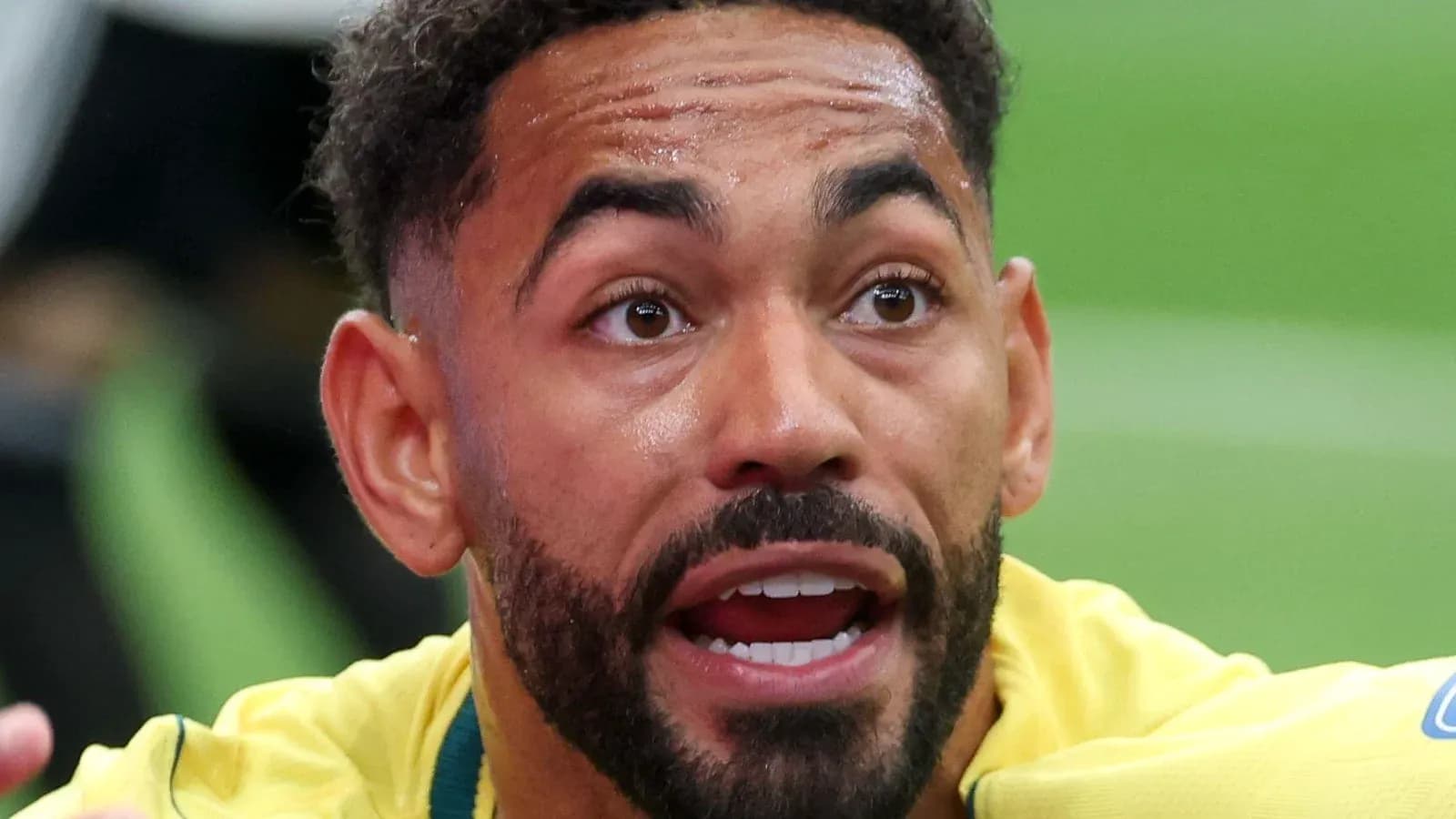
Matheus Cunha: The 'Too Nice' Narrative in Football
Somewhere between Brazil edging past Japan, Germany crashing out to Paraguay and Harry Kane’s future being psychoanalysed from afar, a familiar old football trope reappeared: the idea that being “too nice” is a fatal flaw at the elite level.
This time, the supposed culprit is Matheus Cunha.
Cunha, compassion and a contrived “problem”
Brazil’s win over Japan should have been a straightforward story: a heavyweight nation flirting with danger, then surviving. Instead, for one Daily Mirror writer, the key takeaway was Cunha’s character – and not in a flattering way.
The headline framed it starkly: Cunha’s “classy World Cup act” apparently could not hide an “uncomfortable Brazil truth” for the Manchester United forward. The “truth”? That there is a “general feeling” and “awkward narrative” around Cunha: he supposedly lacks the grit to match his guile, the steel to move from good to great.
The evidence used to prop that up? A brief moment after the final whistle when Cunha consoled Japan’s Ao Tanaka before joining his own team’s celebrations.
In other words, he showed empathy to a distraught opponent.
From there, the piece leapt to the idea that Cunha is “too nice” – nice enough, apparently, that it might hinder him for Brazil and at Manchester United. The conclusion landed with theatrical finality: when Neymar eventually steps aside, the baton will almost certainly go to Vinicius Junior, not Cunha.
Of course it will. Vinicius is already one of the most decisive attackers in world football, a Champions League match-winner and the face of Real Madrid’s next era. That succession plan has nothing to do with Cunha spending 30 seconds with a heartbroken rival.
The irony? This is the same Cunha who once received a ban for removing an Ipswich security guard’s glasses during a fracas. You can argue about the wisdom of that, but it hardly screams a man short of edge or aggression. Yet from one fleeting show of compassion, a whole narrative about his supposed lack of “grit” is built.
Kane, Bellingham and the language of ego
The treatment of Cunha sits in a wider pattern. The way we talk about players’ personalities often says more about the storyteller than the subject.
Take Harry Kane.
Craig Hope in the Daily Mail described him as a man who “does not have an ego in a traditional sense – he is the humblest of superstars – but he does not score the goals he does without a stubborn streak of high self-regard.”
The sentence tries to have it both ways. Kane is presented as almost ego-free, yet driven by a “stubborn streak of high self-regard”. That is, of course, ego by another name. It’s just a more palatable version when the protagonist is the captain, the model professional, the player England has long trusted.
The questions write themselves. Can you really be “the humblest of superstars” and still be defined by that level of self-regard? Can you “not have an ego in a traditional sense” while leaning on exactly the traits that define it?
Then there’s Jude Bellingham. The same writer who paints Kane as a kind of saintly competitor has previously labelled Bellingham a “divisive soloist”, a “poster boy for moodiness”, a “brand ambassador for petulance”, “an angry young man”.
Kane’s confidence is framed as a noble inner steel. Bellingham’s is cast as volatility. Cunha’s empathy becomes a weakness. The vocabulary shifts depending on the character the journalist wants to write.
Bayern, Barcelona and a geography lesson nobody asked for
The Kane discussion stretched into his club future too. A move to Barcelona was presented as the romantic, irresistible dream, contrasted with Bayern Munich’s supposedly more mundane appeal.
“Bayern is not Barca and the Bundesliga is not LaLiga. Der Klassiker is not El Clasico. Der Klassiker is Bayern versus Dortmund, by the way.”
That last line reads like a classroom aside, a slightly patronising geography lesson. And it skims over reality.
Barcelona carry a unique aura and a remarkable history, yes. But Bayern went further in the Champions League last season and collected more trophies. To dismiss them as merely “stable”, “familiar” and “logical” next to the “irresistible” Camp Nou is to reduce one of Europe’s most relentless winning machines to a sensible life choice, rather than an elite sporting destination.
The framing again matters. Barcelona are painted as romance. Bayern as reliability. One club gets myth. The other gets admin.
England, Japan and selective memory
The same skewed framing crept into coverage of Brazil’s clash with Japan.
The Mirror’s report noted that it “looked as though the Three Lions were going to be given a major boost after Japan took the lead in the first half, with the Canarinho at risk of exiting the competition.”
A “major boost”? England lost to Japan just three months ago. They have beaten Brazil more recently than they have Japan. On what basis does Japan’s lead over Brazil automatically become good news, a soft landing, a gift?
The words don’t match the facts. They match a reflex: Brazil are the giant, Japan the underdog, so anything that edges Brazil out must help England. Reality, and recent results, tell a different story.
Nagelsmann, a “snap” and a loaded headline
In Germany’s case, the narrative turned on a few seconds of post-match tension.
After Germany’s penalty shootout defeat to Paraguay, MailOnline led with: “Germany manager Julian Nagelsmann snaps at female reporter’s questioning after being knocked out of the World Cup by Paraguay – as Jurgen Klopp eyes up his job.”
Two things jump out immediately. First, the choice to label Lili Engels as a “female reporter” in the headline. Inside the piece, she is simply “reporter”. The gender tag feels less like essential information and more like a hook – a way to attach a photo of a young woman and inject an implied extra layer of controversy: a male coach “snapping” at a woman.
Second, the word “snaps”. Watch the exchange and you see a slightly terse, pressured manager answering a pointed question after a brutal defeat. It is not a meltdown. It is not a tirade. It is a stressed professional doing a job in the raw aftermath of failure.
Call it testy. Call it prickly. “Infuriated” and “snaps” stretch the moment to breaking point. They turn a normal, if awkward, interaction into a headline-friendly flashpoint.
Again, the language does the heavy lifting. It shapes how we see Nagelsmann, how we interpret his temperament, and even how we read Klopp’s name being floated in the same breath.
The stories behind the stories
Across these threads runs a common theme: character as content.
Cunha comforts an opponent and gets branded “too nice” for the top. Kane’s self-belief is dressed as humble greatness, while Bellingham’s is framed as moodiness. Bayern are reduced to safe and sensible, Barcelona elevated to pure theatre. Japan, fresh from beating England, are spoken about as if they are still a guaranteed “boost”. A routine post-match exchange becomes a manager “snapping” at a “female reporter”.
None of this changes the results. Brazil still beat Japan. Germany still went out. Bayern still win. Kane will still score. Cunha will still have to fight for his place behind Vinicius Junior, as almost any forward on the planet would.
What it does change is the lens. And for players like Matheus Cunha, that lens can be unforgiving. One day, he is too fiery for a security guard’s glasses. The next, he is too gentle to lead Brazil.
At some point, the performances will decide whether he thrives for club and country. Until then, the stories will keep circling around him – and the question is simple: are we watching the footballer, or just the narrative someone has decided to write?
Related News
Raphinha’s Hat-Trick Powers Barcelona to 7-2 Victory Over Racing Santander
Carabao Cup Fourth Round Draw: Liverpool Set to Clash with Chelsea, Arsenal to Face Fleetwood Town
Key Football Matches to Watch in Azerbaijan This Autumn
Raphinha's Hat-Trick Drives Barcelona to 7-2 Triumph Over Racing Santander
Hansi Flick Leads Barcelona to Record-Breaking Seven Wins in a Row
Gavi Reflects on Injury Return as Barcelona Dominate Racing Santander 7-2