
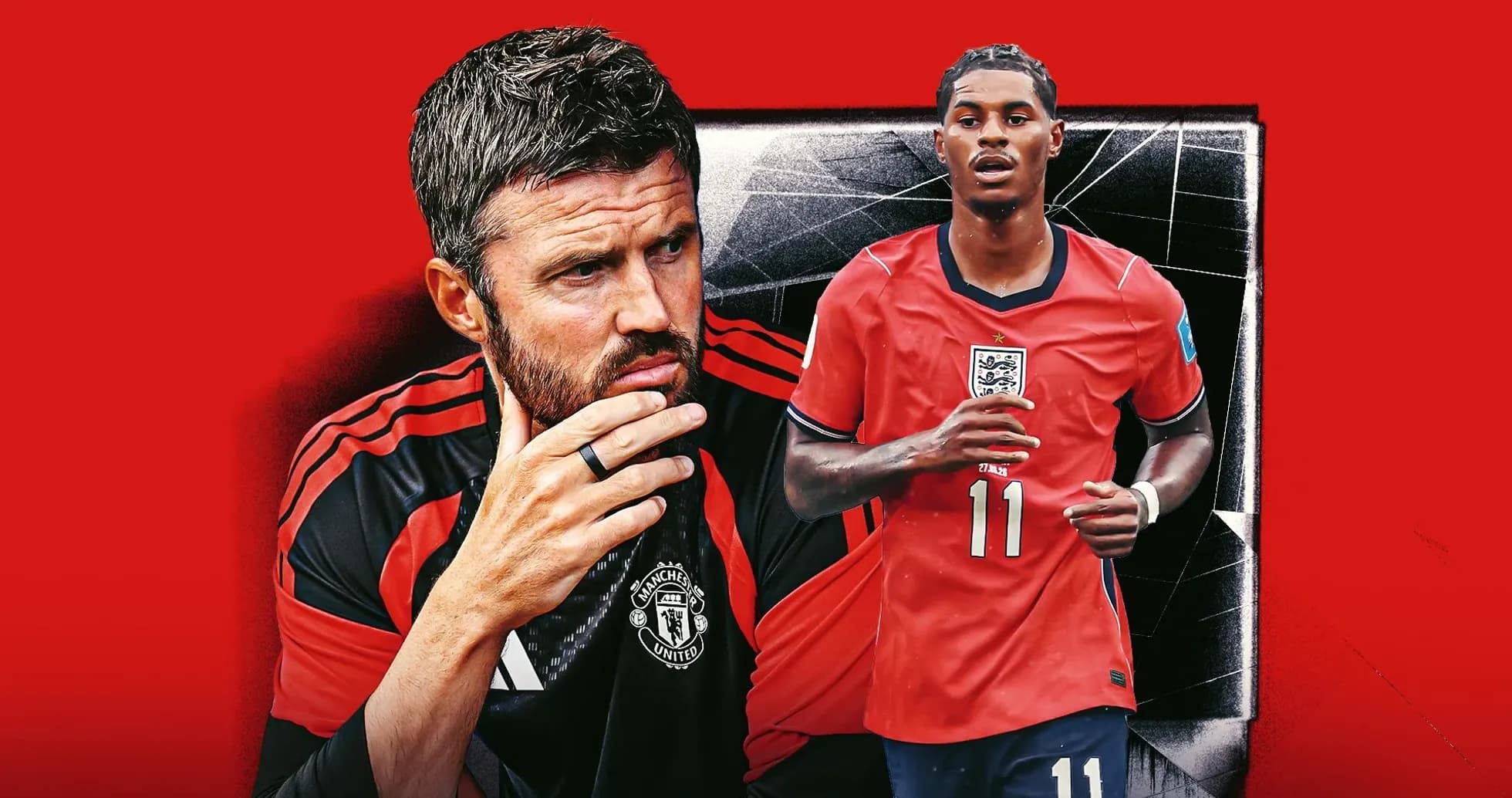
Marcus Rashford's World Cup Struggles and Future Uncertainty
Marcus Rashford went to the 2026 World Cup needing a shop window. He came back with the shutters half‑down.
England’s campaign in North America was supposed to be his chance to reframe the conversation, to remind Europe’s elite that there is still a devastating wide forward inside the 28-year-old. Instead, Anthony Gordon stole his stage and, in doing so, quietly rewrote Rashford’s summer.
Gordon takes the shirt – and the spotlight
Thomas Tuchel spent the build-up to the tournament weighing up a straight duel on the left flank: Gordon or Rashford. The Newcastle winger, newly installed at Barcelona for £69m, started slowly. That was Rashford’s opening.
He did take one chance – a composed finish to help wrap up the opening win over Croatia – but never built on it. As England laboured through flat, functional victories over Panama and DR Congo, Tuchel’s patience ran out. Rashford was dropped, Gordon came in and never looked back, emerging as one of England’s key attacking threats for the rest of the knockouts.
Rashford’s World Cup ended with a modest line: one goal, one assist. The assist arrived in the third-place play-off against a France defence that barely turned up. For a player trying to convince big clubs to move fast, it was nowhere near enough.
Barcelona door closes, clauses expire
All of this played out against a harsh backdrop: his options were shrinking by the week.
Barcelona, his loan club last season, had already nailed their colours to Gordon well before the World Cup kicked off, wiring £69m to Newcastle and, in effect, writing Rashford out of their future. The buy option in his loan deal with Manchester United was allowed to lapse on June 15, just four days into the tournament. United have refused to renegotiate the figure and have no intention of sending him back to Camp Nou on another loan.
Then came the second blow. A month later, the £40m exit clause in Rashford’s United contract expired, the day after England’s semi-final defeat to Argentina. Any move now would require a full negotiation. Barca’s previous £26m option is understood to be closer to United’s realistic asking price, but even that looks optimistic in the current climate.
The faint hope that Barcelona might circle back later in the summer dimmed further when Karim Adeyemi completed his move to Borussia Dortmund, tightening the elite winger market without loosening space for Rashford. He, for his part, has reportedly turned down approaches from Fenerbahce and Galatasaray as he waits for a leading Champions League club.
The wait is starting to feel long.
United’s own plan collapses
This is not just a player stranded between choices. United have backed themselves into a corner as well.
They had been weighing a move for West Ham winger Crysencio Summerville, only to see the Netherlands international slide towards Al-Hilal in a £60m deal, lured by Saudi money. It fits the pattern of a frugal United summer. Sales have been limited, funds tight, and the squad is not exactly overflowing with natural left-sided options.
Selling Rashford inside the Premier League would have been the quickest way to raise cash, but the club has drawn a hard line. According to The i Paper, United will not sell him to another English top-flight side, despite Tottenham’s willingness to activate that now-defunct £40m clause. The fear is stark and simple: Rashford rediscovering his scoring touch for a domestic rival and humiliating his boyhood club. Internally, that scenario has been described as a potential “PR disaster”.
Arsenal and Xabi Alonso’s Chelsea have both monitored the situation, yet any serious move now looks remote, particularly with Chelsea already committing £117m to Aston Villa’s Morgan Rogers. The market is moving on without Rashford.
The wage that no one wants
At the heart of the stalemate sits a number: £325,000 per week.
Rashford is one of the highest earners at Old Trafford. That salary is choking the market for him and complicating United’s own rebuild. No realistic suitor is prepared to go anywhere near that figure, and while Rashford is understood to have turned down even richer offers from less appealing clubs, the effect is the same: there is no obvious buyer.
From United’s perspective, the maths is brutal. According to The Athletic, the final two years of his deal will cost around £39m in basic wages alone, before bonuses. Sir Jim Ratcliffe and INEOS are determined to slash costs, and former head coach Ruben Amorim pushed for Rashford’s exit in January 2025 with that in mind. The board agreed. They wanted the contract off the books.
Ratcliffe’s stance is unlikely to have softened. Rashford is no longer a guaranteed starter and will soon turn 29. Yet the market has not delivered the clean break United expected.
Carrick opens the door
Into this mess steps Michael Carrick, offering something different: a way back.
The current noises around United suggest the new head coach is open to reintegrating Rashford. The forward is expected to join up with the squad in Dublin for the rest of pre-season after his post-World Cup break. There is no lingering resentment on Rashford’s side, despite being frozen out and dumped into the “bomb squad” by Amorim.
Champions League football adds another layer. United need depth, especially in wide areas, and the failure to land Summerville has only sharpened that need.
“Rashford is really looking forward to the opportunity to work with Carrick,” reported transfer specialist Fabrizio Romano on his YouTube channel. “Carrick is also looking forward to working with Rashford. I am told that Carrick is genuinely excited about the opportunity to help revive Rashford’s career at Man United.
“Rashford and the club are prepared to give each other another chance. After that, they will decide whether to continue together or whether the player will leave during the summer transfer window.”
Carrick himself was careful but clear when he spoke in April: “There’s decisions to be made in time on certain things, and obviously Marcus is in that situation. But at this point in time, nothing’s been decided. From my perspective, whoever’s here, I want to work with, make the best out of and help them improve.”
That sounds like a manager who sees a project, not a problem.
A fragile truce with the fanbase
Any return, though, will be complicated by what Rashford is walking back into.
Before his loan exit, his relationship with sections of the United support had turned sour. He became the lightning rod for wider frustrations, criticised for his body language, his pressing, his perceived attitude. Amorim’s reign was chaotic enough that Rashford could argue he was scapegoated, but the damage was done. The mood around him was toxic.
Winning that crowd back will demand more than a few bright cameos. He will need visible fight, relentless work off the ball and, crucially, early goals. If United start poorly and Rashford looks anything less than fully committed, the atmosphere could turn quickly and decisively.
There is also a lingering football truism in the background: you should never go back. Ratcliffe and his inner circle must decide whether a high-cost reconciliation makes sense when the long-term plan is to slim down an inflated wage bill.
Loan, cut, or gamble?
For now, United are trapped by their own decisions. They want a substantial fee, somewhere around that £26m mark, yet the market can see their desperation to sell. No one is inclined to pay full price for a player on enormous wages whom his club clearly wants to move on.
That leaves one scenario rising to the top: another loan.
If United can replicate the Barcelona structure, a new club would shoulder Rashford’s salary, potentially negotiating a pay cut with the player, just as Barca did. Even that might prove optimistic. A more realistic compromise could be a split, perhaps 40/60, to ease the burden while preserving some financial flexibility at Old Trafford.
The clock, of course, is on everyone’s side and against them at the same time. Rashford is being selective. Any serious suitor will fancy their chances of striking a cheaper loan deal late in the window as United’s need to move him intensifies, especially if they invest in another winger.
So the saga drags on, with one stark question hanging over it: does Marcus Rashford’s future still lie at Old Trafford, or is this just the uneasy pause before the final break?
Related News
Ilia Topuria Accuses Justin Gaethje After UFC Defeat
Tyson Fury vs Anthony Joshua Fight Date and Venue Confirmed
Switzerland Calls Up In-Form Sion Striker Winsley Boteli for Nations League
Bournemouth Secures Historic 2-1 Win Over Real Sociedad in Spain
Portugal Announces Squad for 2026 UEFA Nations League; Cristiano Ronaldo Expected to Play

Raphinha Channels Ronaldo Nazario as Barcelona's Leading Striker After Position Change