
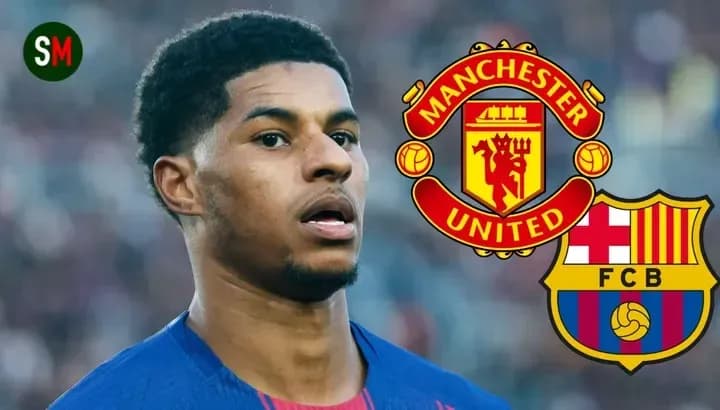
Marcus Rashford's Potential Return to Manchester United: A Bold Vision
Michael Carrick has quietly cracked a door open that many at Manchester United thought had been slammed shut: the return of Marcus Rashford.
Not this summer. Not even next. The vision is bolder than that – a homecoming after the 2026 World Cup, when Rashford would be 28 and, in theory, at the peak of his powers.
Barcelona step back, Old Trafford glances over
The chain reaction started in Spain. Barcelona’s decision to push ahead with a big-money move for Anthony Gordon has shifted the landscape around Rashford’s future. The Catalan club held a £26m option to make his stay permanent, but that clause is understood to have expired on June 15 without being triggered.
For now, the England international remains a loanee rather than a long-term fixture at Camp Nou. Bayern Munich and Paris Saint-Germain have both been linked, circling as elite clubs do when a high-profile forward edges towards uncertainty. Yet the most intriguing possibility lies not abroad, but back where it all began.
According to reports, Carrick has been in regular contact with Rashford in recent weeks, sounding out the player’s mindset and gauging whether the fractured relationship with his boyhood club can be repaired.
Dressing room ready to forgive
Carrick is not alone. Figures within United’s leadership group have also been contacted, and the mood inside the dressing room is said to be broadly receptive. Put simply: they would have him back.
That in itself is striking. Rashford has not played for United since December 2024, his exit coming on the back of a very public breakdown in relations with then-head coach Ruben Amorim. The fallout was messy, the optics bruising. A fan favourite and academy graduate frozen out, then dispatched on successive loans to Aston Villa and Barcelona.
Yet the contract tells a different story. Rashford remains tied to Old Trafford until June 2028. He is not a former United player, just a distant one.
Carrick, keen to add a left-sided winger this summer, has made it clear to Rashford that he would welcome his return into the fold. For a player who grew up with the Stretford End as his backdrop, that message carries weight.
Football politics and old scars
Romance, though, does not write transfer policy. Carrick would have to navigate internal resistance to any Rashford reunion.
Director of football Jason Wilcox and CEO Omar Berrada are both believed to have backed Amorim’s hardline stance when Rashford’s behaviour at Old Trafford came under scrutiny. They supported the disciplinary line, and those scars do not disappear because a new head coach wants a clean slate.
Any attempt to bring Rashford back would therefore test not just the player’s contrition, but the club’s appetite for forgiveness. Rashford is understood to harbour regrets about how he handled his struggles under Amorim. That acknowledgement may help, but it will not erase what went before.
The numbers that won’t go away
What does refuse to fade is his record.
Rashford has scored 138 goals and supplied 79 assists in 426 appearances for Manchester United. Those are not the numbers of a fringe player or a fleeting talent; they are the output of a forward who has carried the attack through multiple eras and rebuilds.
His loan spell at Barcelona last season only underlined his enduring quality. Fourteen goals and 14 assists in 49 games in a side under constant tactical and financial pressure is no small return. He adapted, produced, and reminded Europe’s elite why his name still commands attention.
For a United side still searching for a reliable, high-impact presence on the left, that kind of end product is not easily ignored.
Carrick’s gamble worth taking?
This is where Carrick’s influence becomes decisive. As a former United midfielder who understands the fabric of the club and the weight of its shirt, he knows exactly what Rashford once meant to Old Trafford – and what he could mean again.
He also knows the risks. Bringing Rashford back would test the unity of the new football structure, reopen old debates about standards and discipline, and place a lightning rod at the heart of his attack. If it works, United reclaim a proven match-winner. If it fails, the club relives a saga it thought it had moved past.
Yet the calculation is simple: Rashford remains a high-level, difference-making forward. One who, under the right conditions, can still tilt big games and big seasons.
Carrick’s presence makes a return more plausible than at any time since that December rupture. The question now is not whether Rashford can help Manchester United again.
It is whether the club is brave enough to let him.
Related News
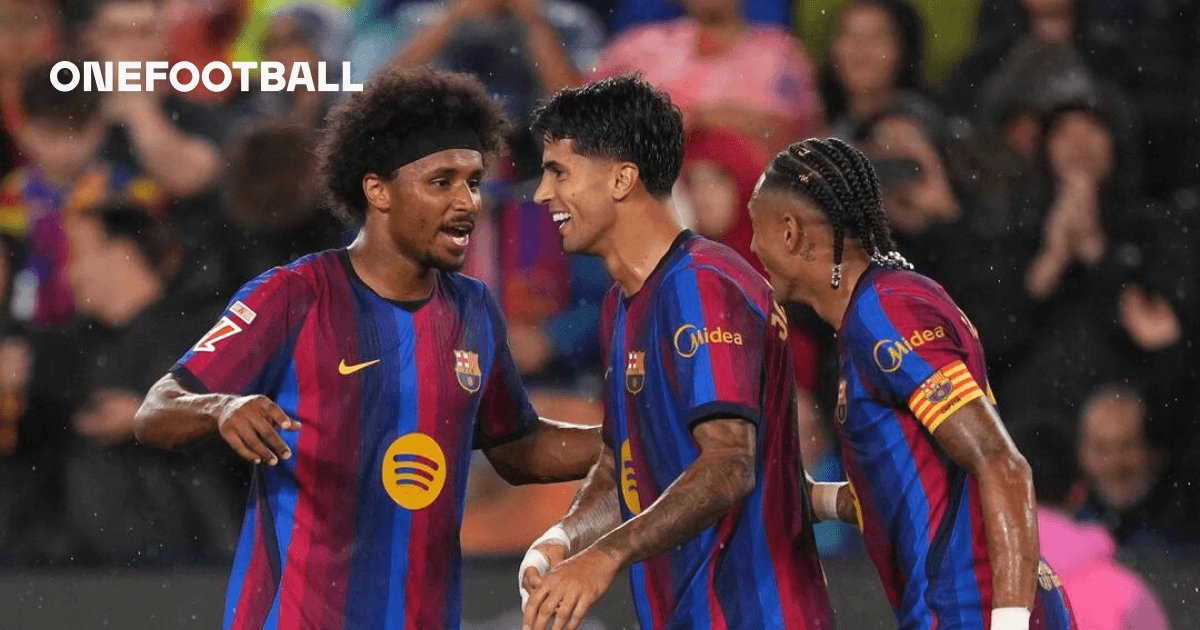
Raphinha’s Hat-Trick Powers Barcelona to 7-2 Victory Over Racing Santander
Carabao Cup Fourth Round Draw: Liverpool Set to Clash with Chelsea, Arsenal to Face Fleetwood Town
Key Football Matches to Watch in Azerbaijan This Autumn
Raphinha's Hat-Trick Drives Barcelona to 7-2 Triumph Over Racing Santander
Hansi Flick Leads Barcelona to Record-Breaking Seven Wins in a Row
Gavi Reflects on Injury Return as Barcelona Dominate Racing Santander 7-2