
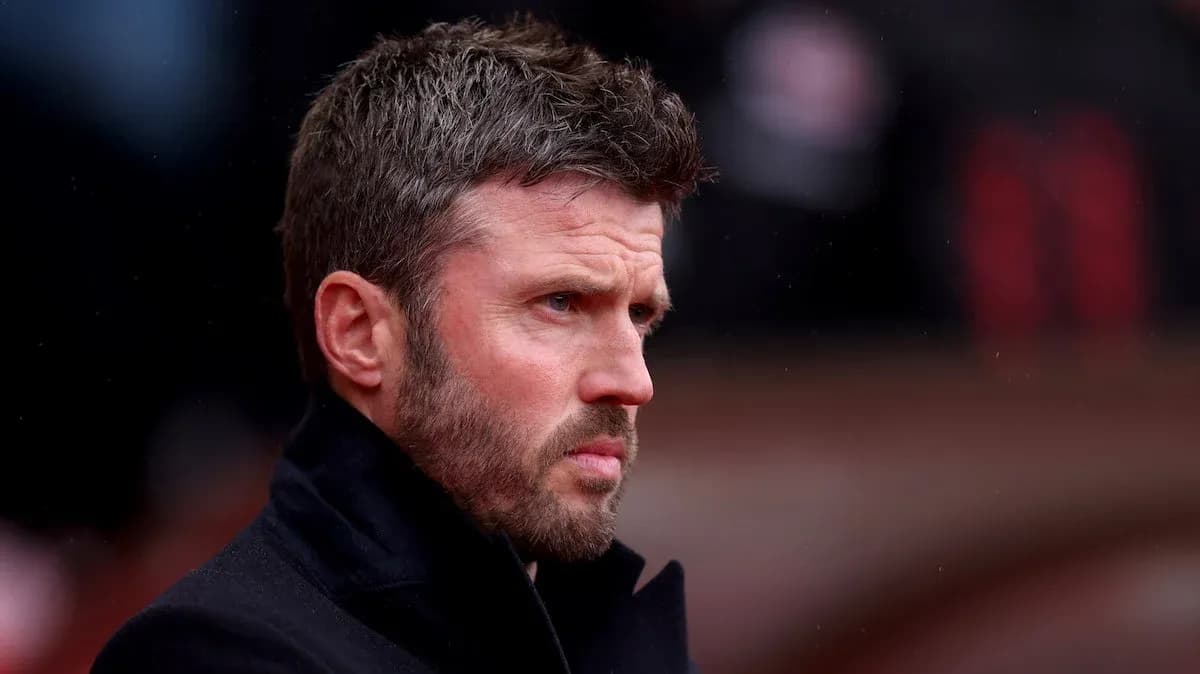
Marcus Rashford's Future: Balancing Finances and Football at Manchester United
Manchester United want to sell Marcus Rashford this summer. Michael Carrick wants to keep him. United have missed out on their top targets on the left.
So why are they still pushing him towards the exit?
A cold equation at Old Trafford
The public story around Rashford’s exile under Ruben Amorim in December 2025 centred on discipline and attitude. Inside the club, the story was different. The real power sat not on the training pitch but in the spreadsheets.
Rashford earns £325,000 a week at Old Trafford once his Champions League bonus kicks in, a standard clause at United. His deal runs to 2028. That leaves the club on the hook for almost £34 million over the next two years for a player who spent 18 months badly out of form before his stand-off with Amorim.
Strip away the romance and you’re left with a simple corporate call. If one of the most expensive assets in any business is underperforming for a year and a half, you move it on. You don’t indulge it. You don’t protect it. You clear it from the books.
INEOS, and Sir Jim Ratcliffe in particular, have applied that logic ruthlessly since their arrival was ratified in 2024. They resisted the emotional swell around Casemiro and the “One More Year!” chorus, refusing to trigger an extension that would have cost around £350,000 a week. That decision was not about nostalgia, leadership, or dressing-room aura. It was about the wage bill.
Rashford is being treated the same way. Amorim wanted him out; the hierarchy backed that stance. Now Carrick is prepared to bring him back into the fold at Carrington, and still the board’s position has not shifted. This isn’t a debate over a sulking winger or a disruptive presence. Even Erik ten Hag, hardly a sentimentalist, once called Rashford “unstoppable” a week after dropping him for turning up late.
The judgment has been made somewhere far from the touchline. It is a financial decision, born in the offices of M16, shaped by a billionaire’s obsession with the bottom line. The “local lad” narrative, the academy poster boy, the England international who grew up in the shadow of Old Trafford – all of that is secondary to the numbers.
And one number matters more than any other: zero.
Because Rashford is a Carrington product, any transfer fee United receive counts as “pure profit” under the Premier League’s Profit and Sustainability Rules. When United agreed a £26 million buy option in his loan to Barcelona last summer, it looked like a cut-price tag for a player of his profile. Barcelona chose not to trigger it, but had they done so, that entire fee would have dropped straight into United’s PSR column as profit.
The same logic applies to any deal they accept this summer. Sell Rashford, bank pure profit, reinvest the fee in a replacement whose cost can be spread over the life of a contract. On a balance sheet, it is elegant. On a team sheet, it is far more complicated.
The Summerville calculation
United’s alternative plan on the left is already in motion. The club are exploring options that, on the pitch, do not match Rashford’s ceiling. Crysencio Summerville is the clearest example.
The West Ham United winger is viewed as the “No.1 target” out wide. Relegation from the Premier League should have made him a bargain. It hasn’t. The Hammers are holding firm at £50 million, and the 24-year-old’s impressive World Cup has only hardened that stance.
Yet even at that price, the maths still favours Summerville over Rashford. A £50 million fee amortised over a five-year deal hits the PSR columns at £10 million per season. Summerville is thought to be earning around £50,000 a week at the London Stadium and wants that doubled to £100,000 to move.
Run the numbers.
- Transfer amortisation: £10 million per year.
- Wages: £100,000 a week, around £5.2 million a year.
Total cost for next season: just over £15 million.
Rashford’s wages alone for 2026/27? Around £16.9 million.
From INEOS’s vantage point, the decision writes itself. In two years, Rashford can walk away for nothing at almost 31. Summerville, still short of his prime, could be sold on at a profit. United would have lowered the wage bill, banked pure profit on an academy sale, and added a younger, cheaper, more tradable asset.
On paper, it is ruthless and rational. On grass, it is far less convincing.
Is the sacrifice worth it?
Strip away the spreadsheets and ask a football question: is Marcus Rashford worth the squeeze?
Even his harshest critics would struggle to argue, with any conviction, that Summerville is the better footballer. The Dutch winger has 10 goals and eight assists across four Premier League seasons, 84 appearances in total. Rashford, playing largely as a substitute in his debut La Liga campaign, produced more assists in one season at Barcelona than Summerville has across his entire Premier League career.
Barcelona’s verdict was telling. They declined to buy him outright, but they were keen to bring him back on loan. They clearly felt he justified his salary; it was the transfer fee that made them hesitate. If a Champions League regular believes Rashford is worth paying to use, just not to buy, why are United so desperate to offload him entirely when they already own him?
And there is another twist. United are not even leading the race for Summerville. AS Roma are in talks with West Ham and, according to reports, have the player’s approval to move to the Italian capital. United could end up losing Rashford and missing out on the man earmarked as his financial – if not footballing – replacement.
That is the risk when your strategy is driven from the ledger rather than the dugout.
Football vs business, and Carrick in the middle
This was not the original plan. Heading into the window, United’s primary targets for the left flank were RB Leipzig’s Yan Diomande and Aston Villa’s Morgan Rogers. Both were viewed as genuine upgrades on Rashford, players who could transform the position rather than merely reset the wage structure.
The pivot to Summerville only came when it became clear that Diomande and Rogers were priced out of reach. With a major midfield overhaul taking priority, the club shifted towards a cheaper, more attainable winger – even if he is, in pure football terms, a downgrade on the academy graduate they already own.
So the question hangs over Old Trafford: if the choice is between keeping a superior player on a heavy wage and signing an inferior one to satisfy PSR and wage models, what kind of club do United want to be?
Carrick’s stance is clear. He is happy to reintegrate Rashford, to work with him, to try to restore the player who once looked like United’s attacking future. He sees value on the pitch that the spreadsheets can’t capture. His employers see an asset whose peak resale moment has passed, whose salary skews the internal pay scale, whose departure would instantly tidy the accounts.
Both positions have logic. Both can be defended. One is rooted in tactics, form and potential. The other in regulations, amortisation and long-term financial health.
But if United sell Marcus Rashford, replace him with a lesser winger, and watch that winger head elsewhere anyway, what exactly will they have gained – and what will it say about who really runs Manchester United now?
Related News
Ilia Topuria Accuses Justin Gaethje After UFC Defeat
Tyson Fury vs Anthony Joshua Fight Date and Venue Confirmed
Switzerland Calls Up In-Form Sion Striker Winsley Boteli for Nations League
Bournemouth Secures Historic 2-1 Win Over Real Sociedad in Spain
Portugal Announces Squad for 2026 UEFA Nations League; Cristiano Ronaldo Expected to Play

Raphinha Channels Ronaldo Nazario as Barcelona's Leading Striker After Position Change