
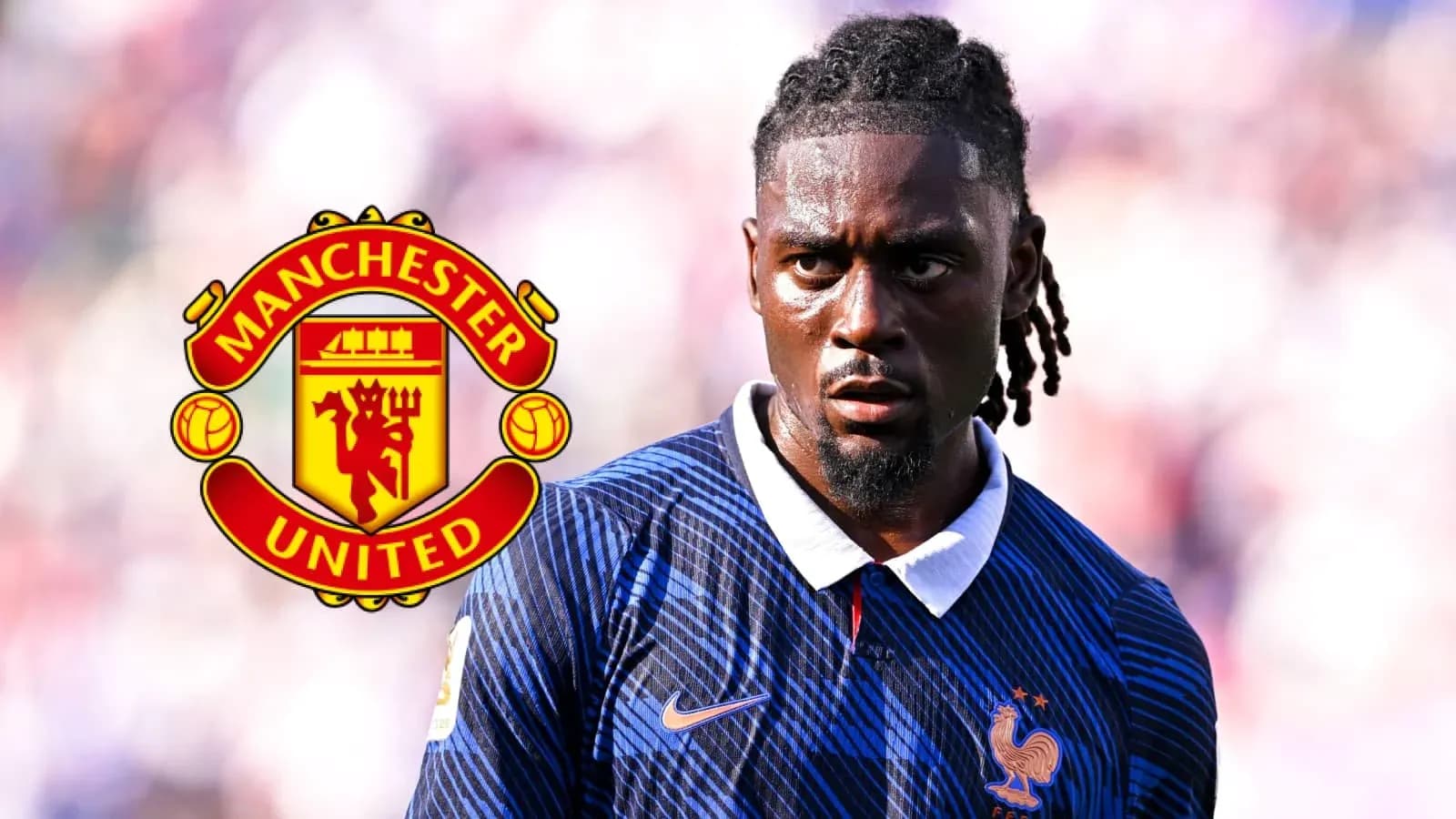
Manchester United’s Midfield Rebuild: The Case Against Manu Kone
Manchester United’s midfield rebuild has moved quickly, decisively, and – in parts – impressively. But the most important piece of the jigsaw is still missing, and if the club believes Manu Kone is the answer to that problem, they are looking at the right player for the wrong job.
Casemiro has gone, walking away as a free agent. Manuel Ugarte is out with a serious injury. Into that vacuum have stepped Andrey Santos and Youri Tielemans, signings that restore numbers and add Premier League nous. On paper, the department looks healthier. In reality, the profile of midfielder United still lack could define Michael Carrick’s project.
He needs a specialist to sit in front of his defence. He needs, in essence, a version of himself.
Carrick the player was never a destroyer. He didn’t thunder into tackles to rip up opposition attacks. He orchestrated from deep, held his position, read danger, and controlled tempo. He was a defensive midfielder by starting position, not by stereotype.
That distinction matters when Kone’s name lands on the recruitment desk.
A midfielder judged on the wrong traits
Kone has caught the eye for France at the World Cup, a stage that can warp reputations but, in his case, has largely reflected the player he has become. At 25, with three seasons in the Bundesliga at Borussia Monchengladbach and two in Serie A with Roma, he is no longer a prospect. He is entering his prime.
Roma treat him as one of their crown jewels. When he arrived on deadline day in the summer of 2024, he injected energy and drive into a stagnant midfield. Not because he patrolled the edge of his own box and snuffed out danger, but because he drove his team up the pitch.
Kone’s first season in Italy showed his true nature. He carried the ball with power and purpose, shrugging off challenges, eating up ground, and turning defence into attack. His role resembled a number eight, not a six. He was the player who broke lines, not the one who sat behind them.
Then came a shift.
Gian Piero Gasperini arrived with his high-octane, man-to-man blueprint honed at Atalanta. Many assumed Kone would be the perfect fit for that chaos – a physical, mobile midfielder in a system built on intensity. Gasperini saw something different.
Kone was pulled deeper. In build-up, he often tucked into the defensive line, sliding alongside centre-backs to help progress play. The lung-bursting runs remained, but they were rationed. His influence became subtler, less obvious to the casual eye, more about positioning and circulation than surging through the thirds.
He still had a good season. But the version of Kone that truly terrifies opponents is the one unleashed as a box-to-box force, not chained to the centre circle as a permanent shield.
United’s familiar mistake
That is where the warning light flashes for United. They have history here.
The Fred–Scott McTominay partnership became the symbol of a muddled era: two willing, industrious midfielders asked to be something they were not. Neither was a natural holding midfielder, neither a pure playmaker, yet both were shoehorned into a double pivot that never quite worked. The result was a unit that ran a lot, tackled a lot, but never fully controlled games.
The club has been scrambling to correct that misstep ever since. Casemiro, even at 30 when he arrived in 2022, offered a short-term solution. He had his moments, delivered big performances, and can leave with his reputation intact. But the dream scenario would always have been signing him five years earlier.
Ugarte was the next attempt. His outstanding tackling numbers at PSG in Ligue 1 hinted at a tailor-made ball-winner. Those metrics have not translated cleanly into United’s system.
Now comes the temptation to view Kone as the next candidate for that deepest role. Tielemans and Santos are not being signed to play as the out-and-out six. Kone, clearly, is the one they believe can plug that gap.
He can play there. He has the engine, the physicality, the defensive work rate to survive as the deepest midfielder. But using him primarily as a sitter comes at a heavy cost: it blunts his greatest weapon.
Last season, even in a more restrained role under Gasperini, Kone ranked in the 78th percentile of Serie A midfielders for the average distance of his progressive carries. That’s despite going forward less often. When he is allowed to step on the gas, he changes the geography of a game.
Locking that version of Kone into a permanent holding role would be like buying a sports car and never taking it out of second gear.
The limitations that shape his value
Kone is not the finished article. If he wants to cement himself as a top-tier box-to-box midfielder, his biggest flaw is glaring: his end product.
Four goals in 82 games for Roma tell the story. In the final third, he often lacks conviction. He arrives in promising areas but doesn’t consistently punish teams.
Gasperini acknowledged it publicly in December, after Kone finally scored his first goal of the 2025–26 campaign. The coach admitted that if Kone added more goals, he would already be operating at a higher level than Roma. The numbers since then support the critique: 22 more appearances for club and country, just one additional goal.
That return fuels the lazy misconception that he is primarily a defensive midfielder. He isn’t. He is a central midfielder who can defend, not a specialist destroyer.
The transfer market muddies the picture further. Prices for midfielders have drifted into a different stratosphere. Elliot Anderson produced fewer than 10 goal contributions last season and still commanded £116m from Manchester City. Spurs paid £85m for Mateus Fernandes, another player United considered before backing away.
Against that backdrop, Roma’s likely asking price – £50m and upwards – feels steep but not outrageous. The World Cup will only have inflated his value. They rejected around £38m from Inter last year. Any club stepping in now must be absolutely clear what they are buying.
You are not paying for goals. You are paying for a carrier, a presser, a midfielder who drags his team 20 yards up the pitch with one run. If you then ask him to stay home and plug gaps, you are burning money.
Tactical fit: United and beyond
There are other issues to iron out. Kone’s off-the-ball movement in possession still needs work. At Roma, he too often failed to drift into ideal pockets to receive the ball, sometimes even blocking passing lanes rather than opening them. As a lone six, that kind of positional imprecision can be fatal.
In United’s 4-2-3-1, there is at least a framework that might protect him. Used in a double pivot with Tielemans or Santos, Kone could operate on a “you go, I stay” understanding. The key would be balance. The responsibility to sit cannot fall heavily on just one of them. When Tielemans roams, Kone must hold. When Kone bursts forward, Tielemans must anchor. It sounds basic. In practice, it requires discipline and coaching.
For France at the World Cup, that dynamic has worked. His partners in a similar shape – Adrien Rabiot against Iraq, Paraguay and Morocco, and Aurelien Tchouameni against Norway and Spain – both offer that security. They are comfortable hanging back so Kone can flip the switch and drive on. At Roma, Bryan Cristante often filled that role, even if the Italian himself enjoyed pushing on at times.
The blueprint is clear. Surround Kone with at least one genuine anchor, and you unlock his running power. Ask him to be the anchor, and you dull his edge.
That is why other potential destinations might suit him better. Atletico Madrid have been mentioned. Arsenal flirted with the idea. Liverpool’s name has resurfaced, having tracked him since his Bundesliga days.
At Arsenal, the presence of Martin Zubimendi as a dedicated pivot could free Kone in the same way it initially liberated Declan Rice, another midfielder wrongly pigeonholed as a pure holder. But Arsenal’s gaze now appears fixed on Bruno Guimaraes.
Liverpool feel more plausible. They want a number six, but if Andoni Iraola leans into a 4-2-3-1, Kone could dovetail neatly with someone like Ryan Gravenberch, both sharing duties, both alternating runs, both allowed to step into advanced areas without leaving the defence exposed.
The risk United cannot ignore
None of this is to downplay Kone’s quality. He is powerful, technically sound, and already proven in two of Europe’s toughest leagues. He has time to tidy up his weaknesses. He has the mentality to operate on the biggest stages.
But the margin for error in this United rebuild is shrinking. They cannot afford another miscast midfielder, another talent shoehorned into a role that blunts his strengths and exposes his flaws.
If this is the summer Kone crosses into the Premier League, someone will land a serious player. The question for United is brutally simple:
Do they want the real Manu Kone – the driving, box-to-box force – or are they about to spend £50m trying to turn him into something he has never truly been?
Related News
Ilia Topuria Accuses Justin Gaethje After UFC Defeat
Tyson Fury vs Anthony Joshua Fight Date and Venue Confirmed
Switzerland Calls Up In-Form Sion Striker Winsley Boteli for Nations League
Bournemouth Secures Historic 2-1 Win Over Real Sociedad in Spain
Portugal Announces Squad for 2026 UEFA Nations League; Cristiano Ronaldo Expected to Play
Raphinha Channels Ronaldo Nazario as Barcelona's Leading Striker After Position Change