
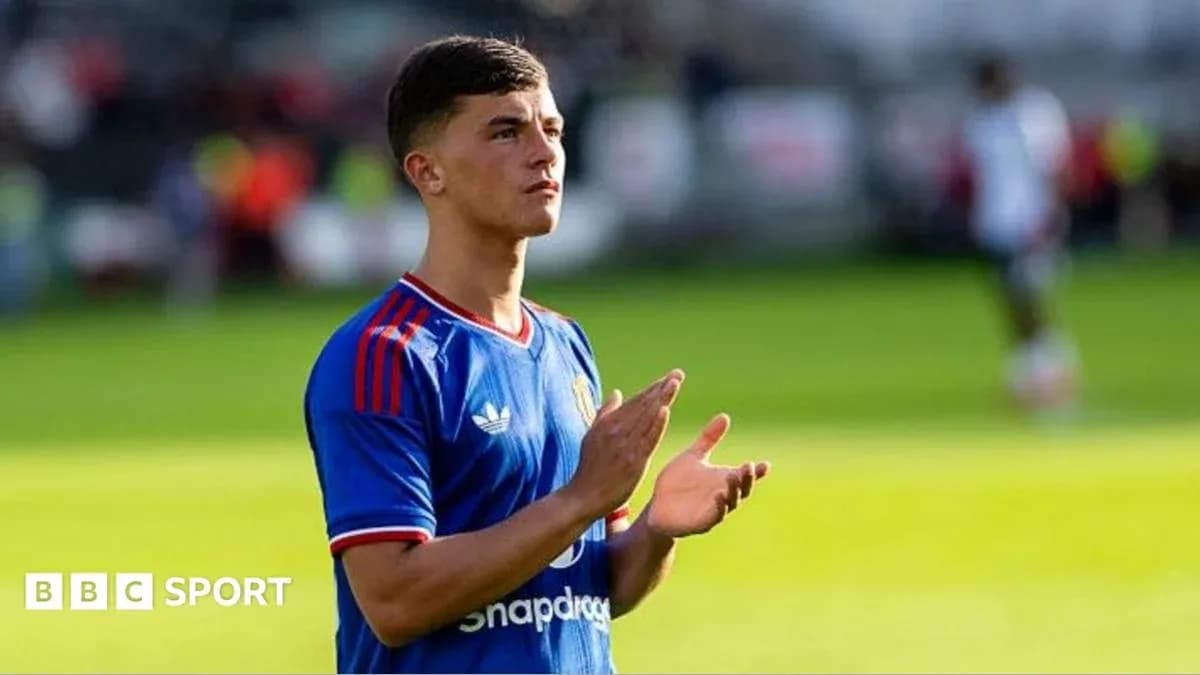
Manchester United’s Academy Stars Shine in Stockholm
Manchester United’s trip to Stockholm this weekend will feel like the end of a chapter.
When Michael Carrick sends his side out to face Atletico Madrid, it will be the last time this pre-season that his travelling squad leans so heavily on academy talent. By the time Paris St-Germain arrive next weekend, the senior faces will be back, the stakes a little higher, the pecking order a little clearer.
For some youngsters, this has been an audition. For two of them, it already feels like a promotion.
Last big stage for the kids
The picture is about to change. Bruno Fernandes, Diogo Dalot and Matheus Cunha are due back in training next week. Belgium internationals Senne Lammens and Youri Tielemans, who reported to Carrington on Thursday, are stepping up their work. Recruitment is still incomplete, exits still on the table, so nothing is fixed yet. But the window is closing for those trying to force their way into Carrick’s thoughts.
Harry Amass, Jaydan Kamason, Dan Armer, Jack Fletcher, Jim Thwaites, Ethan Williams and JJ Gabriel have all kept their spots for the Stockholm leg, while others have dropped back to under-21 duty against Altrincham. The pathway is busy, the traffic constant.
Even so, two names keep cutting through the noise: Shea Lacey and Tyler Fletcher.
Lacey and Fletcher move to the front
Their status inside the club crystallised on the final day of last season at Brighton. With little riding on the result, Carrick could have filled his bench with almost anyone from the academy. He chose Lacey and Fletcher, then trusted them with second-half minutes in a 3-0 away win that felt like a quiet statement.
Nothing since has hinted that either has lost momentum.
Lacey has used pre-season as a showcase. Coming off the bench in Helsinki against Wrexham, he lit up the second half, then went one better six days later in Norway, scoring in a 5-0 dismantling of Rosenborg.
The 19-year-old spent much of that game operating in the pockets just behind Joshua Zirkzee, wearing the number 10 role like it was made for him, with Bryan Mbeumo stretching the pitch on the right – the channel Lacey loves to drift into.
His goal was a snapshot of what makes him different. He burst onto Zirkzee’s through ball, cushioned it with his left, slowed the defender down, then chopped inside with his right and curled into the far corner with a calm, almost casual finish. No panic. No fuss. Just clean execution.
The ease of it all underlines why coaches at Carrington speak about his talent in such glowing terms. Nothing looks forced. Last May, after a wild 4-3 Premier League 2 semi-final win over Manchester City, under-21s coach Adam Lawrence described the Liverpudlian as having “magic in his feet”.
That wasn’t the only thing Lawrence highlighted. He made a point of praising Lacey’s defensive work, a clear sign of what the staff are demanding from him: end product, yes, but also discipline without the ball. By then, Lacey was already training virtually full-time with the senior group. There is no expectation that will change.
Fletcher’s whirlwind rise
If Lacey brings the flicker of improvisation, Fletcher offers something more understated but just as valuable.
His rise accelerated from a 16-minute cameo at Brighton into a whirlwind few weeks that most teenagers can only imagine. Scotland manager Steve Clarke clearly saw enough to invite him into his pre-World Cup camp, asking the midfielder – son of former Scotland international Darren Fletcher and twin brother of Jack, who is currently aligned with England at youth level – to train with the senior squad.
That invitation turned into a full debut against Bolivia. Then came the twist. When Billy Gilmour suffered an injury against the South Americans and dropped out of the tournament, Clarke turned to Fletcher again, parachuting the 19-year-old into his 26-man World Cup squad.
He did not play a minute at the finals, but that is hardly the point. The experience has been filed away as priceless: a first-hand look at the standards required at the very top, and a vivid target for what the next phase of his career could be.
Standards have never really been Fletcher’s problem. Those who know him talk about a player who has absorbed plenty from his father. He carries himself with maturity, puts the team first, understands the rhythm of a game. These are traits that sit alongside, rather than behind, his technical ability.
Where Lacey can conjure a moment, Fletcher specialises in making the simple look sharp. He reads play early, takes sensible positions, and his passing is crisp. On top of that, he leads.
Last season, Jacob Devaney wore the armband for Manchester United’s Premier League 2 side before heading out on loan to St Mirren, and he too is well regarded at Old Trafford, impressing in this pre-season. Yet when Carrick has rolled out his so-called “second-half team” – the academy-heavy XI used after the interval in these warm-up games – it has been Fletcher with the captain’s armband.
He could have taken three weeks off after the World Cup. He cut it to two and came back early.
A glimpse of United’s future
This trip to Stockholm, then, is not just another friendly. It is a final, extended look at a group of youngsters before the senior players reclaim their places and pre-season sharpens into something more serious.
Some of those academy names will drift back into the youth ranks or head out on loan. Others will hover on the fringes, waiting for the domestic cups and the inevitable injuries.
Lacey and Fletcher feel different. One glides, one guides. Both have already nudged open the door to the first team.
Now the question is not whether they stay around the senior set-up in the coming weeks. It is how long it will be before they stop being described as “academy players” at all.
Related News

Raphinha’s Hat-Trick Powers Barcelona to 7-2 Victory Over Racing Santander

Carabao Cup Fourth Round Draw: Liverpool Set to Clash with Chelsea, Arsenal to Face Fleetwood Town
Key Football Matches to Watch in Azerbaijan This Autumn
Raphinha's Hat-Trick Drives Barcelona to 7-2 Triumph Over Racing Santander
Hansi Flick Leads Barcelona to Record-Breaking Seven Wins in a Row
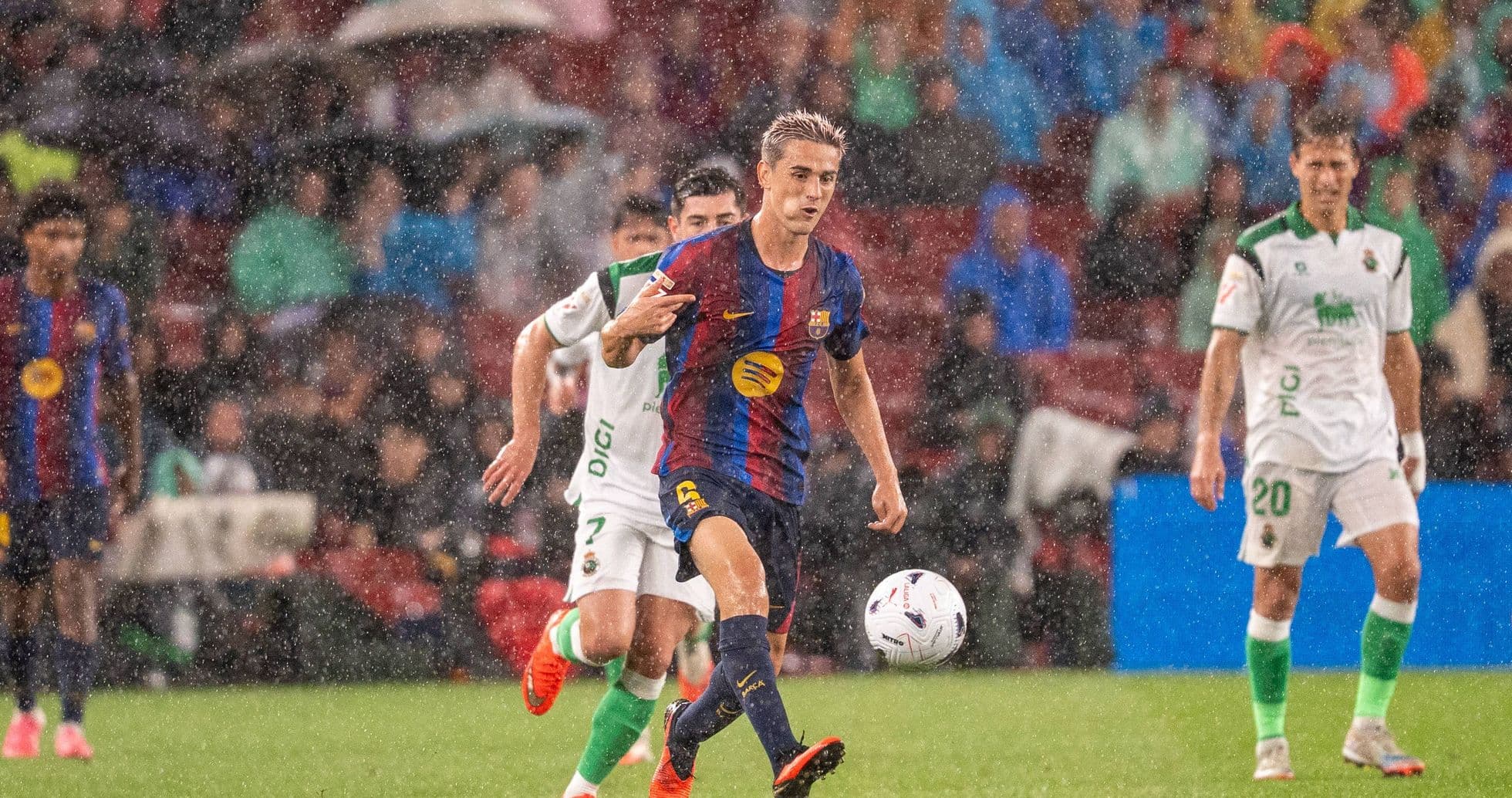
Gavi Reflects on Injury Return as Barcelona Dominate Racing Santander 7-2